

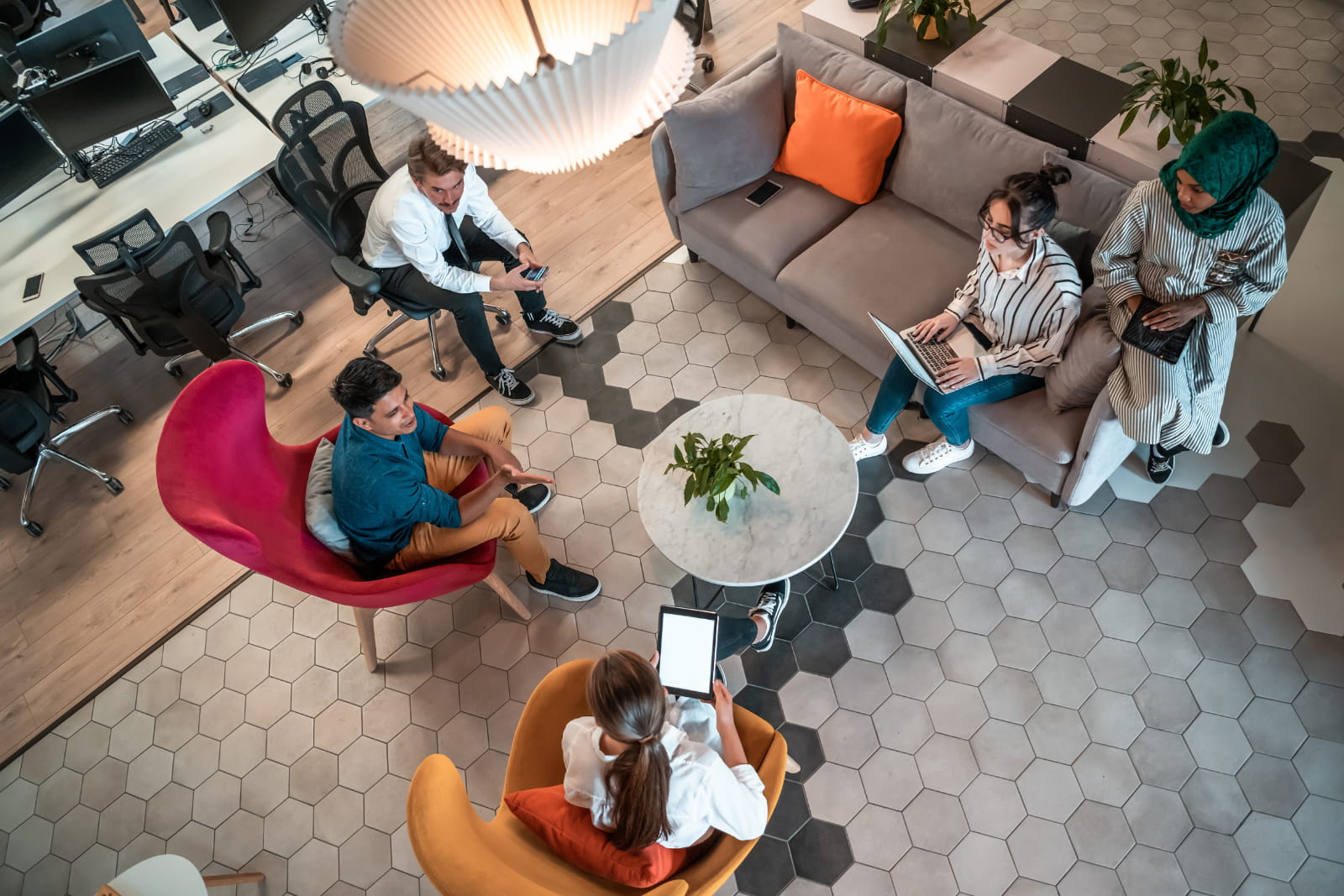
The Role of Workplace Design in Employee Retention
Employee retention depends on more than salaries, benefits and opportunities for promotion. Workplace design also shapes how employees experience their jobs every day. Lighting, acoustics, furniture, layout and access to suitable work areas can affect comfort, concentration and satisfaction. Research cited by workplace specialists suggests that 68% of workers believe the quality of office design affects engagement and an organisation’s ability to retain talent.
A well-planned workplace can therefore support a wider employee-retention strategy. It reduces everyday frustrations, gives people environments suited to different tasks and demonstrates that the organisation is willing to invest in its workforce. For businesses facing the financial and operational costs of staff turnover, improving the physical workplace can deliver value beyond appearance alone.
Why Employee Retention Has a Financial Impact
Employee turnover creates direct and indirect costs. Recruitment advertising, interviews, onboarding and training require money and management time, while productivity can fall as existing employees cover additional responsibilities. When experienced people leave, organisations may also lose knowledge and established client or colleague relationships.
Some workplace research estimates that replacing certain mid-level employees can cost approximately 150% to 200% of their annual salary once recruitment, training and lost productivity are considered. This makes retention an important financial issue rather than only an HR concern.
- Recruitment and interviewing consume management time.
- New employees require onboarding and training.
- Vacancies can increase workloads for remaining teams.
- Productivity may decline while replacements learn their roles.
- Valuable organisational knowledge can leave with experienced employees.
These costs help explain why seemingly small improvements to the workplace can produce a worthwhile return. A business does not necessarily need to prevent dozens of resignations for its investment to make financial sense. Retaining even a few skilled employees can offset part of the cost of improving an office.
Workplace design should therefore be viewed as one component of retention ROI. It cannot compensate for poor leadership or inadequate career development, but it can remove environmental problems that make employees less satisfied with their daily working experience.
How Workplace Design Influences the Employee Experience
Employees interact with their surroundings throughout the working day. One workplace study referenced in the research found that 51% of employees considered inadequate workplace design an important source of job dissatisfaction. This suggests the quality of the environment can have a measurable influence on how people feel about work.
Small problems matter because employees experience them repeatedly. A noisy desk, an uncomfortable chair or a constant shortage of meeting rooms may seem minor individually, but experiencing the same frustration 5 days a week can turn it into a significant workplace issue.
Effective workplace design reduces this friction by matching the environment to actual employee activities. People should be able to focus, meet, collaborate and take calls without constantly competing for suitable space. Improving these everyday interactions can make the overall employee experience more comfortable and efficient.
The Psychology Behind Better Workplace Environments
People respond to the spaces around them, even when they are not consciously thinking about interior design. Persistent noise, overcrowding, poor lighting and uncomfortable temperatures can create low-level stress, while an organised and comfortable workplace can make everyday tasks feel easier to manage.
A workplace also sends psychological signals about the organisation itself. Employees can interpret neglected facilities or poorly maintained spaces as evidence that their experience is not a priority. Conversely, environments designed around employee needs may reinforce the idea that people are valued.
- Natural light can make work areas feel more comfortable.
- Acoustic control can reduce distracting background noise.
- Ergonomic furniture can support physical comfort.
- Plants and natural elements can soften corporate environments.
- Different work settings can give employees greater control over where they work.
Choice is particularly important. When employees can move between collaborative areas, quiet rooms and informal spaces, they gain more control over their working environment. This autonomy can improve how people perceive the office and their ability to work effectively within it.
Good workplace design therefore supports both practical and psychological needs. The strongest environments do not simply look attractive. They help employees feel comfortable, capable and considered, which can contribute to stronger satisfaction over the long term.
How Layout and Space Planning Affect Daily Workflow
Layout determines how easily people move, communicate and access the facilities they need. In a standard 8-hour working day, even several unnecessary trips between distant teams or poorly positioned meeting rooms can accumulate into lost time across an organisation.
Space planning examines these relationships before deciding where employees, departments and facilities should be located. Teams that work together regularly may benefit from proximity, while noisy collaborative activities should be separated from areas where concentrated individual work takes place.
Better workplace design can therefore improve workflow without necessarily increasing floor area. By analysing circulation, departmental interaction and utilisation, businesses may discover that an existing office has sufficient space but is using it inefficiently. Reorganisation can sometimes improve performance without the cost of relocating.
Why Friction in the Workplace Can Push Employees Away
Workplace dissatisfaction often develops through repeated small frustrations. Employees may struggle to find private meeting rooms, hear colleagues during virtual calls or concentrate because noisy activities happen nearby. When these problems become part of everyday work, they can gradually affect morale.
The impact is especially important when employees compare their office experience with working elsewhere. If coming into the office makes basic tasks harder rather than easier, employees may begin questioning whether the workplace is supporting how they actually need to work.
- Poor acoustics can interrupt focused work.
- Congested circulation routes can waste time.
- Insufficient meeting rooms can delay collaboration.
- Inadequate furniture can create discomfort.
- Poor zoning can place incompatible activities together.
Addressing workplace friction starts with observation and employee feedback. Businesses need to understand where delays, interruptions and complaints occur instead of assuming that the existing layout still works simply because it once did.
Targeted workplace design improvements can then address specific problems. Better zoning, acoustic treatment, revised furniture layouts or additional focus spaces may improve the employee experience without requiring a complete refurbishment.
Designing Spaces That Support Different Work Patterns
Employees rarely perform one type of task all day. A person might spend 2 hours concentrating independently, another hour in meetings and additional time collaborating informally. A workplace designed around a single workstation type cannot support all of these activities equally well.
Activity-based planning responds by creating different settings for different tasks. Quiet rooms can support concentration, collaborative areas can encourage teamwork and enclosed rooms can accommodate private conversations. This approach gives employees greater choice without allocating every person multiple permanent spaces.
Flexible workplace design also supports hybrid working. If employees attend the office on different days, the space can be planned around changing occupancy rather than maximum headcount at every moment. This can make better use of available floor area while still providing employees with the environments they need.
The Link Between Workplace Design and Productivity
Productivity depends partly on how easily employees can complete their work without unnecessary interruption. Even a 10-minute daily loss caused by searching for rooms, moving between poorly positioned teams or recovering concentration after interruptions adds up to more than 40 hours per employee over a typical 240-day working year.
Environmental conditions can create similar losses. Noise, glare, uncomfortable furniture and poor temperature control can make it harder to maintain concentration. These problems may not stop work completely, but they can reduce the amount of productive attention employees can sustain.
Good workplace design aims to remove these obstacles. Appropriate zoning, acoustic planning, ergonomic furniture and efficient circulation can help employees spend more time on productive tasks. The commercial benefit comes not from one dramatic change, but from improving hundreds of small workplace interactions over time.
How Better Offices Can Strengthen Employer Appeal
Candidates often form opinions about an organisation before joining it. The office may be one of the first physical representations of the employer they encounter, particularly during interviews, tours or onboarding. A neglected environment can therefore undermine messages about innovation, professionalism or employee wellbeing.
Research cited by workplace specialists indicates that 68% of workers believe office quality affects engagement and talent retention. This means workplace experience can influence both existing employees and people deciding whether they want to join the organisation.
- A professional reception can strengthen first impressions.
- Comfortable meeting areas can improve candidate experiences.
- Collaborative spaces can demonstrate how teams work together.
- Well-maintained facilities can signal investment in employees.
- Thoughtful design can reinforce organisational identity.
Employer appeal does not require extravagant interiors. Employees are more likely to value workplaces that function properly and make their working lives easier. Practical quality can be more meaningful than decorative features that do not support daily activities.
Effective workplace design also helps ensure that an organisation’s physical environment matches its employer brand. A company that promotes collaboration, flexibility or employee wellbeing should provide spaces where those values can actually be experienced.
When Workplace Improvements Deliver Long-Term Value
Office improvements should be evaluated according to how long they remain useful. Businesses that redesign around a fixed headcount or temporary working pattern risk having to make expensive changes again when their requirements evolve.
Flexible layouts and modular furniture can extend the useful life of a workplace. If a business grows by 10% or 20%, adaptable spaces may be easier to reconfigure than highly fixed layouts. Planning for possible change during the initial project can therefore help reduce future disruption and expenditure.
Long-term workplace design value can also come from improving existing premises instead of relocating. Better zoning, lighting, acoustics or furniture may solve the underlying problem without taking on additional floor area. Businesses should first determine whether they need more space or simply need to use their current space more effectively.
How Turnkey Interiors Approaches Workplace Design
At Turnkey Interiors, we treat workplace design as a business planning exercise as well as a design project. We look at how your employees work, how teams interact, what your current workplace needs to improve and how your organisation may change over time.
Our experience covers the complete workplace transformation process. Rather than focusing on one isolated aspect of the office, we can combine planning, design, construction and implementation within an integrated project.
- Strategic space planning and workplace layouts
- Corporate and commercial interior design
- Office fit-outs and refurbishments
- Custom business furniture solutions
- Building modifications and modernisation
- Costing, procurement and project management
- 3D visualisation and detailed design development
We can also help businesses assess whether existing space can be used more effectively before they commit to additional property. Our space planning considers departmental relationships, workflow, employee requirements and potential growth so the proposed environment supports both current and future needs.
From initial concepts through construction and handover, we manage the different stages through one coordinated team. This gives clients a clearer line of responsibility while helping us maintain consistency between the original design objectives, budget and completed workplace.
Invest in a Workplace People Want to Stay In
Effective workplace design can support employee retention by improving the everyday experience of work. Better layouts reduce friction, appropriate spaces support different activities and thoughtful environmental choices can strengthen comfort and productivity. When replacing some employees may cost well over their annual salary, reducing avoidable turnover can also carry significant commercial value.
At Turnkey Interiors, we help organisations translate these principles into practical workplaces built around their people and operations. From space planning and interior design to furniture, construction and building modifications, we can support the complete process. Get in touch with us to discuss how we can create a workplace that improves performance, supports your employees and gives valuable people more reasons to stay.
FAQs About Workplace Design
How Does Workplace Design Affect Employee Retention?
Workplace design can influence employee retention by shaping how comfortable, productive and supported people feel at work. Employees are more likely to become frustrated when offices are noisy, poorly planned, uncomfortable or difficult to use. Good workplace design reduces these problems through better layouts, ergonomic furniture, acoustic control, appropriate lighting and spaces for different tasks. It can also strengthen employees’ sense of belonging by reflecting company culture and supporting collaboration. Workplace design cannot replace fair pay, good leadership or career development, but it can remove everyday frustrations that may contribute to dissatisfaction and make employees more likely to consider leaving.
How Does Office Layout Affect Employee Satisfaction?
Office layout affects employee satisfaction because it influences movement, communication, concentration and access to resources throughout the day. Poorly positioned departments, insufficient meeting rooms, noisy collaboration areas and overcrowded workstations can create repeated frustration. Effective space planning places related teams closer together, separates quiet and active zones and ensures employees can find suitable spaces for different activities. This can reduce unnecessary interruptions and help work flow more smoothly. When employees spend less time working around office limitations, they may feel more positive about the workplace. A practical layout can therefore contribute to stronger satisfaction and support stronger longer-term employee retention.
What Workplace Design Features Do Employees Value Most?
Employees often value workplace features that make daily work easier, healthier and more comfortable. Important elements include ergonomic furniture, good natural and artificial lighting, comfortable temperatures, effective ventilation, acoustic control and access to quiet spaces. Collaboration areas, private rooms, informal meeting spaces and breakout zones can also help employees choose environments suited to different tasks. Biophilic features such as plants and natural materials may improve the overall workplace experience. The most effective design depends on how employees actually work, so businesses should combine workplace observation with staff feedback before deciding which improvements are most likely to support satisfaction and retention.
Can Better Workplace Design Improve Productivity?
Yes, better workplace design can improve productivity by reducing distractions, unnecessary movement and other environmental obstacles. Employees may lose time when meeting rooms are difficult to find, teams that collaborate frequently are positioned far apart or noisy activities interrupt concentrated work. Better space planning can reduce these problems by organising departments, circulation routes and work areas around actual workflows. Ergonomic furniture, suitable lighting and acoustic treatment can also help employees remain comfortable and focused. Productivity improvements are often created through many small gains rather than one dramatic change. A workplace that supports daily activity can strengthen performance and employee satisfaction over time.
How Can Businesses Improve Retention Without Completely Redesigning the Office?
Businesses can improve employee retention through workplace design without completely rebuilding or relocating their offices. The first step is to understand how the existing space is being used and where employees experience frustration. Staff feedback, workplace observation and utilisation data can reveal underused rooms, noisy zones, poor circulation or shortages of suitable work areas. Improvements may include rearranging furniture, changing departmental layouts, adding acoustic treatments, creating focus rooms or introducing more flexible spaces. Targeted changes can often deliver meaningful improvements at lower cost than relocation. Professional space planning can also help businesses determine whether current premises can support future growth.


Leave a Reply