

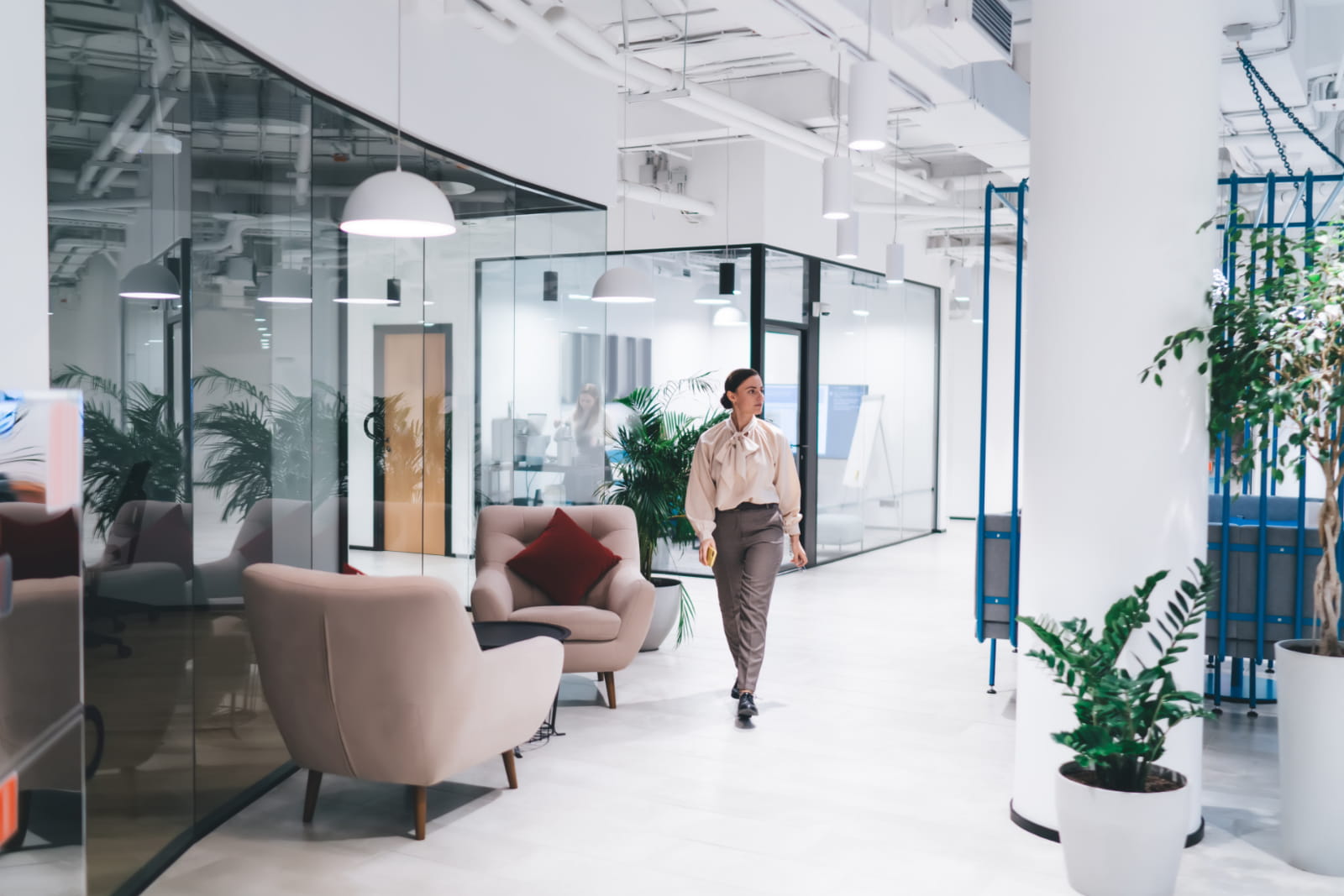
Finding the Best Interior Design Firms for Corporate Offices
The best interior design firms for corporate offices do more than make a workspace look polished. They understand how people work, how businesses operate, and how a physical environment can support productivity, wellbeing, collaboration, and brand identity. In a modern office, design affects how employees move, meet, focus, communicate, and feel throughout the day.
For corporate businesses, choosing the right design partner can shape the entire office experience. A well-planned workspace can improve first impressions, reduce wasted space, support hybrid work, and help teams feel proud of where they work. The strongest commercial interior design firms bring together strategy, creativity, project control, and practical delivery, so the final space works beautifully and performs well over time.
Why Corporate Offices Need Specialist Interior Design Firms
Corporate offices have changed dramatically in recent years. They are no longer built only around fixed desks, meeting rooms, and reception areas. Today, they need to support focused work, teamwork, video calls, informal meetings, client visits, staff wellbeing, and future growth.
This matters because the office now has to earn its place in the working week. Stanford research found that working from home increased performance by 13% in a nine-month study, partly because employees worked in quieter conditions and took fewer breaks and sick days. This does not mean offices are less valuable. It means they need to offer clear benefits that home working cannot always provide, such as better collaboration, stronger culture, client-facing spaces, learning opportunities, and shared team energy.
Specialist interior design firms know how to balance all these needs. They consider circulation, natural light, acoustics, furniture, branding, storage, technology, accessibility, and employee comfort. Their job is to create a workplace that feels professional and inviting while still supporting the daily realities of the business.
What the Best Interior Design Firms Actually Do
The best interior design firms begin by understanding the business before they start designing. They look at team size, workflow, departments, client-facing areas, future plans, budget, and the company’s culture. This helps them create a design that is practical, brand-aligned, and tailored to how the organisation really works.
Their role often includes consultation, needs assessment, space planning, layout design, concept development, material selection, furniture planning, costing, procurement, project management, site supervision, and final installation. In a corporate office project, this joined-up process is important because every decision affects the next stage of the project.
Key responsibilities often include:
- Understanding business goals, brand identity, and staff needs
- Analysing how teams move, meet, focus, and collaborate
- Creating space plans that improve flow and functionality
- Developing design concepts, mood boards, and visual direction
- Selecting suitable finishes, furniture, lighting, and materials
- Planning ergonomic workstations and shared team spaces
- Preparing budgets, procurement plans, and delivery timelines
- Coordinating contractors, suppliers, and installation teams
- Managing site progress, quality checks, and final handover
This broad role is why corporate office design should not be treated as a simple furniture or décor project. A design decision can affect productivity, staff comfort, acoustic performance, client experience, maintenance costs, and future flexibility. The best firms look at the full picture before they recommend a layout or finish.
They also help businesses avoid fragmented decision-making. When space planning, furniture, construction, joinery, procurement, and project delivery are all managed separately, the project can become harder to control. A strong commercial design partner keeps the process connected, so the finished office feels cohesive and performs as intended.
Key Qualities of the Best Interior Design Firms for Corporate Offices
Strong commercial interior design firms have a clear process. They should be able to guide a client from early consultation through to final handover with confidence and structure. This includes understanding the brief, developing design concepts, preparing layouts, managing budgets, coordinating suppliers, and overseeing the build process.
They should also be practical as well as creative. A beautiful office that does not support workflow, storage, comfort, or long-term use will quickly become frustrating. Leesman’s workplace experience data shows that the average workplace experience score improved from 64.3 in 2019 to 69.5 in 2024, which suggests that businesses are paying closer attention to how well offices support people after the pandemic.
The best firms also understand that people use offices in different ways. Some employees need quiet focus spaces, while others need access to project rooms, team tables, meeting booths, client areas, and informal social spaces. A good corporate office is not one-size-fits-all. It gives people options and makes each area work harder.
Strategy Before Style
A good corporate office starts with strategy. Before choosing finishes or furniture, the design team needs to understand what the business wants the space to achieve. This could include improving collaboration, making better use of space, creating a stronger client experience, supporting employee wellbeing, or preparing for growth.
This is especially important now that hybrid work has changed the role of the office. Gensler’s workplace research highlights the need for human-centred design that supports both individual and collective work. That means the office cannot simply be a place where people sit. It needs to help them work better together, solve problems, build trust, and feel connected to the business.
When strategy leads the design process, every element has a purpose. Meeting rooms are placed where they make sense, quiet zones are protected from noise, social areas encourage connection, and brand elements feel natural rather than forced. This is what separates thoughtful commercial design from surface-level styling.
Space Planning That Supports Real Work
Space planning is one of the most valuable services offered by professional interior design firms. It looks at how people move through the office, how departments interact, where bottlenecks happen, and which areas are underused. A strong layout can make the office feel larger, calmer, and easier to work in.
A 2024 workplace study using 614 worker survey responses from the United States and Canada found that perceived work performance was higher in the office, while comfort and wellbeing were higher at home. This is useful because it shows the challenge clearly. Offices can be strong places for performance, but they still need to improve comfort, choice, and overall experience.
Good space planning also helps businesses avoid unnecessary costs. If every square metre is used properly, a company may not need to expand or relocate as quickly. Flexible rooms, shared zones, breakout spaces, and clever storage can all help the office work harder without feeling cramped.
Brand Identity Built Into the Workspace
A corporate office should reflect the company behind it. This does not mean placing logos everywhere. It means using colour, materials, finishes, artwork, furniture, signage, and spatial experience to communicate the company’s values and personality. A workspace can feel innovative, calm, premium, energetic, inclusive, or practical depending on how it is designed.
The best interior design firms know how to translate brand identity into a physical environment. They create spaces that feel consistent with the company’s image, while still being comfortable and useful for employees. This helps clients and visitors form the right impression from the moment they enter the office.
Brand-led design also matters for staff pride. Leesman measures workplace experience partly through how the workplace supports pride, productivity, and community, which shows that office design is not only about function. It also shapes how people feel about belonging to the organisation.
Employee Wellbeing and Productivity
Office design has a direct impact on how employees feel and perform. Lighting, noise levels, desk comfort, chair support, access to natural light, and the layout of work zones all affect focus, energy, and stress levels. A poorly planned office can create distractions and discomfort, while a thoughtful one can help people do their best work.
Workplace wellbeing is especially important because employees now compare the office with the comfort and control they may have at home. Gensler’s 2025 workplace research found that 40% of global workers prioritise access to natural light and operable windows, while 36% prefer workspaces enhanced with greenery. These details are not decorative extras. They influence whether people feel comfortable, energised, and willing to spend time in the office.
Modern corporate offices often include quiet areas, focus rooms, call booths, collaboration zones, pause areas, canteens, and informal meeting spaces. These features give employees more choice in how and where they work. When people feel supported by their environment, they are more likely to feel engaged, comfortable, and connected to the business.
Flexibility for Hybrid Work and Future Growth
The best corporate offices are designed to adapt. Many businesses now need spaces that can support changing team sizes, hybrid work patterns, new technology, and different ways of working. Fixed layouts and rigid furniture can quickly become limiting if the business grows or changes direction.
Hybrid work has also raised the standard for what the office needs to offer. Research reported in 2024 found that 74% of hybrid workers felt more productive and 76% felt more motivated because of splitting their week between home and office. This means corporate offices need to support the reasons people come in, such as teamwork, culture, training, client meetings, and social connection.
Interior design firms can future-proof a workspace through modular furniture, flexible meeting rooms, adaptable layouts, multi-use zones, and smart planning. This helps businesses avoid expensive redesigns every few years and allows the office to evolve with the organisation.
Practical Project Management
Corporate office projects involve many moving parts. Designers, contractors, suppliers, furniture teams, joiners, electricians, site managers, and decision-makers all need to stay aligned. Without strong project management, timelines can slip, budgets can stretch, and important details can be missed.
This matters because mistakes in built projects can be costly. Industry rework studies often place the cost of fixing mistakes at around 5% to 10% of total project costs, with some projects experiencing more. In office fit-outs, clear coordination, proper drawings, quality checks, and early decision-making help reduce these risks.
This is why the best interior design firms offer more than creative ideas. They bring structure, coordination, quality control, and accountability. A well-managed project gives the client clarity throughout the journey and helps ensure the final office is delivered on time, on budget, and to the right standard.
Services and Expertise at Turnkey Interiors
At Turnkey Interiors, we bring together design, construction, furniture, joinery, building modernisation, procurement, costing, and project management under one roof. We have been shaping corporate workspaces since May 2001, with offices in Johannesburg and Cape Town, and our focus is on creating spaces that support people, performance, and purpose.
We take a full turnkey approach, which means our clients do not need to manage separate service providers for each stage of the project. From early consultation and space planning to 3D visualisation, budgeting, implementation, custom joinery, and final handover, we guide the process with clarity and accountability.
Our services and expertise include:
- Corporate interior design and commercial workspace planning
- Consultation, needs assessment, and strategic design concepts
- Space planning and layout design for efficient flow
- Brand-aligned design, finishes, and workplace experience
- Costing, procurement, and transparent budget planning
- Construction coordination and project management
- Bespoke furniture, custom joinery, and office furniture solutions
- Building modernisation, including façades, lobbies, common areas, and white boxing
- 3D visualisations to help clients understand the proposed design
- Site supervision, quality control, and final implementation
Our design service focuses on creating workspaces that are functional, attractive, brand-aligned, and future-ready. We look at how the business operates, how teams interact, and what the space needs to communicate. This allows us to create office environments that feel tailored, practical, and connected to the client’s goals.
Our wider service offering includes construction, bespoke furniture and joinery, and building modernisation. This means we can support office refurbishments, relocations, new builds, façade upgrades, lobby improvements, white boxing, common-area upgrades, and custom workplace features. By managing these services together, we help clients enjoy a smoother and more controlled project journey.
Why Our Turnkey Model Matters
A corporate office project can become complicated when responsibility is split between too many providers. Our turnkey model gives clients a single partner who understands the full vision and manages the details from concept to completion. This improves communication, reduces confusion, and helps protect quality throughout the project.
We also place strong emphasis on transparent costing, practical planning, proactive communication, and quality control. Our team includes experienced designers, project managers, quantity surveyors, site professionals, account managers, and joinery specialists. This allows us to deliver offices that are not only visually strong, but also suitable for real business use.
Our turnkey model supports clients through:
- A single point of responsibility from concept to completion
- Better coordination between design, build, furniture, and joinery
- Clearer communication throughout the project
- Practical budget planning and transparent costing
- Stronger control over timelines, quality, and site delivery
- Fewer gaps between design intent and final installation
- Custom solutions that suit the business, brand, and building
- A smoother experience for clients who need to stay focused on daily operations
This model is especially useful for corporate clients because office projects often need to happen while the business is still operating. Clear planning and delivery control help reduce disruption, protect productivity, and keep the project moving in the right direction.
It also gives clients greater confidence. Instead of trying to coordinate separate suppliers, contractors, furniture providers, and site teams, they can work with one partner who understands the full scope. That creates a more accountable process and a more cohesive final workspace.
How to Compare Interior Design Firms Before Choosing One
When comparing interior design firms, businesses should look beyond visuals. A strong portfolio matters, but it should be supported by a clear process, practical expertise, transparent costing, and the ability to manage delivery. The right firm should ask detailed questions about your people, operations, brand, budget, and future plans.
It is also worth looking at whether the firm can support the full project journey. Corporate office design usually involves much more than concept work. You may need space planning, procurement, construction coordination, furniture selection, custom joinery, site supervision, and aftercare. A partner that can manage these elements together can make the process simpler and more reliable.
Another important factor is communication. A reliable interior design firm should keep you informed at every stage of the project, from initial concepts to final installation. Clear communication helps prevent misunderstandings, ensures that expectations are aligned, and allows for quicker decision-making when adjustments are needed. Regular updates, progress reports, and accessible points of contact can make a significant difference in how smoothly the project runs.
Finally, consider the firm’s experience with similar projects. Corporate offices vary widely depending on industry, company size, and operational needs. A firm that has worked on comparable projects will better understand the challenges and opportunities involved. Their past experience can help them anticipate potential issues, recommend practical solutions, and deliver a workspace that meets both functional and aesthetic goals.
Questions to Ask Before Appointing a Firm
Before choosing a commercial interior design partner, ask how they approach the discovery stage. A good firm should want to understand your business before recommending solutions. They should also explain how they manage budgets, timelines, approvals, communication, site issues, and quality checks.
You should also ask how they make the design easy to understand before work begins. Tools such as 3D visualisations and clear layouts can help decision-makers see the proposed office and give feedback early. This reduces uncertainty and helps everyone feel more confident before implementation starts.
It is also helpful to ask about their experience with similar corporate projects and how they handle challenges during the build phase. A reliable firm should be able to share examples of past work, explain how they resolved issues on site, and demonstrate how they keep projects on track when unexpected changes arise. This level of transparency can give you greater confidence in their ability to deliver a successful outcome.
Common Mistakes to Avoid When Choosing Interior Design Firms
One common mistake is choosing purely on price. A low-cost proposal may seem attractive at first, but it can become expensive if the design does not function well, materials do not last, or project coordination is weak. Good commercial interior design should provide long-term value, not just short-term savings.
Another mistake is focusing only on appearance. A corporate office needs to do more than impress visitors. It must support daily work, wellbeing, collaboration, storage, technology, privacy, and future change. The best results come from firms that understand both the creative and practical sides of workplace design.
Common mistakes to avoid include:
- Choosing a firm based only on the lowest quote
- Looking at visuals without checking the design process
- Ignoring space planning, workflow, and team movement
- Underestimating the importance of acoustics and lighting
- Forgetting about future growth or hybrid work needs
- Failing to ask about project management and site control
- Overlooking budget transparency and procurement planning
- Choosing trendy finishes that may date too quickly
- Not checking whether the firm can manage delivery as well as design
These mistakes usually happen when businesses treat office design as a once-off visual upgrade rather than a strategic project. A corporate office affects how people work every day, so it needs to be planned around real behaviour, not assumptions.
The safer approach is to choose a design partner that asks the right questions early, explains the process clearly, and understands both creative design and practical delivery. This gives the project a stronger foundation and helps the final office support the business for years to come.
Create a Space That Works
The best interior design firms for corporate offices are the ones that combine creativity with strategy, structure, and practical delivery. They understand that a workspace must support employees, reflect the brand, improve efficiency, and adapt as the business grows. A well-designed office is not just a nicer place to work. It is a tool that can support culture, performance, and long-term success.
At Turnkey Interiors, we help businesses create corporate workspaces that are thoughtful, functional, and built around real needs. Whether you are planning a refurbishment, relocation, building modernisation project, or complete office fit-out, we are ready to guide the process from concept to completion. Get in touch with Turnkey Interiors today, and let us help you create a workspace that works beautifully for your business.
FAQs About Interior Design Firms
What Do Interior Design Firms Do for Corporate Offices?
Interior design firms plan, design and deliver office spaces that support how a business works every day. For corporate offices, this usually includes consultation, needs assessment, space planning, layout design, furniture selection, material choices, lighting, branding, costing and project management. A good firm looks at workflow, team structure, client-facing areas, employee wellbeing and future growth before recommending a design. The goal is not only to create a polished office, but to create a workplace that improves productivity, supports collaboration, reflects the brand and makes better use of available space.
How Do I Choose the Right Interior Design Firm for an Office Project?
Start by looking for interior design firms with proven experience in corporate office projects. A strong portfolio is useful, but it should be backed by a clear process, transparent costing and practical project delivery skills. Ask how the firm handles consultation, space planning, budgeting, procurement, construction coordination and site management. You should also check whether they understand your brand, culture, workflow and future plans. The right firm should ask detailed questions before offering solutions. They should also make the design easy to understand through layouts, visuals and clear communication.
Why Is Office Interior Design Important for Employee Productivity?
Office interior design affects how people focus, collaborate, move and feel during the workday. Poor layouts can create noise, clutter, distractions and inefficient movement. Thoughtful design can support quiet work, teamwork, informal meetings, video calls and staff wellbeing. Elements such as natural light, ergonomic furniture, acoustic control, clear circulation and comfortable break areas all influence how employees experience the workplace. When staff feel supported by their environment, they are more likely to feel engaged and productive. A well-designed office can also help create pride, connection and a stronger sense of belonging.
Can Interior Design Firms Help With Brand Identity?
Yes, experienced interior design firms can translate brand identity into the physical workplace. This goes beyond adding logos or using brand colours. It includes materials, finishes, furniture, artwork, signage, lighting and the overall feel of the space. A corporate office should tell visitors, clients and employees something about the business from the moment they enter. For example, a company may want to feel innovative, premium, welcoming, sustainable or practical. Good design makes those values visible in a natural way while still keeping the office functional, comfortable and suitable for everyday work.
What Makes Turnkey Interiors Different From Other Interior Design Firms?
At Turnkey Interiors, we offer a complete turnkey service for corporate office projects. This means we bring design, construction, furniture, joinery, building modernisation, procurement, costing and project management together under one roof. We have been shaping South African workspaces since May 2001, with offices in Johannesburg and Cape Town. Our team focuses on creating spaces that support people, performance and purpose. From consultation and space planning to 3D visualisation, budgeting, implementation and final handover, we guide clients through the full process with clarity, accountability and practical support.


Leave a Reply