

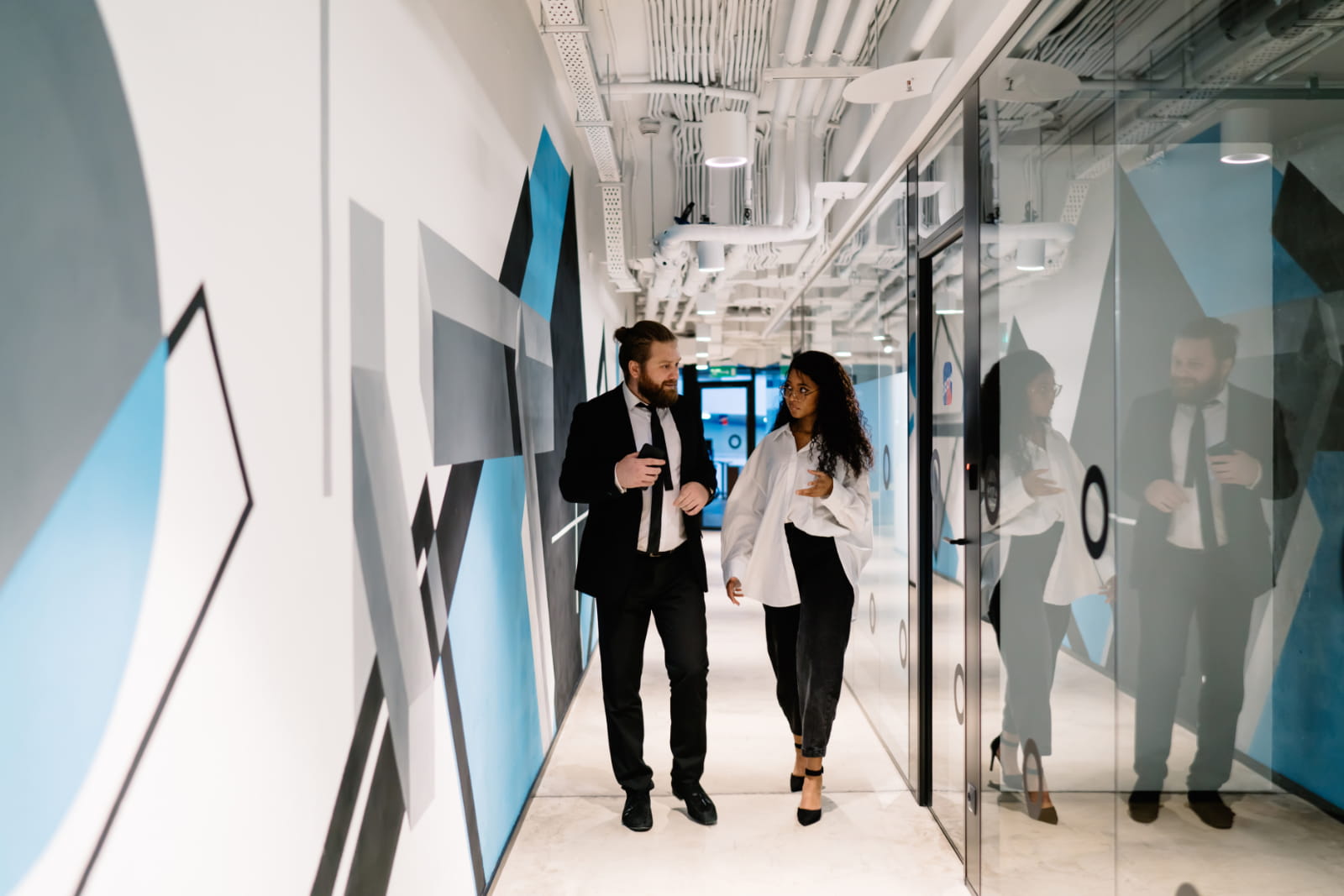
A Guide to Office Interior Styling and Branding Integration
Office interior styling is about much more than making a workplace look attractive. The best interior design firms combine styling with brand identity so that layouts, colours, materials, furniture, lighting and visual details communicate something meaningful about the business. Done well, the office becomes a physical expression of the organisation rather than simply somewhere employees work.
This approach also needs to balance appearance with everyday performance. Employees still require comfortable workstations, quiet areas, collaborative spaces and practical circulation. Visitors need to understand where to go and form a strong first impression. Bringing these considerations together creates an office that communicates the brand while supporting the people who use it.
What Is Office Interior Styling and Branding Integration?
Office interior styling covers the visual details that give a workplace character, including furniture, artwork, colours, lighting, decorative features and material combinations. Branding integration connects those choices to the organisation’s personality, values and positioning. Instead of selecting features because they simply look fashionable, designers consider what each element says about the business.
Effective integration should also feel natural. Filling an office with logos or repeating corporate colours on every available surface can make the branding feel forced. A better approach is to identify a few important qualities the organisation wants to communicate and translate those ideas into the overall workplace experience.
Important elements can include:
- Colour: Use brand colours selectively through upholstery, walls, artwork and smaller accents.
- Materials: Choose finishes that reflect qualities such as warmth, innovation, sustainability or sophistication.
- Furniture: Select styles that reinforce the desired workplace culture while meeting ergonomic requirements.
- Lighting: Match lighting levels and atmosphere to the purpose and personality of different spaces.
- Graphics and signage: Reinforce identity through typography, imagery and wayfinding.
- Space planning: Use layouts to support values such as collaboration, privacy, openness or flexibility.
- Artwork and accessories: Add personality without turning the workplace into an advertising display.
The goal is to build recognition through consistency rather than repetition. A workplace should ideally still feel connected to the company even if prominent logos were removed. Materials, furniture, colours and the overall atmosphere should tell the same story as the organisation’s broader identity.
Styling also has to support the people using the space. A beautiful branded environment will quickly lose its appeal if furniture is uncomfortable, meeting rooms are difficult to use or employees cannot concentrate. Brand integration therefore works best when aesthetics and functionality are developed together.
Why Should Branding Be Part of Office Interior Design?
The physical workplace is one of the few places where employees, clients and visitors can experience a brand directly. A 2024 global study involving more than 16,000 office workers found that employees increasingly judge workplace performance not only by whether the space functions, but also by how the environment makes them feel. This makes workplace experience relevant to branding as well as operational design.
There is also an employee-engagement reason to think carefully about the office environment. Global workplace data for 2025 found that only 20% of employees were engaged at work, while 64% were not engaged. Office design cannot solve engagement problems by itself, but an environment that visibly supports culture, connection and employee needs can reinforce the wider experience an organisation is trying to create.
The important point is consistency. A business that promotes collaboration but provides few places for teams to work together creates a gap between its stated culture and employees’ daily experience. Likewise, a company positioned as progressive may struggle to reinforce that message through an inflexible or dated workplace. Interior branding helps align what the organisation communicates with what people actually experience.
How Do Interior Design Firms Translate a Brand Into a Workplace?
Experienced interior design firms usually begin by understanding the business rather than choosing paint colours or furniture immediately. Designers need to know how employees work, what clients expect, what differentiates the company and how people should feel when entering the office.
Descriptive ideas such as innovative, trustworthy, established, approachable or energetic can then be converted into practical design decisions. This gives the project a clear direction and prevents styling from becoming a collection of unrelated visual choices.
A useful process can include:
- Define the company’s most important values and characteristics.
- Identify how employees currently use the workplace.
- Consider what visitors should understand or feel when they arrive.
- Develop moodboards with suitable colours, materials, textures and furniture.
- Connect space planning with the organisation’s culture and working patterns.
- Decide where branding should be obvious and where it should remain subtle.
- Create visualisations before committing to major finishes or construction.
- Review the concept for practicality, durability and budget.
Moodboards are particularly helpful because abstract brand values can be difficult to describe through words alone. Bringing finishes, textures, imagery and furniture references together makes it easier to see whether the proposed design communicates the intended personality.
Brand translation should nevertheless avoid becoming too literal. A company does not need to reproduce its website inside its office. The physical workplace has different requirements, so interior design firms need to interpret the brand in ways that work spatially while maintaining enough visual consistency to make the connection recognisable.
How Can Colour, Materials and Furniture Support Your Brand?
Colour is one of the easiest ways to establish visual continuity, but it needs restraint. Strong corporate colours may work well on feature walls, furniture details or social areas, while quieter tones can make concentration spaces more comfortable.
Materials communicate personality in subtler ways. Natural finishes can introduce warmth, glass can strengthen a sense of transparency, while carefully selected premium finishes can help communicate refinement. Furniture adds another layer because its shape, finish and flexibility affect both appearance and how employees interact with the workplace.
When making these choices:
- Use strong brand colours as controlled accents rather than everywhere.
- Match finishes to the level of traffic each area receives.
- Select materials that reinforce the desired personality of the company.
- Consider maintenance requirements before choosing delicate finishes.
- Choose ergonomic furniture suitable for extended everyday use.
- Use modular furniture where teams or layouts regularly change.
- Coordinate upholstery, flooring and joinery rather than selecting each separately.
Design choices should also reflect what different areas are expected to do. Reception areas may justify more distinctive finishes because they influence first impressions, while work areas might prioritise comfort, acoustics and durability.
A balanced approach also protects the project budget. Not every surface needs a premium finish to achieve a high-quality result. Concentrating distinctive materials or bespoke details in important areas can create impact while allowing more practical finishes to handle high-use areas economically.
How Should Space Planning Reflect Company Culture?
Company culture is expressed through the way people interact, not only through visual branding. Modern workplace data illustrates why this matters. A global study of office workers found that employees spent about 40% of their working time alone and another 40% working with others. A workplace designed only for individual desk work therefore ignores a substantial part of how employees actually operate.
The office also needs variety. In a 2024 study, 94% of employees working in environments described as exceptional had a choice about where to work within the office. That finding is important because choice allows people to move between focus rooms, meeting areas, collaborative spaces and informal settings depending on the task rather than forcing every activity into one type of workspace.
Space planning can therefore reinforce culture practically. A collaborative organisation might provide project zones and social spaces, while teams dealing with confidential information need enclosed areas. The key is to understand actual working patterns first. Brand values should shape the layout, but the layout must ultimately help employees perform their work effectively.
How Can Lighting, Graphics and Smaller Details Strengthen Branding?
Lighting contributes to both usability and atmosphere. Employees might require brighter task lighting at workstations, while reception areas can use accent lighting to emphasise materials or features. Social areas can have a softer atmosphere. These differences help people understand how spaces are intended to be used while also shaping the emotional character of the workplace.
Smaller details become particularly important when employees spend substantial time in the office. Global workplace research found that workers spend about 51% of a typical working week in their company office, despite the growth of hybrid working. This means employees experience signage, lighting, finishes and graphics repeatedly, so small design decisions contribute to their overall perception of the environment.
Graphics should therefore be purposeful. Company values, imagery, custom artwork and wayfinding can reinforce identity without covering every wall in promotional messaging. Upholstery, typography, handles, decorative objects and other minor elements can also support the wider design language. Individually these details are small, but together they create visual consistency.
Why Should Branding Be Integrated Early in the Design Process?
Brand integration becomes much easier when it forms part of the initial brief. Waiting until layouts, construction details and finishes have been approved can reduce branding to graphics placed onto surfaces that were never designed with the organisation’s identity in mind.
Early planning gives designers more ways to incorporate the brand into permanent and semi-permanent features. It also allows branded elements to be considered alongside budgets, material availability, furniture requirements and construction work.
Early integration allows businesses to:
- Define brand objectives before developing the design concept.
- Include branding within layout and material decisions.
- Coordinate colours, furniture, graphics and finishes.
- Identify important feature areas before allocating the budget.
- Avoid expensive changes late in construction.
- Use visualisations to test ideas before installation.
- Distinguish essential branding elements from optional additions.
This process can also reduce overdesign. Once the most important brand messages have been identified, designers can decide where stronger visual expression is appropriate and where the office should remain quieter.
Budget priorities become clearer at the same time. A business might invest more heavily in reception, meeting rooms and client-facing areas while using simpler branded touches elsewhere. Starting early gives the design team more opportunities to achieve impact without relying on expensive additions at the end of the project.
How Do You Balance Branding With Practical Workplace Needs?
Functionality must remain at the centre of the office. A global workplace study found that 94% of employees in high-performing workplaces believed being in the office had a positive effect on their individual productivity, compared with only 45% of employees in low-performing workplaces. This large difference illustrates why design quality should be assessed by how well the workplace supports people, not simply by how impressive it looks.
Practical requirements include acoustics, circulation, storage, ergonomics, meeting capacity and opportunities for both focus and collaboration. These requirements become even more important as businesses adapt to changing attendance patterns. In one 2024 workplace survey, 74% of organisations recorded utilisation above 60% on peak days, while only 28% maintained that level across the entire week. Offices therefore need to cope with both busy and quiet periods.
Durability also matters. High-traffic passages and reception areas need different finishes from low-use meeting rooms. Furniture must withstand daily use, and attractive materials should not create unnecessary maintenance problems. Successful branding works within those practical constraints instead of competing with them.
How Can Office Styling Support Future Change?
Hybrid working has made adaptability increasingly important. A 2024 global workplace report found that 80% of office occupiers had adopted hybrid policies they expected to maintain. This means many organisations are planning offices for employee populations that no longer occupy every desk simultaneously.
Workplace utilisation data continues to reinforce that shift. More recent benchmarking recorded average office utilisation at 53% and global occupancy at 111%, meaning more employees were assigned to buildings than there were physical seats. The figures show why flexible layouts and shared environments are becoming more important than simply providing one permanent workstation per employee.
Styling should therefore combine permanent and flexible elements. Core architectural finishes can represent long-term aspects of the brand, while furniture, artwork, graphics and accessories provide opportunities for easier updates. Modular furniture and multipurpose spaces can also help businesses adapt as teams grow, working patterns change or branding evolves.
Who Offers Office Interior Styling and Branding Integration?
At Turnkey Interiors, we integrate styling and branding into the broader workplace-design process rather than treating them as separate finishing touches. We consider the client’s brand, organisational culture, workflow, employees, available space and future plans before developing the interior concept.
Our integrated service allows us to connect creative decisions with practical delivery. Because space planning, interior design, costing, furniture and project implementation are considered together, we can develop a workplace that communicates the brand without ignoring operational requirements.
Our services include:
- Workplace consultation and needs assessment
- Office interior design
- Space planning
- Styling and brand integration
- Moodboards and material selections
- 3D visualisation
- Costing and budgeting
- Furniture solutions
- Custom joinery
- Fit-out and refurbishment
- Project management
- Final implementation and handover
We can also use visualisations to help clients understand the proposed workplace before implementation. This gives teams an opportunity to assess layouts, finishes and branding decisions before committing to construction or procurement.
Our goal is to create an environment in which branding, styling and functionality support one another. By managing these considerations as part of one coordinated process, we can create distinctive workplaces that reflect the organisation while remaining practical for the people who use them every day.
Bringing Your Workplace and Brand Together
Successful office branding creates consistency between what an organisation says about itself and what employees and visitors actually experience. Skilled interior design firms achieve this by combining layout, furniture, colours, materials, lighting and visual details with practical workplace requirements. When these elements are planned together, branding becomes part of the environment rather than decoration applied at the end.
At Turnkey Interiors, we bring workplace strategy, interior design, space planning, styling and project delivery together to create offices that work as well as they look. If your business is planning a new workplace or refreshing an existing one, get in touch with us to discuss how we can create an office that reflects your brand, supports your employees and remains adaptable for the future.
FAQs About Interior Design Firms
How Do Interior Design Firms Integrate Branding Into Office Spaces?
Interior design firms can integrate branding by translating a company’s identity into physical design choices. This may include colour palettes, materials, furniture, lighting, signage, artwork and space planning. The aim is not to cover an office with logos, but to create a consistent environment that reflects the organisation’s personality and values. For example, an innovative company may prefer flexible layouts and contemporary finishes, while a sustainability-focused business may favour natural materials and biophilic elements. Good branding integration also considers employee experience, visitor impressions and everyday functionality, ensuring the workplace feels distinctive without becoming overly decorative or impractical over time too.
When Should You Involve an Interior Design Firm in Branding Integration?
You should involve an interior design firm early, ideally before layouts, finishes and major construction decisions are finalised. Early involvement gives designers more opportunities to integrate branding into the structure of the workplace rather than adding it at the end. They can align space planning, materials, furniture, lighting and graphics with the company’s identity from the start. This also helps with budgeting because important branded features can be prioritised before money is committed elsewhere. Early collaboration reduces the risk of costly changes later and makes it easier to create a workplace where visual identity and practical requirements feel properly connected.
What Is the Difference Between Interior Styling and Branding Integration?
Interior styling focuses mainly on the visual character of a workplace, including furniture, finishes, artwork, lighting, accessories and decorative details. Branding integration goes further by linking those styling choices to the company’s values, culture and positioning. A stylish office may look attractive without saying anything specific about the organisation, while a branded workplace is designed to communicate a recognisable identity. The two work best together. Interior design firms can use styling to reinforce brand personality while making sure the office remains functional, comfortable and suitable for daily use. This creates a more coherent experience for employees, clients and visitors alike.
Can Interior Design Firms Keep Branding Consistent Across Multiple Offices?
Yes, interior design firms can help maintain brand consistency across offices by creating a clear design language that can be adapted to different locations. This may include agreed colour palettes, furniture styles, materials, signage standards, lighting principles and branded graphic elements. Consistency does not mean every office must look identical. Designers can adjust layouts and finishes to suit building conditions, team requirements and available space while preserving the core identity. This approach is especially useful for growing companies because it creates recognisable workplaces across multiple sites without forcing a rigid template that ignores practical differences between locations or employee needs.
What Should You Look for in an Interior Design Firm for Branding Integration?
When choosing an interior design firm for branding integration, look for experience in space planning, workplace design, furniture, finishes, visualisation and project delivery. The firm should ask about your brand values, culture, employees, workflow and future plans before recommending a design direction. It should also be able to explain how branding choices will affect functionality, durability and budget. Ask to see relevant project examples and understand how the team moves from concept to implementation. A strong partner should balance aesthetics with practical requirements, helping you create a workplace that feels recognisable, supports employees and can adapt as the business changes.


Leave a Reply