

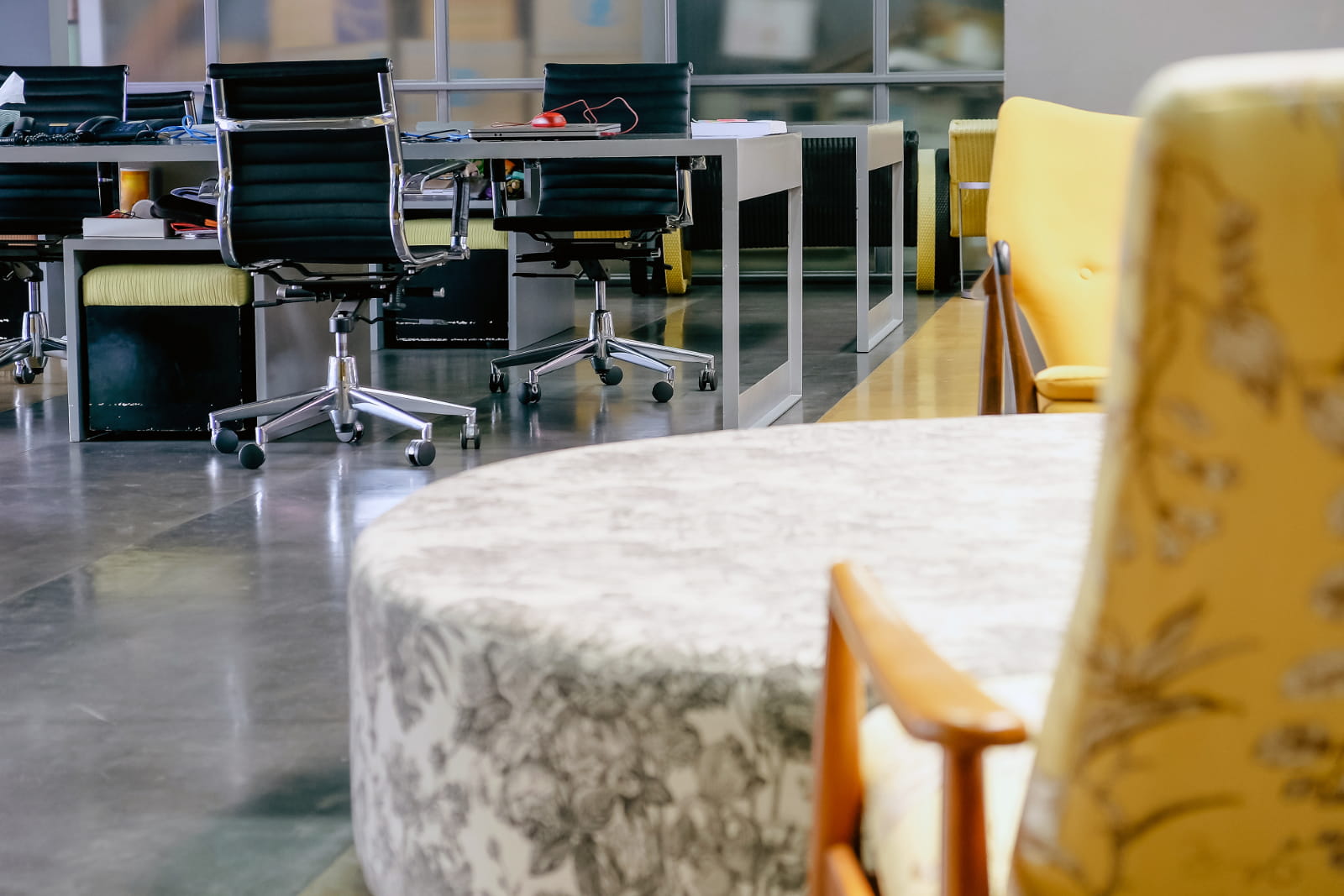
Durable Materials for High-Traffic Corporate Offices
Choosing the right materials for corporate offices is essential when reception areas, corridors, meeting rooms and shared workspaces have to cope with constant daily use. Flooring, furniture, upholstery and work surfaces can all deteriorate quickly if they are selected mainly for appearance rather than performance. A durable workplace therefore needs materials that resist wear, remain easy to maintain and continue looking professional after years of regular use.
Durability does not mean creating an office that feels industrial or purely functional. Modern commercial materials are available in a wide range of colours, textures and finishes, allowing businesses to combine long-term performance with a strong workplace identity. The best results come from understanding how each office area is used and choosing materials according to traffic levels, cleaning requirements, acoustics, safety and expected maintenance.
What Makes Materials for Corporate Offices Durable?
Durable materials for corporate offices need to withstand much more than occasional foot traffic. Floors may face constant movement from employees, visitors, office chairs and equipment, while desks, counters and partitions can experience repeated contact throughout the working day. A suitable commercial material should resist abrasion, staining, scratching and impact while remaining relatively easy to clean.
Businesses should also consider what happens when a material is eventually damaged. A product that can be repaired, refinished or replaced in sections may offer better long-term value than one requiring complete replacement. Maintenance requirements, moisture resistance and the expected intensity of use should therefore form part of the specification process from the beginning.
Important durability factors include:
- Resistance to scratching, abrasion and impact
- Stain and moisture resistance
- Easy routine cleaning and maintenance
- Slip resistance where safety is important
- Acoustic performance in busy workplaces
- Ability to withstand frequent commercial cleaning
- Repairability or modular replacement
- Long expected service life
- Compatibility with the intended office environment
- Ability to retain its appearance over time
These qualities will not carry equal importance in every part of an office. A reception floor may require exceptional resistance to abrasion, while an open-plan work area may need stronger acoustic properties. A kitchen worktop, meanwhile, needs to cope with spills and repeated cleaning rather than heavy foot traffic.
The most effective approach is therefore to define what each area needs before comparing products. Selecting materials according to actual use reduces the risk of premature failure and helps businesses avoid paying for unnecessary performance in areas that experience relatively little wear.
Choose Flooring According to Traffic Levels
Flooring is one of the hardest-working elements in a corporate workplace. Entrance areas, passages and lift lobbies can experience considerably more wear than private offices or meeting rooms, which means using one flooring specification throughout an entire workplace is not always practical. Research into commercial flooring shows that some properly specified high-traffic flooring systems can remain operational for 10 to 20 years or longer, depending on the product, installation and intensity of use.
Luxury vinyl tile, porcelain, commercial carpet, rubber, polished concrete and resin flooring all offer different benefits. Porcelain can be particularly useful in entrances and other demanding areas because it resists scratches, stains and moisture. Luxury vinyl tile offers more design flexibility and can replicate the appearance of timber, stone or concrete while still providing the practical advantages of resilient flooring.
Businesses should also consider noise, comfort and maintenance rather than relying on lifespan alone. Rubber can offer greater underfoot comfort and slip resistance, while carpet helps reduce sound. Hard surfaces can be more practical where spills and dirt are common. Matching the floor to the activity within each area will usually provide better long-term performance than simply selecting the toughest available material.
Use Carpet Tiles Where Acoustics and Repairability Matter
Commercial carpet tiles are particularly useful in offices where noise control matters. Open-plan workplaces create significant footfall, conversation and chair movement, all of which can contribute to distraction. Certain commercial carpet systems with specialised acoustic backing can reportedly reduce impact sound by up to around 30 dB, although actual performance depends on the product, backing and installation.
Commercial carpet should also be distinguished from ordinary residential flooring. Products intended for intensive workplace use may carry classifications such as Class 33 under EN 1307, indicating suitability for heavy commercial environments. Dense fibres, durable backing and stain-resistant constructions help these products withstand frequent foot traffic without deteriorating as quickly as carpets designed for domestic settings.
The modular format provides another practical advantage. If a small part of the floor becomes stained, damaged or excessively worn, individual tiles can be lifted and replaced rather than removing an entire continuous carpet. Keeping spare tiles from the original installation can make these repairs easier while reducing material waste, disruption and long-term maintenance expenditure.
Consider Hard Surfaces for the Busiest Areas
Polished concrete, terrazzo, porcelain and resin-based flooring can perform well in reception areas, corridors, cafés and other workplace zones where foot traffic is especially intense. These surfaces resist abrasion and are generally easier to clean than many softer materials, making them useful in places where dirt, moisture and frequent use are expected.
Resin-based systems can also provide useful performance advantages where seamless construction is required. Removing joints and grout lines reduces the number of places where dirt and moisture can collect. However, preparation and installation quality remain critical. Even a high-performance material can fail prematurely if the substrate is poorly prepared or the product is incorrectly installed.
Harder surfaces do create additional design considerations. Reflective floors can contribute to higher noise levels, and materials such as concrete may provide less underfoot comfort than carpet or rubber. Combining durable flooring with acoustic ceilings, upholstered furniture, wall treatments and other softer materials can help create a balanced office rather than simply maximising physical toughness.
Select Work Surfaces That Can Handle Daily Use
The floor is not the only part of an office exposed to wear. Reception counters, kitchen surfaces, desks, meeting tables, cabinets and shared workstations can accumulate scratches, stains and impact damage through everyday use. Durable materials for corporate offices should therefore extend to every frequently touched surface.
The appropriate finish will depend on the activity taking place around it. Decorative materials may work well in executive or low-traffic settings, while kitchens, collaborative work areas and reception desks generally require more robust finishes that can tolerate repeated cleaning and contact.
Useful workplace surface options include:
- High-pressure laminates for desks and cabinetry
- Compact laminates for demanding applications
- Solid-surface materials for seamless worktops
- Durable veneers for selected client-facing spaces
- Moisture-resistant finishes for kitchens and refreshment areas
- Scratch-resistant surfaces for shared workstations
- Easily cleaned finishes for high-contact areas
- Replaceable or repairable components where possible
High-pressure and compact laminates are particularly useful because they can provide considerable resistance to scratches and impact while still offering many colours and textures. Solid surfaces may also suit kitchens and reception counters because seamless joins can make routine cleaning easier.
Material decisions should also account for future repair. Replacing a damaged cabinet door or worktop section is far less disruptive than replacing an entire furniture installation. Choosing materials and furniture systems with repairability in mind can therefore extend the effective lifespan of the office.
Choose Upholstery That Balances Comfort and Durability
Office chairs, reception seating and breakout furniture can experience intensive daily use, so fabric should be selected according to commercial demands rather than appearance alone. Durable upholstery helps furniture retain its appearance while reducing the need for frequent replacement or reupholstering.
Natural materials can also offer useful performance characteristics. Wool, hemp, linen and felt provide different combinations of strength, comfort and acoustic performance. The important factor is ensuring the chosen fabric is appropriate for the amount of use the furniture will receive.
When comparing upholstery, businesses should consider:
- Resistance to abrasion and repeated contact
- Ease of cleaning
- Stain resistance
- Colourfastness
- Suitability for commercial environments
- Acoustic properties
- Comfort and breathability
- Availability of replacement fabric
- Responsible sourcing
- Ability to reupholster the furniture later
The colour and location of the upholstery matter as well. Light or delicate fabrics can become visibly marked more quickly in receptions and shared breakout areas, while harder-wearing finishes may make more sense in spaces experiencing constant use.
Furniture should not automatically be discarded when its fabric begins looking tired. If the frame and cushioning remain structurally sound, reupholstery may extend its lifespan considerably. This can reduce unnecessary waste while allowing businesses to update the appearance of a workplace without replacing complete furniture items.
Factor Sustainability Into Material Selection
Sustainability and durability are closely connected. A material with an attractive environmental story may still create unnecessary waste if it needs replacing frequently. Long-lasting materials can reduce replacement cycles, making expected service life one of the most important sustainability considerations within workplace design.
Businesses now have access to a wider range of options incorporating reclaimed or recycled content. Reclaimed timber, recycled glass, recycled terrazzo, natural clay finishes and recycled textiles can all contribute to more responsible interiors. Some clay-based wall finishes also provide low-VOC alternatives while offering breathable properties that can help regulate moisture within interior environments.
Repairability strengthens this approach further. Modular flooring allows damaged sections to be replaced locally, while reupholstery can extend furniture life. Combining recycled content, responsible sourcing, low-emission finishes and long service life creates a more meaningful sustainability strategy than choosing materials based solely on whether they are labelled natural or recycled.
Look at Lifecycle Cost Rather Than Purchase Price
Initial cost does not reveal the true value of a workplace material. Installation, cleaning, repair, replacement and disruption all affect the amount a business eventually spends. A product that costs more upfront may still represent better value if it performs reliably, requires less maintenance and avoids frequent replacement.
This is particularly important in areas where access is difficult or disruptive. Replacing flooring in a main corridor or busy reception may require employees to be rerouted, furniture to be moved and work to be completed outside normal operating hours. These indirect costs can be substantial even when they do not appear on the original material quotation.
Modular products can help reduce these costs because damaged areas can often be repaired locally. Carpet tiles and some resilient flooring systems allow individual sections to be replaced rather than removing a complete floor. Looking at the entire life of a material therefore gives businesses a much clearer picture of value than comparing purchase prices alone.
Match Materials to Different Office Zones
A corporate office contains several environments with very different requirements. Entrances experience dirt, moisture and continuous foot traffic, while open-plan offices may have greater acoustic concerns. Kitchens need easy-to-clean surfaces, and meeting rooms may place greater emphasis on appearance and comfort.
Matching materials for corporate offices to these individual zones makes it easier to balance durability, cost and design quality. Businesses can invest in particularly hard-wearing products where they are most necessary without over-specifying quieter areas.
A practical zoning strategy could include:
- Porcelain, resin or polished concrete in busy entrances
- Carpet tiles in open-plan workplaces
- Acoustic flooring around collaboration areas
- Moisture-resistant flooring in kitchens
- Durable laminates for shared desks
- Compact surfaces for heavily used cabinetry
- Stain-resistant upholstery in reception areas
- Softer finishes in quieter meeting spaces
- Slip-resistant materials where moisture is likely
- Replaceable finishes in areas prone to localised damage
This approach also makes maintenance more manageable. When materials are suited to their environment, they are less likely to experience premature wear and may require fewer repairs. Businesses can then plan cleaning and maintenance according to the specific needs of each zone.
Material zoning does not mean creating a visually disconnected workplace. Colours, textures and patterns can be coordinated across different materials so the interior remains consistent while each area receives the level of performance it needs.
Why You Should Partner With Turnkey Interiors
At Turnkey Interiors, we understand that durable workplace design requires much more than choosing a tough floor or hard-wearing desk. Material selection needs to support how people actually move through and use the workplace while complementing the organisation’s visual identity.
We provide a coordinated range of workplace services that allows us to consider materials as part of the complete interior rather than treating individual finishes in isolation.
Our expertise includes:
- Corporate interior design
- Space planning
- Office fit-outs
- Office refurbishments
- Project management
- On-site coordination
- Building modifications
- Custom furniture solutions
- Material and finish selection
- Planning for different workplace zones
We can assess how reception areas, collaborative spaces, workstations and meeting rooms will be used before helping to select appropriate materials. This makes it easier to balance durability with acoustics, comfort, maintenance, aesthetics and budget.
Because we work across the broader office design and fit-out process, we can also consider how material choices affect installation, furniture, programme requirements and future changes. Our goal is to create workplaces that continue performing well after the initial project has been completed.
Build a Workplace Designed to Last
Selecting durable materials for corporate offices means looking beyond immediate appearance and asking how every surface will perform over years of daily use. Flooring, furniture, upholstery and work surfaces should be appropriate for their traffic levels, cleaning requirements and maintenance needs. Choosing materials according to specific workplace zones can help businesses reduce unnecessary wear while maintaining a comfortable and professional environment.
At Turnkey Interiors, we can help bring these decisions together as part of a complete workplace design and fit-out strategy. From space planning and material selection to furniture, refurbishment and project delivery, we focus on creating offices that work practically as well as visually. Get in touch with us to discuss your workplace requirements and find out how we can help create a corporate office designed for long-term use.
FAQs About Materials for Corporate Offices
What Are the Best Materials for High-Traffic Corporate Offices?
For high-traffic corporate offices, choose materials that resist abrasion, staining, moisture, scratches and frequent cleaning. Commercial carpet tiles, luxury vinyl tile, porcelain, rubber, polished concrete and resin flooring can all work well when matched to the right area. For desks and cabinetry, high-pressure or compact laminates are practical because they handle repeated contact and are easy to maintain. Upholstery should be commercial-grade, colourfast and easy to clean. The best choice depends on traffic, acoustics, comfort and maintenance needs. A material that performs well in reception may not be the best option for an open-plan workspace.
What Should I Look for in Office Furniture for Busy Workplaces?
Office furniture for busy workplaces should be selected for commercial use rather than appearance alone. Look for sturdy frames, hard-wearing surfaces, durable edge finishes and upholstery designed for repeated daily contact. Desks and shared workstations benefit from scratch-resistant laminates, while reception seating should use fabrics that are easy to clean and resistant to staining. Modular or repairable furniture can also reduce long-term costs because damaged components may be replaced without discarding the complete item. Consider how frequently each piece will be used, who will use it and whether replacement fabrics, panels or components will still be available later.
Are Carpet Tiles Suitable for High-Traffic Corporate Offices?
Carpet tiles are a strong option for high-traffic offices because they combine acoustic comfort with practical maintenance. Commercial-grade products are designed to withstand heavier use than residential carpet and can help reduce footfall noise in open-plan areas. Their main advantage is modularity. If one section becomes stained, damaged or heavily worn, individual tiles can usually be replaced without lifting the entire floor. Keeping spare tiles from the original installation makes repairs easier and helps maintain a consistent appearance. They may not suit every zone, however, so entrances, kitchens and moisture-prone areas may benefit from harder, more resistant flooring.
How Should Materials Be Chosen for Different Office Areas?
Businesses should choose materials according to how each office zone is used. Entrances and corridors usually need abrasion-resistant, easy-to-clean flooring because they experience the heaviest traffic. Open-plan work areas may benefit from carpet tiles or other acoustic finishes that reduce footfall noise. Kitchens and refreshment areas need moisture-resistant, stain-resistant surfaces that can tolerate regular cleaning. Reception areas should combine a professional appearance with durable flooring, upholstery and counters. Meeting rooms can place greater emphasis on comfort and visual quality. Zoning materials in this way avoids over-specifying quiet areas while giving demanding spaces the performance they actually require.
How Can Businesses Reduce the Cost of Replacing Office Materials?
To reduce long-term replacement costs, businesses should compare lifecycle value rather than purchase price alone. Look for materials that are easy to clean, repair or replace in sections, especially in areas where closing the space for refurbishment would be disruptive. Modular carpet tiles and resilient flooring can simplify localised repairs, while replaceable furniture panels and reupholsterable seating can extend the useful life of furnishings. Maintenance requirements should also be considered before installation. A cheaper surface that needs frequent repairs may cost more over time. Choosing appropriate commercial-grade materials from the start can reduce waste, downtime and unnecessary replacement expenditure.


Leave a Reply