Why Eco-Friendly Materials Matter in Modern Office Interior Design
Eco-friendly materials are becoming a key focus for businesses and interior design firms in Cape Town because modern office interiors need to support more than visual appeal. A well-designed workplace should help reduce waste, improve indoor comfort, lower long-term running costs and reflect a company’s commitment to responsible business practices.
The materials used in an office shape how the space looks, feels, performs and ages. Flooring, furniture, wall finishes, paint, fabrics, joinery and partitions all have an impact on sustainability. When these choices are made carefully, they can help create healthier, more practical and longer-lasting workplaces.
Why Materials Matter In Sustainable Office Design
Materials are one of the most important decisions in any sustainable office design project. Every product used in a workplace has a lifecycle, from how it is sourced and manufactured to how it performs over time and what happens when it is no longer needed. Choosing better materials helps businesses reduce environmental impact from the start.
Sustainable material choices also support long-term value. A low-cost finish that needs replacing quickly can create more waste and expense than a durable, responsibly sourced option. This is why sustainable office design should focus on quality, longevity and adaptability, not just appearance.
Key reasons materials matter include:
- They influence the carbon footprint of the office fit-out.
- They affect indoor air quality and employee comfort.
- They determine how often furniture, finishes and fittings need to be replaced.
- They can reduce waste when recycled, reclaimed or repurposed options are used.
- They support a more circular approach to workplace design.
- They help businesses show a clear commitment to sustainability.
For businesses, this means eco-friendly materials are not only an environmental choice. They are also a practical commercial decision. When materials last longer, require less maintenance and support healthier working conditions, they help create an office that performs better over time.
For interior design firms in Cape Town, material selection should form part of a wider workplace strategy. The best results come from balancing sustainability with durability, budget, function and brand identity. That balance helps create offices that are responsible, attractive and fit for daily use.
Eco-Friendly Materials Interior Design Firms In Cape Town Should Consider
Reclaimed wood is one of the most useful materials in sustainable office interiors. It can be used for flooring, wall cladding, desks, shelving, meeting tables and custom joinery. Because it gives existing timber a second life, it reduces the need for new raw materials while adding warmth and character to a workspace.
Bamboo and cork are also strong options for office interiors. Bamboo is lightweight, durable and fast-growing, which makes it useful for furniture and surface finishes. Cork can be used for acoustic panels, flooring, pinboards and wall details. Both materials bring a natural look into the office while supporting more responsible material choices.
Recycled metals, recycled glass, low-VOC paints and natural fabrics are also worth considering. Recycled metals can be used in frames, furniture and structural details, while recycled glass can work well in surfaces and decorative features. Low-VOC and zero-VOC paints help reduce harmful emissions indoors, while natural fabrics such as wool, hemp and linen can improve texture, comfort and overall visual quality.
Reclaimed, Recycled And Repurposed Materials
Reclaimed and recycled materials help keep resources in use for longer. Instead of sending usable materials to landfill, they are brought back into the design process and given a new function. This supports a circular design approach, where products and materials are reused, repaired, recycled or adapted rather than wasted.
Repurposing is especially valuable in office refurbishments. Existing desks, chairs, storage, partitions and joinery may not always need to be replaced. In many cases, they can be repaired, refinished, reupholstered or reconfigured to suit the new layout. This can reduce project waste and help control costs.
Repurposed materials also add depth to a workplace. An office that includes reclaimed timber, refurbished furniture or upcycled feature pieces can feel more personal and less generic. When done well, sustainable design does not look unfinished or second-hand. It looks considered, practical and intentional.
Renewable And Natural Materials
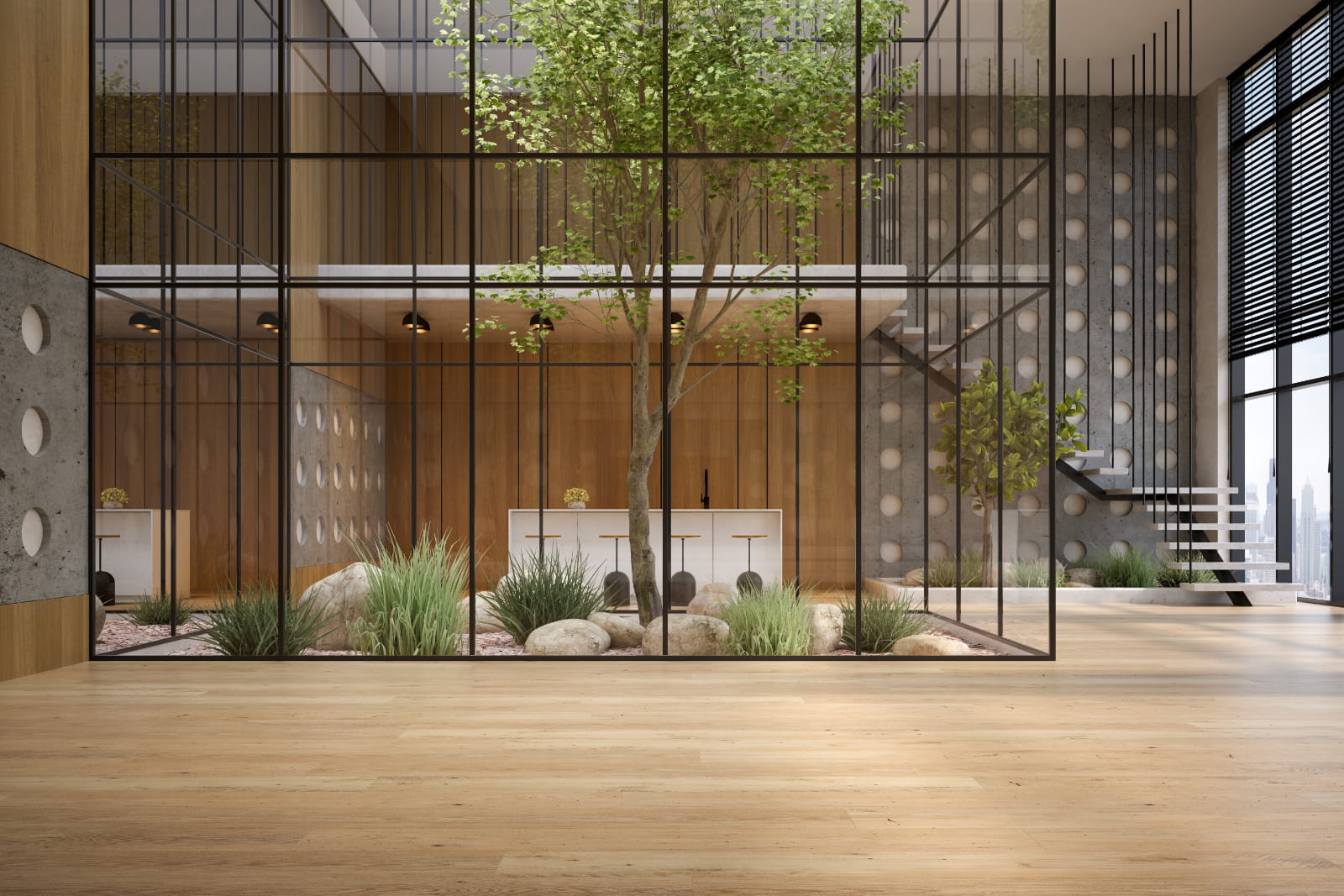
Renewable and natural materials are useful because they support both sustainability and workplace wellbeing. Materials such as bamboo, cork, wool, linen, hemp, timber and stone can soften an office environment and create a stronger connection to nature. This is especially important in workplaces where staff spend long hours indoors.
These materials also work well with biophilic design. Biophilic design brings natural elements into the workplace through greenery, daylight, organic textures and natural finishes. This can help reduce stress, improve comfort and create a more welcoming office environment.
Natural materials should still be chosen carefully. Sustainability depends on how materials are sourced, processed, transported and maintained. For example, locally sourced materials can help reduce transport-related emissions, while durable natural finishes can prevent unnecessary replacement later.
How Eco-Friendly Materials Improve Employee Wellbeing
Eco-friendly materials can have a direct effect on how people feel at work. Poor-quality paints, synthetic finishes and materials with high chemical emissions can contribute to uncomfortable indoor environments. By using low-toxicity finishes, natural textures and better-quality materials, businesses can create offices that feel cleaner, calmer and more comfortable.
The link between sustainability and wellbeing includes:
- Better indoor air quality through low-VOC and non-toxic finishes.
- More comfortable spaces through natural fabrics and tactile materials.
- Lower stress levels through biophilic design and natural textures.
- Improved focus through better acoustics and thoughtful material use.
- A more welcoming workplace through warmer, natural finishes.
- Stronger staff satisfaction when the office feels healthy and well planned.
Materials also influence the sensory experience of a workplace. Timber, cork, wool, linen and plants can make an office feel warmer and more human. This matters because an office is not only a place to complete tasks. It is also a space where people collaborate, think, meet clients and spend a large part of the working week.
For interior design firms in Cape Town, wellbeing should be treated as a core part of sustainable office design. A green office should not only reduce environmental impact. It should also support the people who use it every day through better air quality, comfort, light, acoustics and overall atmosphere.
Reducing Waste Through Smarter Office Design
Waste reduction starts long before materials are removed from site. It begins during the planning stage, when designers decide what can be reused, what needs replacing and how the office can adapt in future. A sustainable office should be designed to avoid unnecessary strip-outs and repeated refurbishments.
Flexible design is one of the most effective ways to reduce waste. Modular furniture, movable partitions, adjustable workstations and multipurpose rooms allow a workplace to change as the business changes. This reduces the need for major construction work every time a team grows, downsizes or shifts to a new working model.
Durability is just as important. High-quality materials may cost more upfront, but they often perform better over time. Strong flooring, well-made furniture, robust joinery and timeless finishes reduce the need for early replacement. This saves money, limits disruption and keeps more materials out of landfill.
Energy Efficiency And Material Choices
Materials play a bigger role in energy efficiency than many businesses realise. The right finishes, layouts and systems can help reduce reliance on artificial lighting, heating and cooling. This makes the office more comfortable while also lowering operational costs.
Light-coloured walls, reflective surfaces and glass partitions can help natural light move deeper into the office. When natural light is used well, businesses can reduce the need for artificial lighting during the day. This also supports employee wellbeing, as daylight can improve mood, focus and overall comfort.
Insulation, window treatments and flooring choices can also affect temperature control. Materials that support better thermal performance help reduce pressure on heating and cooling systems. When combined with LED lighting, motion sensors, smart climate systems and efficient layouts, sustainable material choices can make the office cheaper and easier to run.
Why Interior Design Firms In Cape Town Should Think Beyond Trends
Trends can be useful for inspiration, but they should not control the full direction of an office interior. Interior design firms in Cape Town understand that trend-led spaces can date quickly, which often leads to unnecessary updates, replacements and waste. Sustainable office design should focus on long-term relevance rather than short-term visual impact.
Designing beyond trends means focusing on:
- Timeless finishes that will not feel outdated within a year.
- Durable furniture that can handle daily office use.
- Flexible layouts that adapt to future workplace needs.
- Neutral foundations that can be refreshed with smaller updates.
- Materials that are easy to maintain, repair or reuse.
- Design choices that support productivity, wellbeing and brand identity.
This does not mean an office should feel plain or uninspired. It means the strongest design choices should be built around function, quality and longevity. Colour, texture and brand personality can still be included, but in a way that does not require a full redesign every time trends change.
For interior design firms in Cape Town, this approach is especially valuable for businesses that want long-term return on investment. A well-designed office should support current needs while still being flexible enough to serve future teams, technologies and ways of working.
Ethical Sourcing And Responsible Procurement
Sustainability is not only about the material itself. It is also about how that material is produced, who makes it and how it reaches the project. Ethical sourcing looks at fair labour, safe working conditions, responsible production methods and transparent supply chains.
Responsible procurement can include choosing certified timber, recycled content, locally sourced products, low-toxicity finishes and suppliers with clear sustainability standards. It can also mean avoiding materials that are difficult to recycle, linked to harmful production methods or likely to fail quickly in a commercial setting.
This level of care gives businesses more confidence in their office investment. It also supports stronger sustainability reporting and better brand credibility. Clients, staff and stakeholders are increasingly aware of environmental and social responsibility, so responsible sourcing can help businesses show that their values are reflected in their workplace.
Who Offers Sustainable And Eco-Friendly Office Design Services?
At Turnkey Interiors, we provide sustainable and eco-friendly office design services for businesses that want practical, future-ready workplaces. We manage the full process, including space planning, design conceptualisation, costing, procurement, implementation and project management. This gives clients one clear point of accountability from start to finish.
Our sustainable office design expertise includes:
- Full turnkey office design and build solutions.
- Sustainable material selection and procurement.
- Modular and flexible office layouts.
- Energy-efficient lighting and climate-conscious planning.
- Biophilic design, greenery and natural finishes.
- Custom joinery and furniture solutions.
- Workplace layouts that support productivity and wellbeing.
- Project management with a strong focus on timing, quality and control.
We have nearly 25 years of experience in commercial interior design and fit-out, with teams that understand how to balance sustainability, function, cost and workplace performance. Our in-house capabilities include account management, quantity surveying and custom manufacturing support, which helps us deliver tailored solutions for each client.
As a turnkey partner and one of the leading interior design firms in Cape Town and Johannesburg, we help businesses create office interiors that are built around people, performance and purpose. We focus on spaces that are practical to use, efficient to manage and designed to support long-term value. Sustainability forms part of that approach, from materials and layouts to quality control and future flexibility.
Designing Better Offices For The Future
Eco-friendly materials matter because they help interior design firms in Cape Town create offices that are healthier, more efficient and more responsible. They reduce unnecessary waste, improve indoor comfort and support a longer-lasting approach to workplace design. In modern offices, sustainability should not be treated as a decorative feature. It should be built into the choices that shape the space.
The most successful sustainable offices combine materials, energy efficiency, flexible planning, ethical sourcing and employee wellbeing. These elements work together to create workplaces that are better for people and better for the environment. A natural finish, a recycled surface or a modular furniture system may seem like a small decision, but together these choices can make a major difference.
For businesses planning a new office, refurbishment or fit-out, the key is to think long term. Choose materials that last, layouts that adapt and finishes that support a healthy working environment. This approach helps create offices that are not only attractive, but also useful, resilient and ready for the future.
A Central Part of a Better Tomorrow
For businesses and interior design firms in Cape Town, eco-friendly materials are now a central part of modern office interior design. They help reduce environmental impact, improve employee wellbeing, support energy efficiency and create workplaces that remain functional and attractive for longer.
At Turnkey Interiors, we help businesses design and deliver sustainable, practical and future-ready office interiors. If you are planning a new workspace, refurbishment or office upgrade, get in touch with us today and let’s create a workplace that supports your people, your goals and a more responsible future.


Leave a Reply