

Reinforcing Brand Identity in Commercial Spaces
Interior design for companies is a strategic tool that goes beyond aesthetics, shaping how employees, clients, and visitors perceive a brand. Well-planned commercial spaces communicate a company’s values, culture, and mission through spatial layout, materials, colour, lighting, and other design elements. Every choice within a space can reinforce a brand’s identity, influencing engagement, productivity, and customer loyalty.
Incorporating brand elements into the design of a workspace also demonstrates a company’s attention to detail and commitment to its ethos. Businesses that invest in interior design for companies create cohesive environments where the brand story comes alive, leaving lasting impressions on anyone who steps inside.
Brand Storytelling Through Space
Interior design for companies offers a unique way to visually communicate a brand’s history, mission, and values. By strategically selecting layouts, materials, and visual cues, businesses can create a narrative that resonates with employees and clients alike. Thoughtful storytelling within a space can turn everyday interactions into brand experiences.
Key strategies include:
- Tech Startups: Open layouts, glass partitions, and modern materials to convey innovation and agility
- Heritage Brands: Classic furniture, traditional textures, and curated artwork to evoke legacy and trust
- Wellness Brands: Natural materials, calming colour schemes, and biophilic design to promote serenity and care
Designing spaces with storytelling in mind also encourages deeper engagement. Employees feel a stronger connection to the brand when the workspace reflects the organisation’s purpose, while clients and visitors experience the brand in a tangible, immersive way.
In real-world applications, companies like Acne Studios have demonstrated the power of storytelling through space by transforming historical buildings into headquarters that combine brand signature elements with architectural features, creating environments that clearly communicate their identity and values.
Colour Psychology & Brand Colours
Colour is one of the most powerful tools in interior design for companies. It influences mood, perception, and even behaviour, making it an essential consideration for spaces that aim to reinforce brand identity. Choosing brand-specific colours thoughtfully ensures that every area of a workspace aligns with the company’s messaging and emotional objectives.
Key considerations for colour integration:
- Blue: Instills trust, professionalism, and calm
- Red: Sparks energy, excitement, and urgency
- Green: Signals growth, sustainability, and balance
- Neutrals with Accents: Enhances brand colours while maintaining a functional and welcoming environment
Colour can also be strategically applied to different elements of the space, such as feature walls, furniture, and decorative accents. Research indicates that colour can boost employee productivity and create more memorable client experiences, making it a key factor in brand reinforcement.
Implementing colour psychology in commercial spaces also requires balance. Overuse of bold colours can overwhelm, while subtle incorporation of brand tones can maintain a professional atmosphere while still promoting the desired emotional response. This nuanced approach ensures spaces remain functional, aesthetically pleasing, and true to the brand.
Logo & Visual Identity Integration
Integrating a company’s logo and visual identity within the workspace ensures that the brand is instantly recognisable and consistently communicated. Subtle or bold implementations across walls, furniture, and signage reinforce the brand story and connect employees and visitors to the brand at every touchpoint.
Ways to integrate visual identity effectively:
- Signage: Prominent placement in reception areas and communal spaces
- Wall Treatments: Incorporating brand motifs, patterns, and colours into murals or feature walls
- Custom Furniture: Furniture pieces that subtly reflect brand logos, shapes, or design language
When done thoughtfully, logo integration enhances spatial storytelling and adds cohesion to the interior. It also provides opportunities for interaction, engagement, and brand reinforcement throughout the office environment.
Experts note that maintaining consistency in visual identity across commercial interiors strengthens brand recognition, builds trust, and contributes to a more professional and engaging workplace environment. This is particularly important in multi-location companies or global organisations seeking cohesive branding.
Material & Texture Selection
Materials and textures are more than functional elements; they communicate the personality and values of a brand. Choices like wood, stone, metal, or glass can subtly reflect qualities such as sustainability, modernity, transparency, and innovation. The tactile experience of a space also affects how employees and visitors perceive the brand.
Natural materials like wood and stone often convey authenticity and a connection to nature, enhancing brands that prioritise sustainability and craftsmanship. Conversely, modern materials like glass and steel can communicate innovation, transparency, and sophistication, making them ideal for tech companies and corporate environments. By thoughtfully selecting materials, interior design for companies ensures that the brand identity is embedded into the very fabric of the space.
Lighting as a Brand Tool
Lighting design shapes the mood and atmosphere of a commercial space. It can reinforce brand identity by highlighting key features, enhancing textures, and creating a sense of place. Warm, ambient lighting can create welcoming environments suitable for client-facing areas, while dynamic or focused lighting supports productivity and energy in collaborative spaces.
Innovations such as smart lighting systems, natural light integration, and adjustable lighting levels allow companies to tailor the environment to different needs and brand expressions. Interior design for companies that prioritises lighting ensures that both aesthetics and functionality contribute to a cohesive brand experience.
Customer & Employee Experience Alignment
The alignment of workspace design with customer and employee experience is essential for reinforcing brand identity. Spaces that reflect brand values contribute to higher engagement, satisfaction, and loyalty. Comfortable, functional environments support staff productivity, collaboration, and overall wellbeing, while thoughtfully designed client areas communicate professionalism and brand values.
Studies have found that employees in environments aligned with their company’s identity report higher engagement and satisfaction, demonstrating that interior design for companies is not merely aesthetic but a strategic element of organisational culture. By prioritising both employee and visitor experiences, companies can create spaces that fully embody their brand.
Spatial Layout & Flow
Spatial layout directly affects how a brand is perceived. Open layouts encourage collaboration and innovation, making them ideal for creative and tech-focused companies. Segmented layouts support focus, professionalism, and privacy, which are often critical in finance, law, or consultancy environments.
Thoughtful layout planning also considers movement, interaction, and the natural flow of people throughout the space. Interior design for companies that prioritises operational efficiency alongside brand alignment ensures that the workspace not only looks appealing but functions as an extension of the brand ethos.
Sensory Branding
Engaging multiple senses in commercial spaces deepens brand impact. Soundscapes, signature scents, and tactile materials create an immersive environment where the brand can be experienced beyond visual cues. This type of sensory branding strengthens emotional connections with employees and visitors alike.
For instance, curated background music can encourage focus or relaxation depending on brand positioning, while carefully chosen textures enhance comfort and reinforce perceived quality. Interior design for companies that incorporate sensory elements ensures that brand experience is holistic and memorable.
Cultural & Local Adaptation
Adapting interior design to reflect local culture while maintaining core brand elements is essential for global companies. Incorporating regional artworks, cultural symbols, and contextually relevant materials allows the brand to resonate with local audiences without compromising overall identity.
This approach reinforces brand recognition and demonstrates cultural sensitivity, helping companies establish trust and loyalty in diverse markets. Interior design for companies that balances global consistency with local adaptation provides meaningful and engaging spaces across all locations.
Story-Driven Focal Points
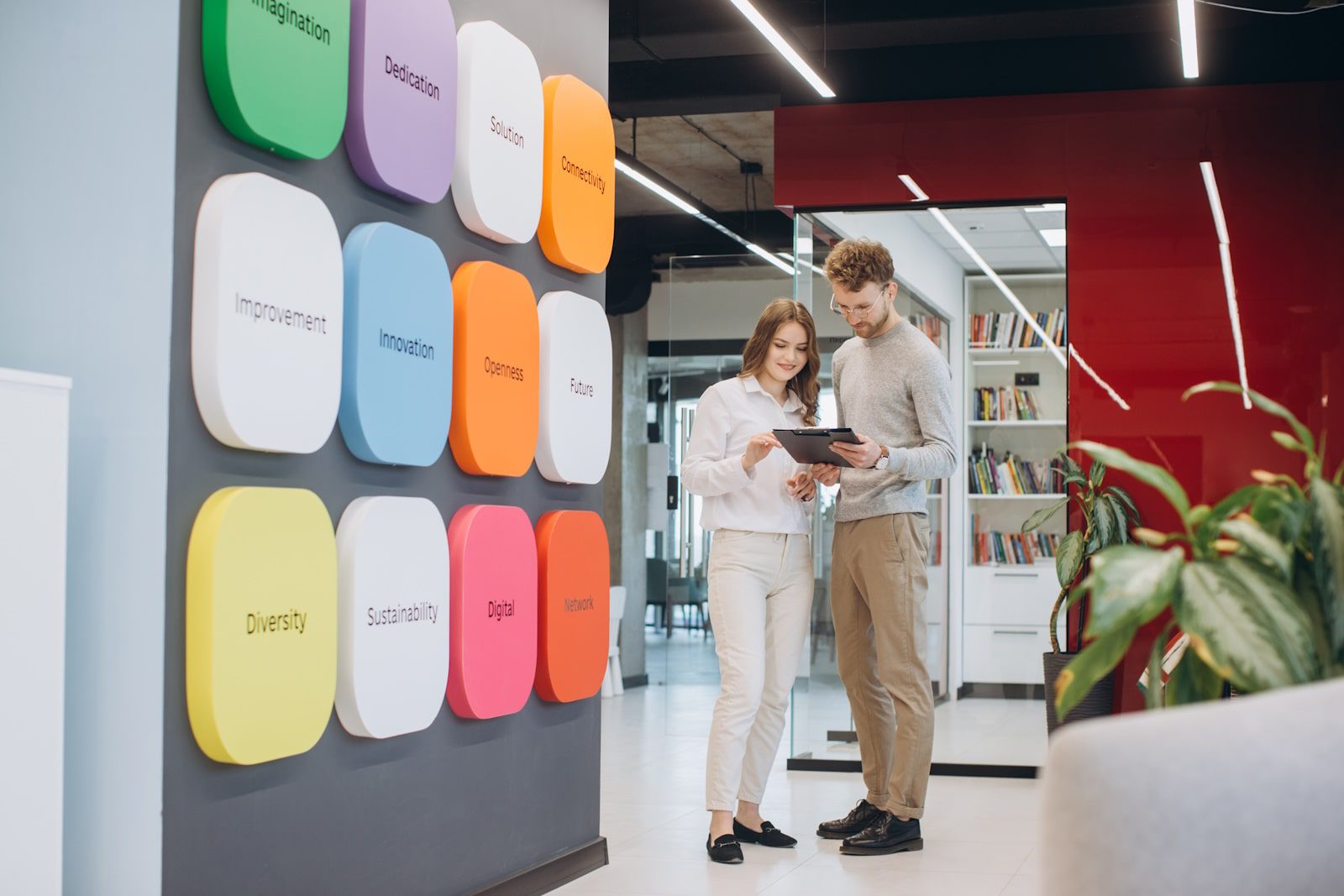
Signature installations, product displays, and interactive elements can become memorable touchpoints that communicate brand narratives. Murals or feature walls serve as storytelling tools, while interactive displays encourage engagement and experiential interaction with the brand.
By combining aesthetic appeal with brand messaging, these focal points reinforce the company’s story and ensure that visitors leave with a lasting impression. Interior design for companies that emphasises story-driven elements transforms commercial spaces into immersive brand experiences.
Interior design for companies plays a vital role in reinforcing brand identity, from colour and material choices to lighting, layout, and sensory experiences. By thoughtfully designing every aspect of a commercial space, businesses can communicate their values, mission, and culture in a tangible, immersive way.
Investing in interior design for companies is more than creating a beautiful office; it is a strategic move that enhances employee engagement, customer perception, and overall brand strength. At Turnkey Interiors, we specialise in crafting bespoke commercial spaces that bring your brand to life. Contact us today and let us help you create a workspace that reflects your identity and inspires everyone who walks through your doors.


Leave a Reply