

Modern vs Traditional Office: Firm Interior Design
Office design is no longer decoration: it’s strategy. Whether you’re planning a complete overhaul or a targeted refresh, understanding how firm interior design choices affect collaboration, confidentiality, recruitment and brand is essential. This article explains the two dominant approaches — modern and traditional — compares their space-planning logic, weighs their impacts on productivity and culture, and gives a practical decision framework you can use to choose (or combine) approaches that suit your organisation.
What “Modern” And “Traditional” Mean In Practice
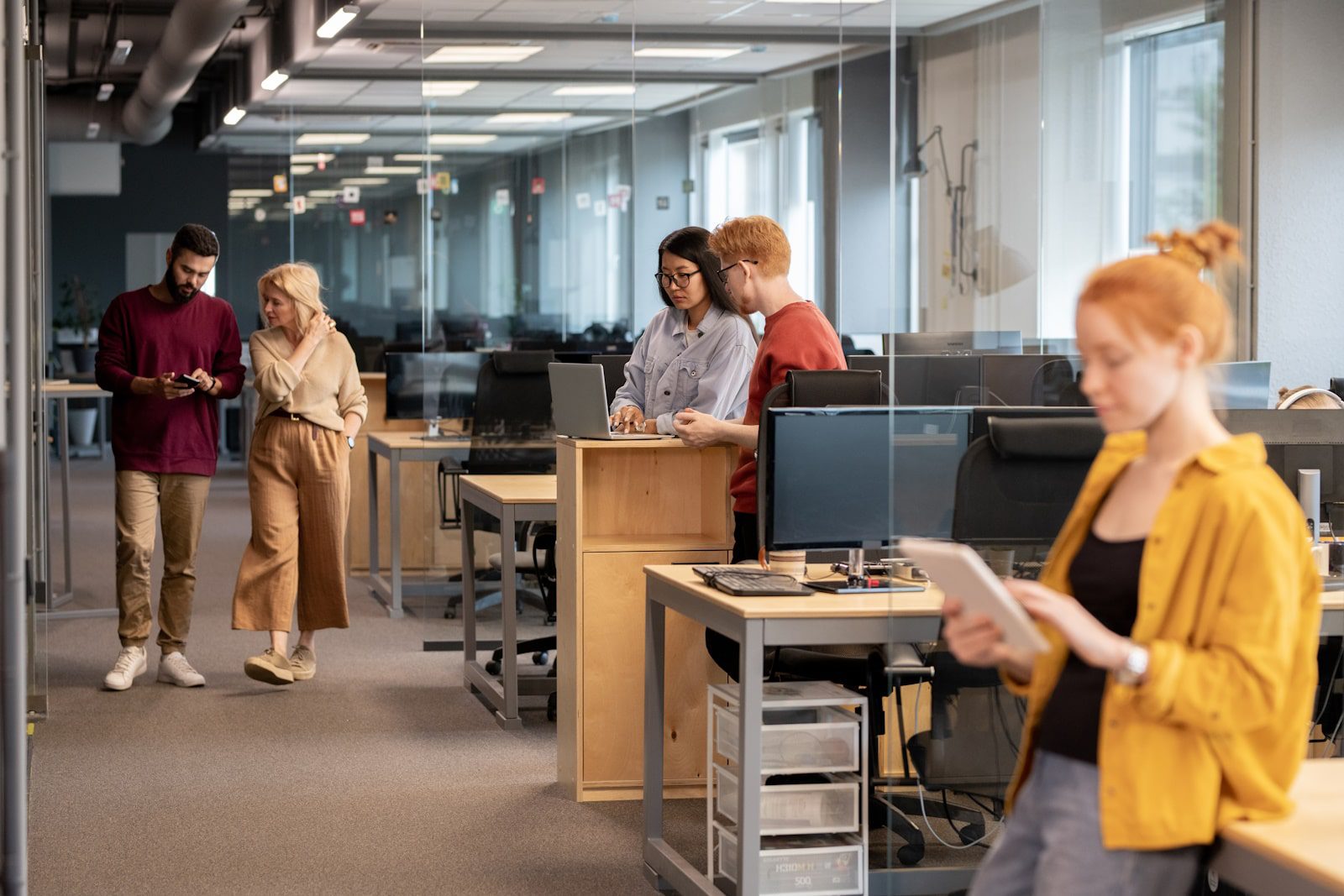
Modern office design champions openness, flexibility and integrated technology. You’ll see large, multi-purpose zones for teams, touchdown seating, collaborative hubs, minimalist furnishings and technology embedded into meeting pods and desk-booking systems. Designers use modular furniture, acoustic baffles and adaptable lighting so spaces can be reconfigured quickly as needs shift. These features are central to many recent workplace strategies that prioritise experience and agility.
Traditional office design emphasises hierarchy, structure and privacy. Think private offices for senior staff, rows of defined desks or cubicles, closed meeting rooms and rich materials that convey stability — wood panelling, leather seating and formal circulation routes. The aim is controlled sightlines, predictable acoustics and a clear separation of functions. Organisations that want to signal authority or protect client confidentiality often favour this approach.
If you’re working with external consultants on firm interior design, be explicit about which of these outcomes — collaboration, confidentiality, brand projection — must be prioritised.
The Core Design Principles
- Modern office design principles: open layouts, collaborative zones, flexible seating, minimalist aesthetics; technology is woven into the fabric of the space (desk-booking, integrated AV, occupancy sensors). These elements foster spontaneity and adaptability but must be paired with privacy solutions.
- Traditional office design principles: private offices, cubicles, hierarchical layouts, classic furniture and closed spaces. These interiors favour focus and formal client presentation, yet they can reduce informal knowledge sharing.
- Space planning differences: modern schemes create multi-purpose neighbourhoods; traditional plans keep clear separations between executive, client and staff zones. The difference shows up in sightlines, circulation and how acoustics are managed.
- Cultural influence: design signals values — firms that want to look stable or conservative often choose traditional interiors; firms aiming to communicate innovation and inclusivity often choose modern plans. Regional norms and client expectations also steer design choices.
What The Evidence Says About Productivity And Wellbeing
Research literature gives a nuanced picture. One intervention study that measured behaviour before and after de-walling offices found face-to-face interactions fell sharply (by roughly 70% in the case studies), while electronic communication rose — a cautionary tale that openness alone doesn’t guarantee more collaboration. This highlights the importance of activity-based zoning and behavioural norms, not just removing walls.
At the same time, industry research underlines that people value choice and experience. Surveys from leading workplace researchers show employees increasingly judge the office by the quality of interactions it enables, and occupiers are investing in collaboration spaces and technology to make the office a destination. CBRE and other consultancies report that many organisations have increased shared collaboration space and adjusted seating ratios to reflect hybrid working patterns.
A few practical takeaways:
- Open, modern firm interior design can boost creativity and serendipitous connection — but only when privacy, acoustics and quiet focus zones are deliberately designed in.
- Traditional layouts support deep, confidential work and formal client presentation — but they can create silos if teams rarely meet informally.
- Hybrid or blended models that combine hubs with bookable quiet rooms and clear policies consistently outperform one-size-fits-all approaches in recent surveys.
Hybrid And Blended Models: The Pragmatic Middle Ground
Most organisations are now choosing hybrid firm interior design: open collaboration zones plus a network of private rooms, phone booths and bookable offices for heads-down work. CBRE’s findings on hybrid programmes show that successful schemes pair design with clear policies and measurement (utilisation sensors, desk-booking data and employee surveys) to ensure the workplace delivers value, not just square metres. Gensler’s workplace research likewise shows workers want a mix of experiences — social, focused and client-facing — all under one roof.
Four Practical Examples
- Activity-based refresh in a product team environment — a tech-style group replaced assigned desks with neighbourhoods for teams, plus reservable focus rooms; utilisation rose and informal cross-team interactions increased, but the design also added sound masking and booking rules to protect concentration. (Trend supported by Steelcase reporting on modular, user-centred spaces.)
- Professional services firm — kept executive suites for client meetings but added hospitality-style collaboration hubs and better AV for hybrid client calls; this retained status signals while creating places for innovation. CBRE and Gensler note this balanced approach as common in sectors where client perception matters.
- Finance/operations hub in a major city — a firm reduced overall footprint but improved amenity quality — higher-grade meeting rooms, privacy booths and better air and lighting — to attract employees back two to three days a week. Market observers cite a “flight to quality” in prime markets where occupiers choose fewer but better spaces.
- Flexible co-working or portfolio model — providers and corporates now blend high-quality communal areas with bookable private suites to serve both collaborative and confidential needs; design and tech metrics track occupancy and user satisfaction to iterate layouts. This pattern is visible across recent sector reports.
There is no universal “best” in firm interior design. Modern layouts shine when your priority is collaboration, agility and talent attraction; traditional layouts work when confidentiality, hierarchy and formal client presentation are dominant concerns. The most resilient solution is a deliberate hybrid, a clear, evidence-driven mix of open collaboration, private focus rooms and strong operational rules, measured and iterated using real data.
If you’re considering a redesign or a pilot for your workplace, we can help you translate strategy into space. For practical, measurable improvements to your firm interior design, contact Turnkey Interiors, we’ll work with you to define goals, pilot with measurable KPIs and deliver a space that supports your people and your brand. We look forward to working with you.


Leave a Reply