

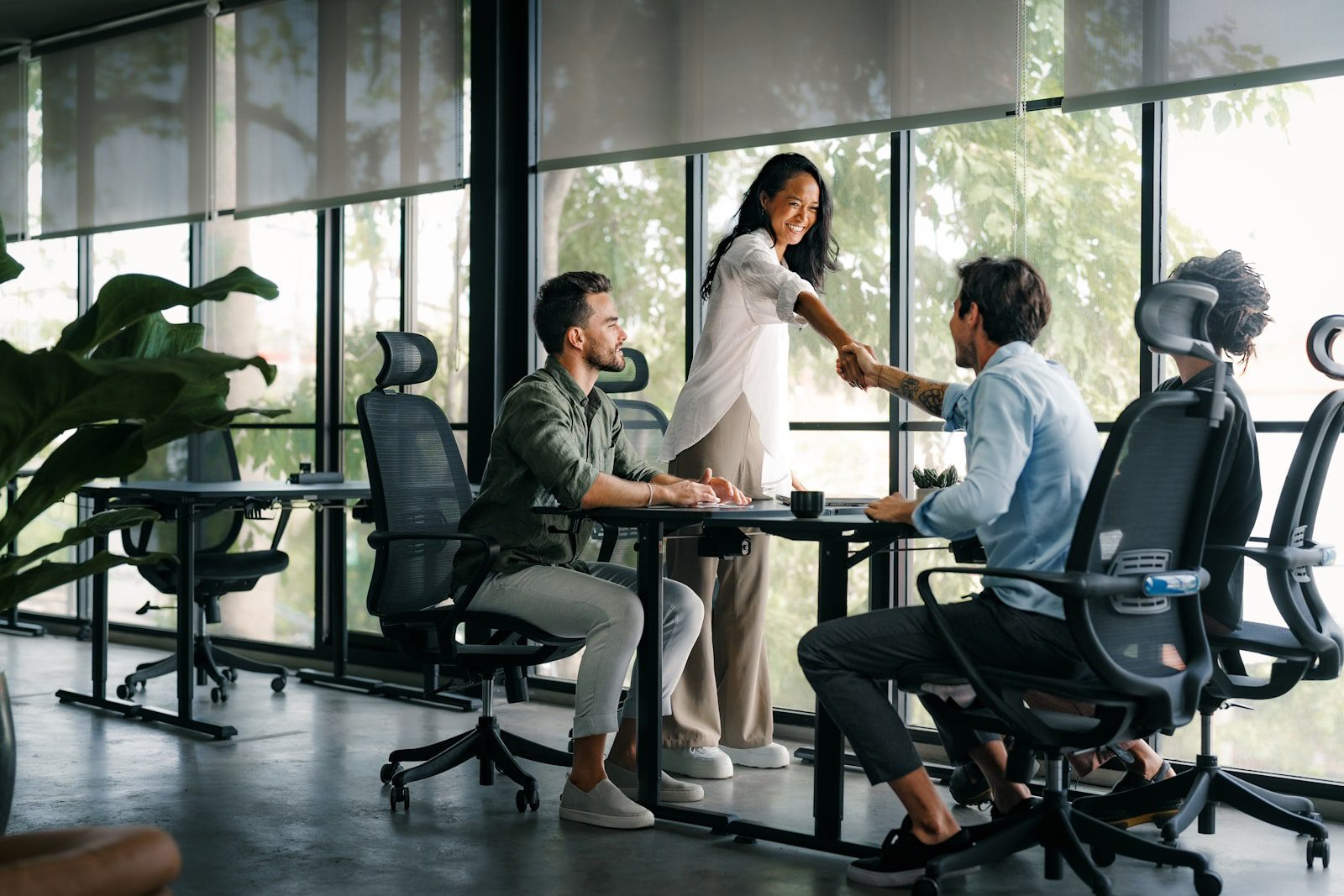
Ergonomics and Comfort in Interior Design for Companies
With growing awareness around employee wellbeing, health and productivity, ergonomics has become a cornerstone of effective workplace planning. Companies are moving beyond aesthetics to focus on how environments actively support human performance. Today, more organisations are viewing ergonomics as a strategic priority. At the heart of this shift is a holistic approach that combines adaptable furniture, thoughtful layouts, indoor comfort, and smart technologies. When ergonomics is embedded into interior design for companies, the results are not only healthier staff but better business outcomes.
Ergonomic Furniture Selection
Well-chosen furniture forms the foundation of any ergonomic environment. Office chairs should offer full adjustability—height, seat depth, armrests, and lumbar support—to promote neutral postures and accommodate a variety of body types. Desks, especially those that support sit-stand transitions, can significantly reduce the physical toll of prolonged sitting.
Beyond desks and chairs, accessories like monitor arms, footrests and keyboard trays play an essential role in maintaining a balanced posture. These tools prevent repetitive strain injuries and reduce physical stress during extended computer use. For interior design for companies to be truly effective, furniture selection must go beyond style and prioritise ergonomic performance.
Workspace Layout Optimisation
Office layout has a profound impact on daily movement, focus and comfort. Placing commonly used items within easy reach reduces unnecessary strain and supports natural body mechanics. A well-thought-out layout also enables better flow throughout the day, encouraging physical activity and mental clarity.
Modular, flexible zones allow employees to switch between tasks and environments without disrupting their rhythm. Whether it’s quiet zones for focused work or open areas for collaboration, layout optimisation enhances both productivity and engagement. A user-informed layout is central to successful interior design for companies.
Adjustable Workstations
The popularity of adjustable workstations continues to rise as more employers recognise the dangers of prolonged sitting. Sit-stand desks have been shown to reduce fatigue, boost alertness and even improve decision-making abilities. The ability to switch postures throughout the day reduces pressure on the spine and improves circulation.
Adjustable setups are especially valuable in agile work environments where employees may hot-desk or rotate roles. By supporting flexibility, these workstations accommodate varied user preferences and encourage healthier work habits. Integrating height-adjustable furniture is now considered a standard best practice in ergonomic interior design for companies.
Lighting and Visual Ergonomics
Lighting is a critical yet often overlooked component of workplace comfort. Poor lighting contributes to headaches, eye strain, and reduced productivity. Conversely, well-planned lighting improves mood, focus and even sleep quality. Where possible, natural light should be prioritised, supplemented by LED task lighting that mimics daylight.
Equally important is the ability to adjust lighting conditions to suit individual preferences. Glare reduction through anti-reflective screens and adjustable monitor positions is essential. A well-lit office that supports visual ergonomics is integral to functional interior design for companies.
Acoustic Comfort
Sound management is a crucial factor in designing workspaces where people can concentrate and collaborate effectively. Excessive noise increases stress and reduces productivity. In open-plan environments, acoustic solutions like ceiling baffles, soft partitions, and wall panels can help mitigate noise without compromising openness.
Strategic zoning further helps manage acoustic comfort. Quiet rooms, soundproofed pods and soft furnishings absorb sound and reduce distractions. Including acoustic considerations in interior design for companies creates spaces where people can focus, communicate and recharge with ease.
Temperature and Air Quality Control
Comfortable temperatures and clean air are essential for maintaining health and focus at work. Offices that are too warm, too cold, or poorly ventilated can negatively impact concentration and overall wellbeing. Modern HVAC systems, fresh air circulation, and the use of natural ventilation all support thermal and respiratory comfort.
Low-VOC materials and indoor plants can further improve indoor air quality while also enhancing visual appeal. Monitoring and maintaining optimal conditions across office zones ensures all staff experience consistent comfort. In interior design for companies, environmental control is both a health necessity and a productivity enhancer.
User-Centred Design
Designing with the user in mind ensures the workplace supports a wide range of needs. This includes adjusting for differences in height, mobility, age, and sensory preferences. Incorporating feedback from employees during the design phase helps create more inclusive and intuitive spaces.
Accessibility features, ergonomic assessments and ongoing adaptability are key to user-centred design. A company’s space should grow and evolve with its people. Incorporating inclusive principles is not only ethical but also a hallmark of high-quality interior design for companies.
Technology Integration for Ergonomics
Technology is transforming how we interact with office environments. Smart furniture with sensors can monitor posture and remind users to adjust positions. AI-driven platforms track ergonomic data, offering real-time feedback and long-term health insights. Wearables and desktop tools prompt movement, stretching, or microbreaks throughout the day.
Even simple additions like split keyboards, ergonomic mice and height-adjustable monitor stands can significantly reduce strain. Integrating tech into ergonomic design bridges the gap between user awareness and behaviour change. For interior design for companies to stay future-proof, seamless tech integration is now essential.
At Turnkey Interiors, we believe that interior design for companies should be as practical as it is inspiring. Our team specialises in creating ergonomic workspaces that help people perform at their best. From space planning and furniture specification to acoustic solutions and environmental controls, we tailor every project to your team’s real needs.
If you’re ready to elevate your workspace, contact us today. Let’s create an office environment where comfort meets performance.


Leave a Reply