

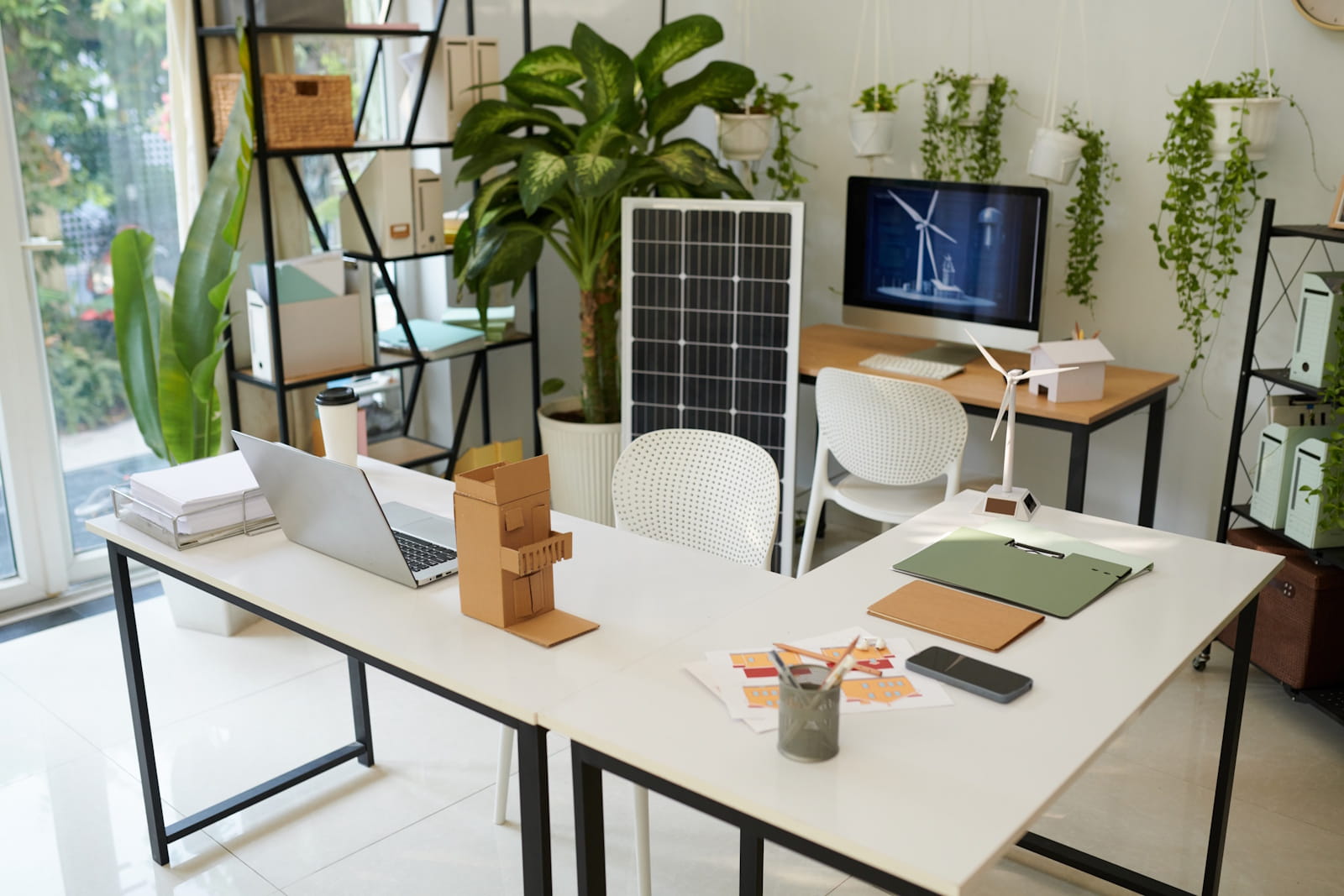
A Guide to Sustainable and Eco-Friendly Office Design Services
Eco-friendly office design is no longer just a nice idea for businesses that want to look responsible. It has become a practical way to create healthier, more efficient, and more future-ready workplaces. A well-designed sustainable office can reduce energy use, cut waste, improve employee comfort, and help a business show a clear commitment to environmental responsibility.
For many companies, the office is one of the most visible expressions of their values. The materials, lighting, furniture, layout, and daily systems all say something about how a business works and what it cares about. By using sustainable office design services, companies can create spaces that support people, protect resources, and still look polished, professional, and brand-aligned.
What Is Sustainable Office Design?
Sustainable office design is the process of planning, fitting out, and managing a workplace in a way that reduces environmental impact while improving the experience of the people who use it. It looks at energy, water, materials, furniture, lighting, air quality, waste, and space planning as connected parts of one bigger system. The aim is not only to create an attractive office, but to create a workspace that performs well over time.
It also considers the full lifecycle of an office. This includes where materials come from, how furniture is manufactured, whether items can be reused or refurbished, how much energy the space consumes, and how easily the office can adapt as the business changes. A sustainable workspace is practical, comfortable, resource-efficient, and built with long-term value in mind.
Key elements of sustainable office design include:
- Low-VOC paints, adhesives, carpets, and finishes to improve indoor air quality
- Recycled, reclaimed, renewable, or responsibly sourced materials
- LED lighting, motion sensors, smart controls, and efficient HVAC systems
- Flexible layouts that reduce the need for repeated renovations
- Modular furniture and joinery that can adapt to future needs
- Recycling stations, digital-first workflows, and waste reduction systems
- Low-flow taps, dual-flush toilets, and efficient kitchen appliances
- Biophilic design features such as plants, natural light, and timber textures
A sustainable office should also support employee wellbeing. Natural light, good ventilation, comfortable furniture, acoustic control, and calming breakout spaces can make the workplace feel more pleasant and productive. These features are not just cosmetic. They can influence concentration, mood, comfort, and how people feel about coming to work.
The best results happen when sustainability is planned from the beginning. If green choices are added only at the end of a project, they can become more expensive or harder to include properly. When they are part of the design brief, budget, procurement, and fit-out process from day one, the final office is more cohesive, efficient, and easier to maintain.
Why Eco-Friendly Office Design Matters for Modern Businesses
Eco-friendly office design matters because businesses are under more pressure to reduce waste, use energy wisely, and create healthier workplaces. Employees, clients, investors, and partners are paying closer attention to whether companies act responsibly. A workspace that uses sustainable materials, saves energy, and supports wellbeing can help build trust and strengthen a company’s reputation.
There is also a strong operational reason to invest in sustainability. Efficient lighting, smarter heating and cooling, durable furniture, and better space planning can reduce long-term costs. Some sustainable office design guides suggest energy bills can be reduced by up to 30% through efficient systems and smarter design choices. Other workplace research often links green-certified buildings with better wellbeing, including higher cognitive performance and fewer sick days.
Eco-friendly office design can help businesses:
- Reduce electricity and water consumption
- Lower long-term operating and maintenance costs
- Improve indoor air quality and comfort
- Support employee productivity and wellbeing
- Reduce waste during fit-outs and daily operations
- Improve brand image and corporate responsibility
- Create flexible workspaces that adapt to future needs
- Support sustainability reporting, ESG goals, and green building targets
The employee experience is especially important. Offices with natural light, fresh air, ergonomic furniture, plants, and good acoustic design can feel more inviting and less stressful. Biophilic design has been linked in workplace design discussions to productivity and wellbeing improvements, with some sources reporting productivity gains of around 20% in spaces that connect people with nature.
Modern businesses also need adaptable spaces. Hybrid work, changing team sizes, and shifting collaboration needs mean that rigid office layouts can quickly become outdated. Flexible planning, modular workstations, movable partitions, and multipurpose areas reduce the need for frequent refurbishments, which saves money and limits unnecessary waste.
In this way, sustainable design supports both the planet and the business. It makes the office cheaper to run, easier to adapt, healthier to use, and more aligned with the expectations of modern employees. It is not just about being green. It is about creating a better-performing workplace.
Key Eco-Friendly Office Design Services to Consider
Sustainable office design includes several specialist services that work together. A business may not need every solution at once, but each one can improve the overall performance of the workspace. The right mix depends on the building, budget, team needs, brand identity, and long-term goals.
Material selection is one of the most important starting points. Low-VOC finishes, reclaimed wood, recycled metals, bamboo, cork, recycled-content boards, and responsibly sourced timber can help reduce environmental impact while improving indoor comfort. These materials should also be durable, because a product that lasts longer usually creates less waste than one that needs frequent replacement.
Energy efficiency is another major service area. LED lighting can use far less energy than traditional lighting, and motion sensors help prevent wasted electricity in empty rooms. Smart HVAC systems, zonal controls, daylight-responsive lighting, proper insulation, and efficient appliances all help reduce operating costs while keeping the office comfortable.
Space Planning and Flexible Layouts
Good space planning is one of the most practical ways to make an office more sustainable. When an office is badly planned, businesses often waste floor area, add unnecessary furniture, and struggle with poor movement and clutter. A smart layout helps every area serve a clear purpose, whether it is for focused work, meetings, collaboration, storage, reception, or staff breaks.
Flexible layouts are also important because offices change. Teams grow, departments move, hybrid work patterns shift, and technology evolves. Modular furniture, movable partitions, multipurpose meeting rooms, adjustable storage, and hot-desking infrastructure can help the office adapt without constant building work.
This has a sustainability benefit as well as a business benefit. Fewer renovations mean less demolition waste, less replacement furniture, and lower project disruption. A flexible office can stay useful for longer, which supports cost control and reduces the environmental impact of repeated fit-outs.
Biophilic and Wellness-Focused Design
Biophilic design brings nature into the office through plants, natural textures, daylight, timber finishes, green walls, and views to outdoor spaces. These features can make a workplace feel calmer, warmer, and more human. They also support the idea that sustainability should benefit the people inside the space, not only the environment outside it.
Workplace wellbeing is strongly connected to design. Poor lighting, uncomfortable furniture, bad acoustics, and stale air can make people feel tired and distracted. By contrast, ergonomic workstations, comfortable breakout areas, good ventilation, and restorative spaces can help create a healthier workplace.
Some sustainable workplace sources report that green-certified buildings can support 26% higher cognitive scores and 30% fewer sick days. While results vary by building and workforce, the message is clear. A better indoor environment can support better performance, fewer comfort complaints, and a stronger employee experience.
Indoor Air Quality, Lighting, and Thermal Comfort
Indoor air quality is a key part of eco-friendly office design. Low-VOC paints, non-toxic finishes, good ventilation, air-purifying plants, and well-maintained HVAC systems can reduce pollutants and improve comfort. Poor air quality can affect concentration, energy levels, and overall satisfaction in the workplace.
Lighting also matters. Natural light can reduce reliance on artificial lighting while making the office feel brighter and more comfortable. LED lighting, task lighting, circadian lighting, occupancy sensors, and zonal controls can help create the right light levels for different tasks without wasting energy.
Thermal comfort should not be ignored. If an office is too hot, too cold, or unevenly ventilated, people become uncomfortable and less productive. Smart climate control, insulation, natural ventilation, and efficient HVAC systems help maintain comfort while reducing unnecessary heating and cooling demand.
Water Conservation and Waste Reduction
Water-saving features are simple but valuable in sustainable office design. Low-flow taps, dual-flush toilets, efficient kitchen appliances, smart plumbing, and regular maintenance can reduce unnecessary water use. In larger projects, rainwater harvesting, greywater systems, and water-wise landscaping can also support broader sustainability goals.
Waste reduction should be built into the office layout and daily behaviour. Recycling stations need to be visible and easy to use. Digital-first workflows can reduce paper waste. Reusable cutlery, glassware, linen towels, bulk stationery orders, rechargeable batteries, and responsible supplier choices can all support greener habits.
The circular economy is also important. Instead of throwing away furniture, fittings, or finishes during every change, businesses can reuse, refurbish, donate, recycle, or specify modular products that can be reconfigured. This approach helps reduce landfill waste and makes future changes more cost-effective.
Who Offers Sustainable and Eco-Friendly Office Design Services?
Turnkey Interiors offers sustainable and eco-friendly office design services for businesses that want practical, attractive, and future-ready workplaces. We provide a full turnkey solution, which means we can support clients from early consultation and design conceptualisation through to costing, procurement, fit-out, furniture, joinery, construction, building modernisation, and project management.
We understand that a sustainable office needs to work on many levels. It should reflect the company’s brand, support employee wellbeing, improve productivity, use space efficiently, and help reduce environmental impact. Our team combines creative design with practical planning so that each workspace is suited to the client’s culture, operations, and long-term goals.
Our services and expertise include:
- Company, commercial, and corporate interior design
- Space planning and layout design
- Office fit-out, refurbishment, and construction
- Furniture procurement and custom joinery
- Building modernisation, including lobbies, common areas, and white boxing
- 3D visualisations to support clearer decision-making
- Transparent costing and budgeting
- Project management from concept to completion
- Brand-aligned, future-ready workspace design
- Sustainable material and layout guidance
With offices in Johannesburg and Cape Town, and experience dating back to May 2001, we bring long-standing commercial interior design and fit-out knowledge to South African workplace projects. We often serve as the main contractor, which helps reduce split accountability and gives clients a more controlled, streamlined process.
We also understand the importance of trust, governance, health and safety, and responsible delivery. Our experience across corporate offices, call centres, telecommunications, finance, energy, property, healthcare, training, and technology spaces allows us to shape interiors that are functional, professional, and built around real business needs.
By working with us, clients get one accountable team that can manage the full workplace transformation. This is especially useful for sustainability-focused projects, because decisions around materials, layout, costing, procurement, and implementation need to be aligned from the start.
Common Mistakes to Avoid
One of the biggest mistakes is treating sustainability as a late-stage add-on. If eco-friendly choices are only discussed after the layout, materials, furniture, and budget have already been decided, the project may miss important opportunities. Sustainability should be built into the brief from the beginning.
Another common mistake is focusing only on visual features. Plants, natural colours, and recycled finishes are useful, but they do not make an office fully sustainable on their own. A proper eco-friendly office design strategy also needs to include energy performance, air quality, water efficiency, waste reduction, flexible planning, and long-term maintenance.
Common mistakes include:
- Choosing cheap furniture that needs frequent replacement
- Ignoring indoor air quality and ventilation
- Treating plants as a complete sustainability strategy
- Forgetting about water-saving fixtures
- Designing a rigid layout that cannot adapt
- Failing to plan recycling and waste systems properly
- Not involving staff in sustainability habits
- Choosing materials without checking durability or sourcing
- Overlooking lighting, acoustics, and thermal comfort
- Prioritising upfront savings while ignoring lifecycle costs
Budget planning is another area where businesses can go wrong. Sustainable materials or systems may sometimes cost more upfront, but they can reduce long-term energy, maintenance, and replacement costs. For example, efficient lighting and durable furniture can pay back over time through lower bills and fewer replacements.
Businesses should also avoid copying trends without understanding their own needs. A sustainable office for a call centre will not look the same as one for a creative studio, law firm, showroom, or hybrid corporate team. The best design decisions come from understanding how people work, what the brand represents, and how the space needs to perform in future.
Sustainable Goals, Well-Managed Spaces
Eco-friendly office design gives modern businesses a practical way to create healthier, more efficient, and more responsible workspaces. By combining sustainable materials, energy-efficient systems, flexible layouts, better air quality, water-saving features, biophilic design, and smart space planning, companies can reduce environmental impact while improving the everyday experience of employees and visitors.
At Turnkey Interiors, we help businesses turn sustainable design goals into clear, well-managed workplace projects. Whether you are planning a refurbishment, relocation, fit-out, or full office transformation, we can guide the process from concept to completion. Get in touch with Turnkey Interiors today and let us help you create an office that supports your people, your business, and the planet.
FAQs
What Is Eco-Friendly Office Design?
Eco-friendly office design is the process of creating a workplace that reduces environmental impact while improving comfort, productivity, and long-term efficiency. It includes using sustainable materials, energy-efficient lighting, smart HVAC systems, water-saving fixtures, better ventilation, and layouts that make smarter use of space. It also considers how furniture, finishes, and fittings can be reused, recycled, or adapted over time. The goal is to build an office that supports people and the planet. Good eco-friendly office design should feel practical, attractive, healthy, and aligned with the company’s brand, culture, daily operations, and future growth plans.
Why Should Businesses Invest in Sustainable Office Interior Design Services?
Businesses should invest in sustainable office interior design services because the workplace affects running costs, employee wellbeing, brand image, and environmental performance. Energy-efficient systems can lower electricity use, while durable furniture and flexible layouts reduce waste and replacement costs. Better lighting, air quality, acoustics, and ergonomic furniture can also help employees feel healthier, more focused, and more comfortable at work. A sustainable office shows clients, staff, and stakeholders that the company takes responsibility seriously. It also helps businesses prepare for future workplace needs by creating adaptable spaces that can change as teams, technology, and working patterns evolve.
What Materials Are Best for an Eco-Friendly Office Interior?
Good materials for an eco-friendly office interior include reclaimed wood, recycled metals, bamboo, cork, recycled-content boards, responsibly sourced timber, low-VOC paints, non-toxic adhesives, and durable modular furniture. These materials help reduce waste, improve indoor air quality, and lower the environmental impact of the fit-out. Long-lasting materials are especially important because they reduce the need for frequent replacements. Businesses should also consider local sourcing where possible, as this can reduce transport impact. The best choices are materials that balance sustainability, safety, durability, appearance, maintenance needs, and suitability for the way the office is used every day.
How Can Eco-Friendly Office Design Improve Employee Wellbeing?
Eco-friendly office design can improve employee wellbeing by creating a healthier, calmer, and more comfortable working environment. Natural light, fresh air, low-VOC finishes, ergonomic furniture, indoor plants, acoustic control, and good temperature management all contribute to a better daily experience. Biophilic design, which brings natural elements into the office, can help reduce stress and make the workspace feel more inviting. Flexible layouts can also support different work styles, from focused tasks to teamwork and informal meetings. When employees feel comfortable and supported by their surroundings, they are more likely to stay engaged, productive, and satisfied.


Leave a Reply