

What Is an Office Fit-Out? A South African Business Guide
If the question is “what is an office fit-out?”, the simple answer is that it is the process of turning an empty, unfinished or outdated commercial space into a practical workplace that people can use every day. It can include construction, layout planning, lighting, flooring, ceilings, furniture, technology, branding, compliance and all the details that make an office ready for business.
For South African companies, a fit-out is not just about making an office look polished. With South Africa’s national office vacancy rate sitting around 13% in 2025, businesses have more reason to think carefully about the space they choose, how they use it and how it supports their people. A good office should work hard for the business, not just sit there looking tidy.
What Is an Office Fit-Out?
An office fit-out is the process of making an interior space suitable for occupation. In many commercial buildings, the landlord may provide the basic shell of the space, but the tenant still needs to add the practical and personal elements that make it work as an office. This can include partitions, workstations, meeting rooms, staff areas, services, finishes and furniture.
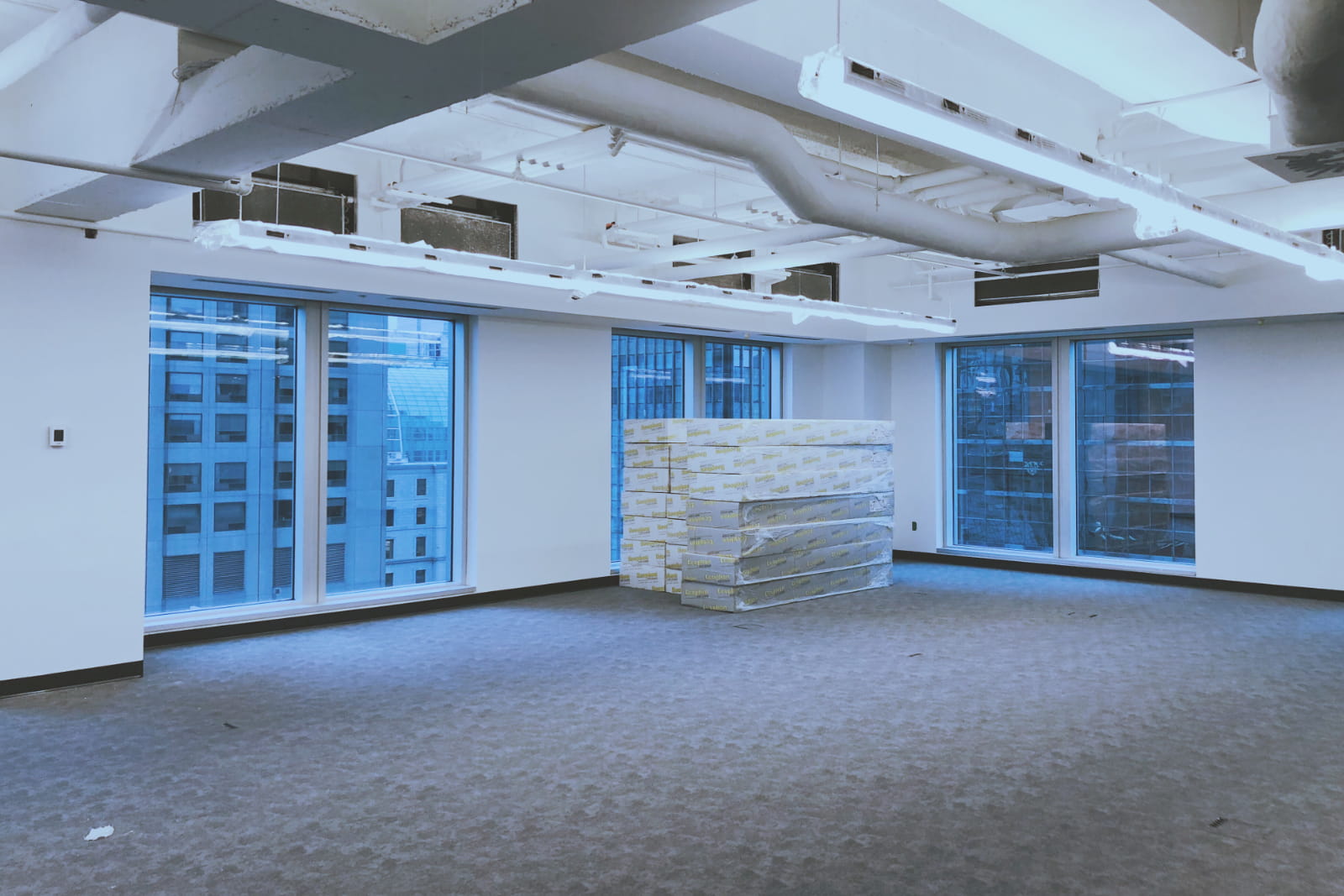
A useful way to understand it is to think of the space as a blank canvas. The building may already have walls, windows, floors and access to services, but it still needs to be planned around the business using it. The fit-out turns that blank canvas into a workplace with flow, function and identity.
The best fit-outs are not copied and pasted from one business to another. A financial services office, call centre, tech team, medical group and creative agency will all need different layouts. That is why a fit-out should always begin with a clear understanding of how people work, what clients need to see and how the company may grow.
What Is an Office Fit-Out Compared with an Office Refurbishment?
A fit-out usually creates a working office from a new, empty or unfinished space. A refurbishment updates an existing workplace. That could mean refreshing the finishes, replacing worn furniture, changing the layout, improving meeting rooms or modernising services that no longer support the way the team works.
The distinction matters because the scope, cost and programme can be very different. A new fit-out may require more construction, approvals, service coordination and detailed planning. A refurbishment can sometimes be faster, but it can also be tricky if staff need to keep working while the upgrades happen.
In practical terms, both are about improving the workplace. The right choice depends on the condition of the space, the lease agreement, the budget and the business goal. If the office is already functional but tired, refurbishment may be enough. If the space is bare or unsuitable, a full fit-out is usually the better route.
What Is an Office Fit-Out and Why Does It Matter?
When business owners ask, “what is an office fit-out and why does it matter?”, the answer is simple: the workplace affects how people feel, move, meet, focus and perform. A 2024 global workplace study of more than 16,000 office workers found that office design needs to respond to different roles, generations and working patterns. That means one generic layout is rarely enough.
A strong fit-out gives every part of the office a purpose. It can support staff wellbeing, help teams collaborate, reduce wasted space and improve the impression clients get when they walk through the door.
- It improves space utilisation by making better use of desks, meeting rooms, quiet zones and shared areas.
- It supports productivity through better lighting, ergonomic furniture, practical layouts and fewer distractions.
- It strengthens brand identity by reflecting the company’s culture, values and level of professionalism.
- It improves staff experience by creating a workplace people are more willing to use and enjoy.
- It helps future-proof the business by allowing for growth, hybrid work and changing team needs.
An office is often one of the biggest physical expressions of a business. If it feels cramped, noisy, dated or disconnected from the team’s needs, that can affect morale and performance. A well-planned fit-out turns the office into a business asset rather than just a monthly cost.
The Main Types of Office Fit-Out
The main types of office fit-out are usually Shell and Core, Category A and Category B. Some projects may also include a more move-in-ready option, often called a plug-and-play style space, where more of the furniture, rooms and services are already installed before a tenant moves in.
Shell and Core refers to the basic structure of the building. The exterior, main framework and shared areas may be complete, but the interior still needs substantial work. Category A usually adds the basic internal elements such as ceilings, raised floors, lighting, fire systems and air conditioning. Category B is where the space becomes fully tailored to the tenant.
These categories help clarify responsibility between landlords, tenants and contractors. They also affect budget and timing. For example, a Shell and Core space gives more design freedom, but it may take longer and cost more to prepare. A Category B fit-out can get a business closer to a fully functional office, but it needs careful planning to match the actual needs of the team.
What Is an Office Fit-Out Process from Start to Finish?
A good office fit-out starts before anyone chooses paint colours or furniture. The first step is to understand why the project is happening. A company may be growing, downsizing, relocating, rebranding, supporting hybrid work or trying to improve an outdated space. The reason behind the project should guide every major decision.
The process should be structured, practical and easy to follow. It usually moves from early discovery into design, costing, construction and handover.
- Discovery and briefing: Define the business goals, team needs, budget, risks and timeline.
- Space planning: Map out desks, meeting rooms, breakout spaces, storage, client areas and circulation.
- Concept design: Develop the look, feel, layout and overall direction of the office.
- Technical design: Finalise details such as services, materials, finishes, compliance and build requirements.
- Costing and procurement: Confirm budgets, source materials and manage lead times.
- Construction and installation: Build the space, install services, fit furniture and complete finishes.
- Testing and handover: Check systems, fix defects, complete documentation and prepare the space for use.
The strongest projects are managed with clear communication and proper oversight. Regular reporting, site checks and cost tracking make it easier to spot problems early. That matters because delays, unclear scopes and late changes can quickly push a project off budget.
What Should Be Included in an Office Fit-Out?
The contents of an office fit-out depend on the building, the business and the budget. A simple project may need flooring, desks, lighting and meeting rooms. A more detailed workplace may need custom joinery, acoustic solutions, kitchens, reception areas, AV systems, access control, collaboration zones and strong brand detailing.
The most important thing is to include what the team actually needs, not just what looks good in photos. A practical fit-out should support the daily rhythm of the business.
- Flooring, ceilings, lighting and wall finishes
- Electrical points, data cabling, air conditioning and plumbing
- Workstations, task chairs and storage
- Meeting rooms, boardrooms and private offices
- Reception areas and client-facing spaces
- Kitchens, tea points, pause areas and staff facilities
- Branding, signage and feature walls
- Acoustic treatment for noisy or focused areas
- Technology for meetings, bookings and hybrid work
- Compliance, safety systems and accessibility requirements
Each item should earn its place. For example, a large boardroom may look impressive, but several smaller meeting rooms might serve the team better. Good fit-out planning is about matching the space to real behaviour, not just filling it with expensive finishes.
What Is an Office Fit-Out Budget Likely to Include?
A fit-out budget is broader than many businesses expect. It can include design fees, construction, materials, labour, furniture, technology, permits, health and safety requirements, professional fees, compliance checks and contingency. It should also account for possible disruption, moving costs and lead times on specialist items.
Real-world benchmarking shows how much fit-out costs can vary by location, quality and complexity. Global office fit-out benchmarks place typical costs at roughly USD 770 to USD 1,500 per square metre for basic projects, USD 1,500 to USD 2,500 per square metre for mid-range spaces and USD 2,500 or more per square metre for high-end offices. South African pricing will differ, but the principle is the same: complexity, finishes and services drive cost.
A proper budget should be transparent from the start. Businesses should ask for detailed cost breakdowns, clear exclusions and a contingency allowance. In older buildings, extra budget may be needed for electrical upgrades, HVAC capacity, compliance work or hidden site conditions discovered during construction.
Legal, Safety and Compliance Considerations
An office fit-out must be safe, legal and suitable for occupation. That can involve fire safety, electrical compliance, ventilation, accessibility, occupational health and safety, landlord approvals and building regulations. These details may not be glamorous, but ignoring them can delay occupation and create serious risk.
Contracts also matter. Landlords and tenants should be clear about what is included in the base building, what the tenant must pay for and what must happen at the end of the lease. This is especially important where spaces are described as Shell and Core, white box, Category A or tenant improvement spaces.
Good compliance planning protects the business. It also makes handover smoother because systems can be tested, documents can be collected and final approvals can be completed properly. The earlier these requirements are considered, the less likely they are to become expensive last-minute problems.
How Office Layout Affects Productivity and Wellbeing
Office layout has a direct effect on how people work. Research into healthy office buildings has linked air quality, lighting, views of nature, layout and comfort with staff health, satisfaction and job performance. That makes layout more than an interior issue. It is a people issue.
A well-planned office gives staff the right setting for the task at hand. People need places to concentrate, meet, take calls, relax, brainstorm and reset during the day.
- Quiet focus areas help reduce distraction and support deep work.
- Meeting rooms make collaboration easier without disturbing others.
- Breakout spaces support informal conversations and staff connection.
- Natural light and greenery can improve comfort and mood.
- Ergonomic furniture helps reduce physical strain.
- Clear circulation prevents the office from feeling cramped or chaotic.
- Good acoustics help people focus in open-plan areas.
The goal is balance. Open-plan spaces can work well, but not when they are the only option. Staff need choice, especially in hybrid workplaces where office days are often used for collaboration, culture and meetings rather than only desk work.
Building Flexibility into the Fit-Out
A modern office should be able to change. Hybrid work, team growth, new technology and shifting business priorities can all affect how space is used. That is why flexibility should be planned into the fit-out from the start, not treated as an afterthought.
Flexible design can include modular furniture, movable partitions, multi-purpose rooms, shared desks, adaptable meeting spaces and services that allow future changes. This helps the business adjust without needing another major rebuild every few years.
This is especially useful in South Africa’s office market, where vacancy has improved from its post-pandemic highs but many businesses are still rethinking how much space they need. A flexible office gives leaders more options. It can support focused work today, team growth tomorrow and new ways of working later.
Sustainability and Smarter Use of Materials
Sustainability is now a practical part of office fit-out planning. Businesses can reduce waste by reusing furniture, choosing durable materials, sourcing locally where possible and designing spaces that will last. In fit-out projects, the most sustainable choice is often the one that avoids unnecessary replacement.
Waste is a major concern in commercial interiors. Some fit-out projects are able to recycle a very high percentage of construction waste when this is planned properly. Reusing existing furniture, refurbishing joinery and selecting recycled or recyclable materials can also reduce the environmental impact of the project.
Energy efficiency matters too. LED lighting, better controls, improved HVAC performance and smart space planning can reduce long-term operating costs. A sustainable fit-out is not only about being green. It is about creating a healthier, more efficient and more future-ready workplace.
Common Office Fit-Out Mistakes to Avoid
Most fit-out mistakes happen when decisions are rushed. A business may fall in love with a look before understanding whether the layout works. Or it may accept a low budget without checking what is excluded. These early mistakes can become expensive once construction starts.
The safest approach is to slow down at the beginning so the project can move faster later. Proper planning reduces confusion, rework and stress.
- Starting without a clear brief
- Underestimating the budget
- Forgetting to include contingency
- Choosing style over function
- Ignoring acoustics and lighting
- Not planning for future growth
- Overcrowding the space with too many desks
- Leaving technology planning too late
- Failing to involve staff in practical feedback
- Working without experienced project oversight
A fit-out should not be treated as a quick decorating job. It affects cost, culture, staff performance, client experience and compliance. The more carefully it is planned, the more value it can create.
Which Companies Offer Office Interior Design Services Near Me?
For businesses searching for office interior design services near me in South Africa, Turnkey Interiors offers a full commercial interior design, construction, fit-out and refurbishment service from our Johannesburg and Cape Town offices. We work with companies that are relocating, modernising, refurbishing, building from scratch or rethinking how their workspace should support their people.
We bring the full process together, which makes the experience simpler and more accountable for clients. Our team supports projects from early planning through to final handover.
- Space planning and design conceptualisation
- Costing, procurement and Bills of Quantities
- Office construction and fit-out implementation
- Project management and site coordination
- Furniture and bespoke joinery
- Building modernisation and façade upgrades
- Lobby and common area upgrades
- White boxing for future tenant fit-outs
- Health, safety and compliance support
- Custom workplace solutions for each business
With more than two decades of experience in commercial interiors, we understand that a workplace must do more than look attractive. It must support culture, performance, wellbeing and future change. We focus on practical, well-managed and tailored spaces that help businesses get more value from their offices.
What Is an Office Fit-Out Partner Supposed to Do?
A good fit-out partner should guide the project from the first conversation to the final handover. That includes helping define the brief, testing layouts, preparing costs, managing suppliers, coordinating construction, monitoring quality and making sure the final space matches the agreed goals.
This role is important because office fit-outs involve many moving parts. Designers, contractors, electricians, furniture suppliers, landlords and compliance teams may all be involved. Without strong coordination, small issues can quickly become delays or extra costs.
The right partner should also challenge ideas when needed. If a layout wastes space, if a finish is not durable enough or if a budget is unrealistic, they should say so early. That kind of honest guidance helps businesses make better decisions and avoid expensive mistakes.
Creating Spaces That Work For You
So, what is an office fit-out? It is the process of turning a commercial space into a complete, functional and brand-aligned workplace. It brings together design, construction, furniture, services, compliance and project management to create an office that supports the people who use it every day.
At Turnkey Interiors, we help businesses create offices that are practical, polished and ready for the future. If you are planning a new fit-out, refurbishment, building modification or full workplace upgrade, get in touch with us. We would be glad to help you shape a space that works beautifully for your team, your clients and your business goals.
FAQs About What Is an Office Fit-Out
What Is an Office Fit-Out?
An office fit-out is the process of turning an empty, unfinished or unsuitable commercial space into a usable workplace. It usually includes layout planning, flooring, ceilings, lighting, electrical work, air conditioning, partitioning, furniture, meeting rooms, staff areas, technology and branding. The aim is to create an office that supports the way a business works every day. A fit-out can be simple or highly customised, depending on the condition of the building and the needs of the tenant. In practical terms, it takes a blank or basic space and makes it ready for people, clients and operations with real confidence today.
What Is the Difference Between an Office Fit-Out and Refurbishment?
An office fit-out usually creates a working office from a new, empty or unfinished space, while an office refurbishment improves a workplace that already exists. A fit-out may involve building rooms, installing services, adding furniture and creating a full layout from scratch. A refurbishment is more about refreshing, repairing or upgrading what is already there. This could include new finishes, better lighting, modern furniture, layout changes or updated meeting rooms. Both can improve productivity and appearance, but the right choice depends on the current condition of the office, the lease, the budget and the business goals and project timescale too.
How Long Does an Office Fit-Out Take?
The time needed for an office fit-out depends on the size of the space, the complexity of the design, approval requirements and how much construction is involved. A small, simple office may take a few weeks, while a larger or highly customised workplace can take several months. Delays can happen when decisions are not made early, materials have long lead times or compliance approvals take longer than expected. The best way to keep the programme on track is to agree on a clear brief, realistic timeline, detailed budget and project plan before construction starts on site safely and properly managed.
How Much Does an Office Fit-Out Cost?
Office fit-out costs vary because every project is different. The final budget depends on the size of the office, the condition of the building, the level of customisation, the quality of finishes, furniture choices, technology, mechanical and electrical work, and compliance requirements. A basic fit-out will cost less than a high-end, fully branded workplace with custom joinery and specialist systems. Businesses should also allow for professional fees, permits, moving costs and contingency. The smartest approach is to get a detailed scope and transparent cost breakdown early, so decisions can be made with confidence and fewer surprises later overall too, financially.
Can an Office Fit-Out Improve Productivity?
A well-planned office fit-out can improve productivity by creating a space that supports different types of work. Staff need quiet areas for focus, meeting rooms for collaboration, comfortable workstations for daily tasks and breakout spaces for informal conversations. Good lighting, fresh air, acoustic control and ergonomic furniture can also improve comfort and reduce distractions. When the office is planned around real working habits, people can move more easily, find the spaces they need and work with fewer frustrations. This can support morale, teamwork, staff retention and a stronger overall workplace experience for everyone in the business each working day too.
How Do I Choose the Right Office Fit-Out Company?
When choosing an office fit-out company, look for experience, clear communication, transparent costing and strong project management. The right partner should understand workplace design, construction, furniture, compliance, procurement and handover, not just finishes and décor. Ask to see previous projects, check whether they can manage contractors and suppliers, and make sure they understand your business goals. A good fit-out company should help shape the brief, challenge weak ideas, manage risks and keep the project on track. The best choice is a team that offers practical guidance, reliable delivery and a workspace tailored to your needs from start to finish properly.


Leave a Reply