

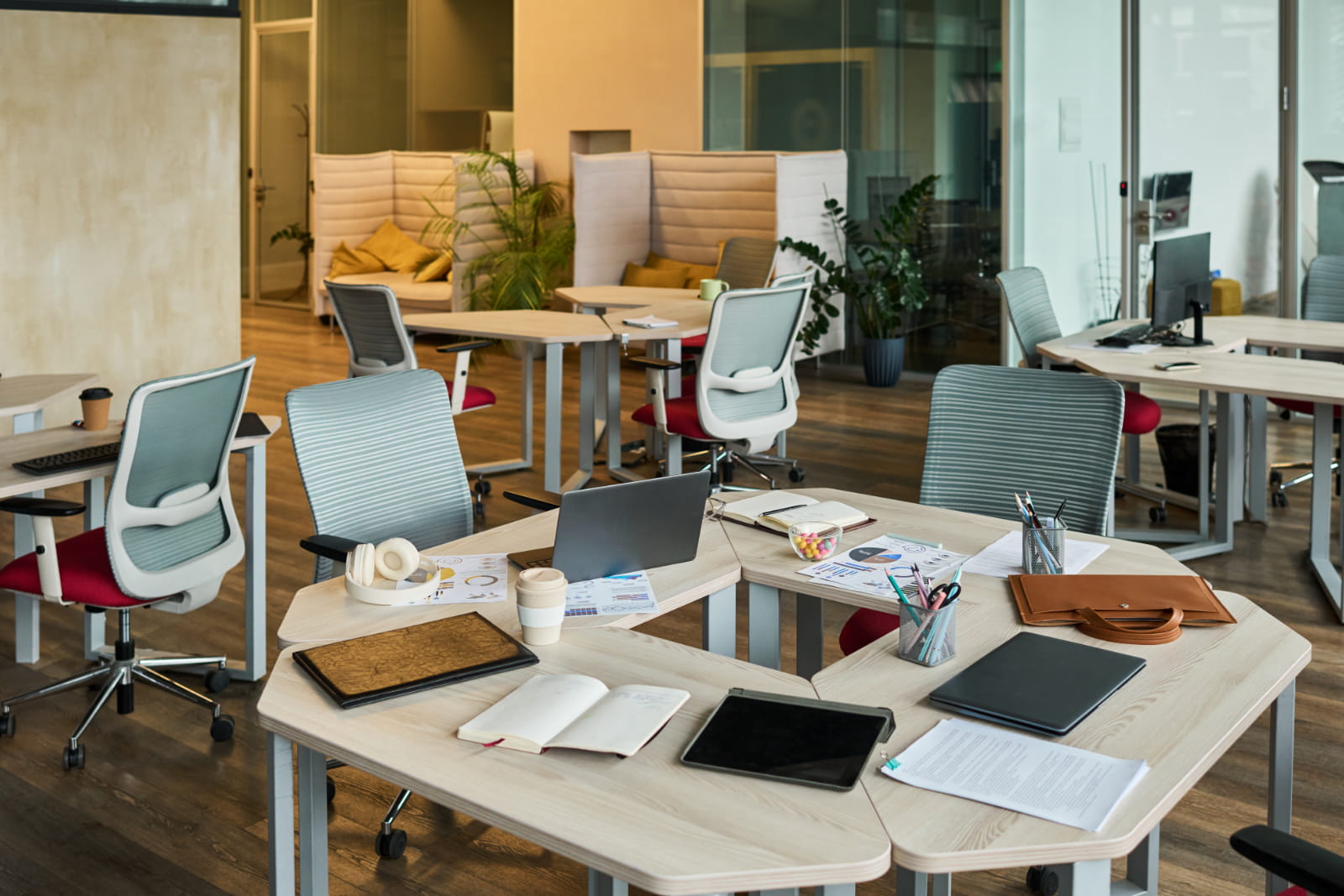
Ergonomics and a Company for Interior Design
Choosing the right company for interior design is about more than creating an office that looks polished. A well-designed workplace should help people feel comfortable, move naturally, focus properly and get through the day without unnecessary strain. That is where ergonomic office design becomes a practical business advantage.
Ergonomics is the process of designing a workspace around the people who use it. In an office, that includes furniture, layout, lighting, acoustics, movement routes, breakout areas and collaboration spaces. When these elements work together, the result is a healthier, more productive and more enjoyable place to work.
Why Ergonomic Office Design Matters
Office work may not look physically demanding, but long hours at a desk can place constant pressure on the body. Poor seating, awkward desk heights, badly positioned screens and limited movement can all contribute to back pain, neck strain, wrist discomfort, eye strain and fatigue. These issues often start as minor discomfort, but over time they can become more serious problems that affect both wellbeing and performance.
Good ergonomic office design helps prevent these issues by making the workspace fit the employee, rather than forcing the employee to adapt to a poor setup. Adjustable chairs, sit-stand desks, supportive accessories, suitable lighting and a sensible office layout can all reduce strain and make day-to-day work feel easier. The goal is not to create a luxury workspace, but a practical one that supports the body and mind during normal working hours.
This matters for the business too. When employees are uncomfortable, they are more likely to lose focus, take unnecessary breaks, feel tired and struggle to produce their best work. When the office supports comfort and movement, people can concentrate for longer, collaborate more easily and feel more valued in their working environment.
How a Company for Interior Design Improves Workplace Comfort
A professional company for interior design looks at the full workplace, not just one or two furniture items. An ergonomic chair is useful, but it cannot solve everything if the desk is too high, the screen is too low, the lighting causes glare or the office layout creates constant distraction. Comfort comes from the way the entire space works together.
The best ergonomic offices are planned around real tasks and real people. That means understanding how employees sit, stand, meet, focus, move, store items and use shared areas during the day. It also means considering different working styles, because not every person or role needs the same setup. Some teams need collaborative zones, while others need quiet spaces for concentrated work.
A good design approach also considers long-term flexibility. Modern workplaces change often, so office interiors should be able to adapt as teams grow, roles shift and new working habits develop. Flexible furniture, movable screens, multi-use spaces and smart layout planning can help businesses create offices that remain useful over time.
Key Ergonomic Furniture Features To Consider
Furniture is one of the most visible parts of ergonomic office design, but it needs to be chosen carefully. The aim is to support healthy posture, reduce unnecessary strain and give employees enough flexibility to adjust their setup. A chair, desk or accessory only works well when it suits the person using it and the task being done.
A company for interior design can help businesses select furniture that fits the wider office plan, rather than simply choosing products that look good. This includes checking how furniture works with desk spacing, screen positions, storage access, circulation routes, lighting and collaboration zones. Ergonomic furniture should make the working day easier, not add more complexity.
- Adjustable office chairs: Look for seat height adjustment, lumbar support, backrest adjustment and adjustable armrests.
- Sit-stand desks: These allow employees to alternate between sitting and standing, helping to reduce stiffness from staying in one position for too long.
- Monitor arms or stands: Screens should be positioned at a comfortable height and distance to reduce neck and eye strain.
- Keyboard and mouse placement: Equipment should support relaxed shoulders, neutral wrists and comfortable arm positioning.
- Footrests: These can help shorter employees or those using fixed-height desks keep their feet supported.
- Ergonomic accessories: Keyboard trays, document holders and task lighting can help improve workstation comfort.
- Storage within easy reach: Frequently used items should be accessible without twisting, stretching or disrupting posture.
The most important point is that ergonomic furniture must be adjustable and correctly used. A high-quality chair will not help much if the employee does not know how to set the seat height, backrest or armrests properly. Simple training and regular workstation checks can make a big difference.
Businesses should also avoid treating ergonomic furniture as a once-off purchase. Employee needs change, teams move and office layouts evolve. Regular reviews help ensure that furniture still supports comfort, safety and productivity as the workplace develops.
Lighting, Layout And The Wider Ergonomic Office
Ergonomics goes far beyond desks and chairs. Lighting, layout, acoustics, air quality, temperature and access to movement all affect how comfortable and productive people feel at work. A poorly lit or noisy office can undermine even the best furniture choices.
A thoughtful company for interior design will consider how each part of the office influences behaviour and wellbeing. The goal is to create a balanced environment where people can focus, collaborate, take breaks and move naturally. This wider view is what turns ergonomic furniture into a complete ergonomic workplace.
- Natural light: Good access to daylight can support mood, energy and concentration.
- Task lighting: Adjustable desk lighting helps employees control light levels for detailed work.
- Glare control: Screen glare should be reduced through careful desk placement, blinds, shading and lighting design.
- Quiet zones: These support focused work, confidential conversations and tasks that require deep concentration.
- Collaborative areas: Shared spaces encourage teamwork, idea sharing and informal communication.
- Breakout spaces: These give employees a place to pause, reset and step away from their desks.
- Clear movement routes: Walkways and accessible communal areas encourage natural movement throughout the day.
- Noise management: Soft finishes, acoustic panels and layout planning can help reduce distraction.
The layout should also reflect the way people actually work. Open spaces can be useful for communication, but they can also create distractions if there are no quiet areas nearby. A hybrid layout with open zones, private spaces, meeting areas and relaxation points gives employees more choice.
Small changes can make a big difference. Repositioning desks to reduce glare, improving lighting in focus areas, adding acoustic treatment or creating a standing meeting zone can all improve comfort. The wider ergonomic office is about designing a workspace that supports both physical ease and mental clarity.
The Business Benefits Of Ergonomic Office Design
A well-designed ergonomic office can improve productivity because employees are less distracted by discomfort. When people are not constantly shifting in their seats, dealing with neck strain or struggling with screen glare, they can give more attention to their work. Comfort supports concentration, and concentration supports better output.
There are also health-related benefits. Poor ergonomics can contribute to musculoskeletal problems, fatigue, headaches and stress. By improving seating, workstation setup, lighting and movement opportunities, businesses can help reduce the risk of discomfort and support healthier working habits. This can contribute to fewer avoidable absences and better overall employee wellbeing.
Ergonomic design can also improve morale and retention. When employees see that their workplace has been designed with their comfort and productivity in mind, it sends a clear message that they are valued. This can strengthen workplace culture, support engagement and make the office a more appealing place to spend the working day.
What Should a Company for Interior Design Audit in an Existing Office?
A skilled company for interior design can assess an existing office to identify practical ergonomic improvements. This does not always mean a full refurbishment is needed. Sometimes the biggest gains come from smaller changes, such as adjusting monitor heights, improving lighting, changing desk layouts or introducing better seating.
An office audit should look at how people use the space throughout the day. This includes workstation setup, chair adjustability, desk height, storage placement, meeting spaces, lighting quality, noise levels, air flow, temperature comfort and movement routes. It should also review whether the office has the right mix of focus areas, collaboration zones and breakout spaces.
Employee feedback is essential. A space might look good, but if staff are struggling with distractions, poor lighting, uncomfortable seating or lack of privacy, the design is not fully working. Combining employee input with professional workspace analysis helps businesses make better decisions and prioritise changes that will have real impact.
Who Can Design Ergonomic Office Interiors For My Company?
Turnkey Interiors designs and delivers corporate office environments that support people, performance and business purpose. We provide an end-to-end workplace solution, covering space planning, design conceptualisation, costing, procurement, implementation and project management. That means clients can move from idea to finished workspace with one experienced team managing the process.
As a company for interior design, we understand that an effective office needs to balance comfort, function, aesthetics, brand identity and long-term value. Our services include workplace design, construction, furniture and joinery, and building modernisation. We create office interiors that are practical, attractive and aligned with the way modern teams work.
- Workplace design: We plan spaces that support productivity, engagement, collaboration and focus.
- Space planning: We help organise the office so that teams, departments and shared areas function properly.
- Construction and fit-out: We manage the build process with attention to quality, timing and coordination.
- Furniture and joinery: We provide tailored furniture and custom joinery that support both form and function.
- Building modernisation: We refresh tired spaces through upgrades to lobbies, common areas, façades and internal environments.
- Project management: We coordinate the details so clients have clarity, accountability and a smoother experience.
- Client-focused delivery: We work around each client’s goals, budget, culture and operational needs.
Our approach is built around creating workspaces that do more than look impressive. We focus on how the space will be used every day, how it will support employees and how it can help the business operate more effectively. That includes considering ergonomic comfort, movement, collaboration, productivity and future flexibility.
We also bring experience, professional oversight and a full turnkey process to workplace projects. From initial planning to final delivery, we help businesses create office interiors that are functional, inspiring and suitable for their people. The result is a workspace designed with purpose, not guesswork.
Actionable Tips for Better Ergonomic Office Design
Start with the workstation. Make sure chairs are adjustable, screens are at eye level, keyboards and mice are positioned comfortably, and desks allow relaxed arm placement. If desks are fixed, use accessories such as monitor stands, footrests or keyboard trays to improve alignment.
Then look at movement. Encourage employees to change position during the day by using sit-stand desks, standing meeting points, accessible shared spaces and clear walking routes. Movement should feel natural, not forced. A good office layout makes it easy for people to shift posture, stretch, walk to communal areas and take short breaks from their screens.
Finally, review the full environment. Check lighting, glare, noise, temperature, storage, privacy and the balance between open and quiet spaces. Ergonomic office design works best when it is treated as a full workplace strategy rather than a furniture checklist. Regular audits and employee feedback can help keep the office aligned with changing needs.
Building a Workplace That Works Better
Working with a company for interior design can help businesses create offices that are not only attractive, but also healthier, more practical and more productive. Ergonomic design brings together furniture, layout, lighting, movement, acoustics and employee needs to create a workplace that feels better and works better in daily use.
At Turnkey Interiors, we design and deliver office spaces that support how people actually work. If your business needs a more comfortable, efficient and future-ready workplace, get in touch with us to discuss how we can help create a better office for your team.


Leave a Reply