

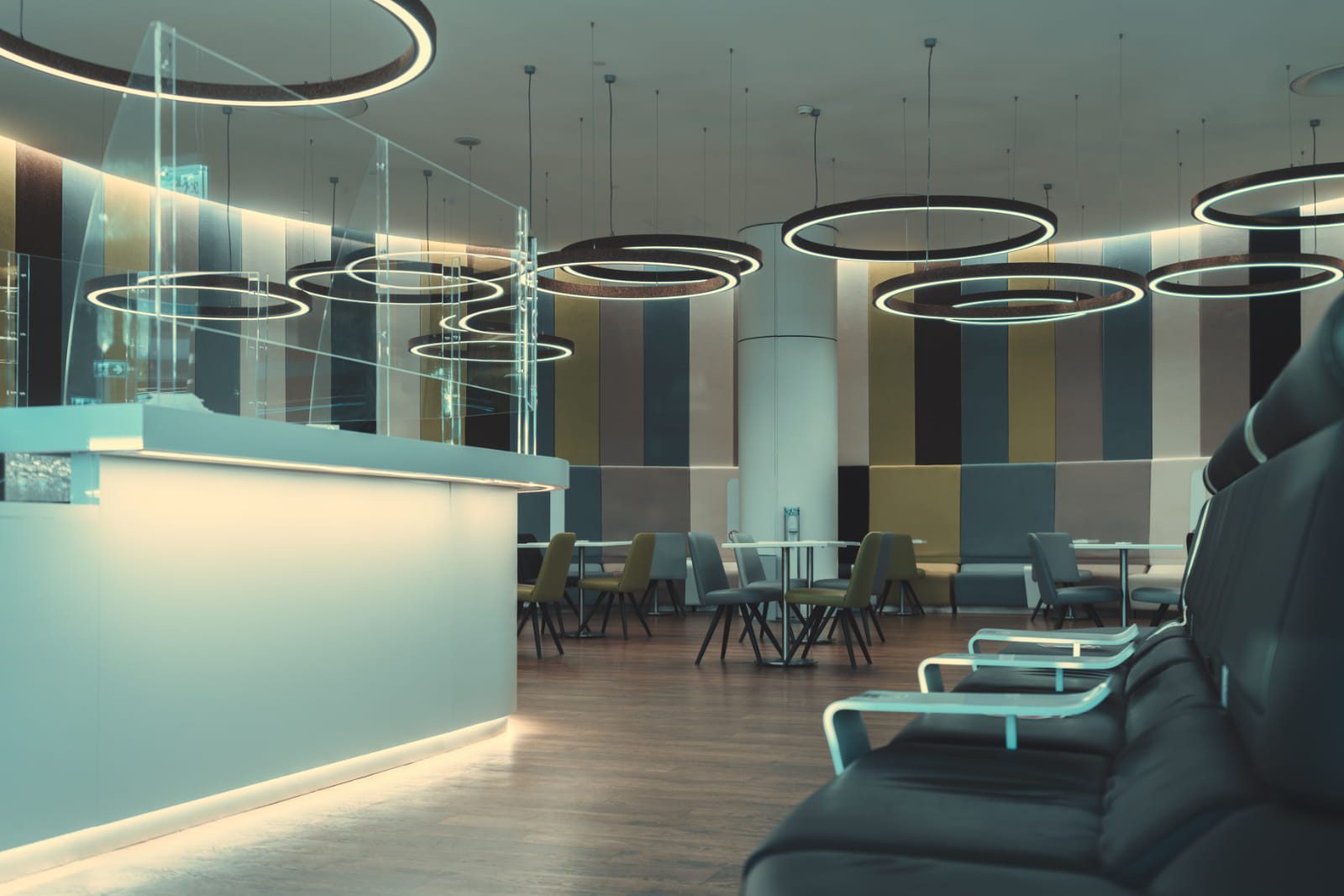
Task and Acoustic Lighting in Office Interior Design
Lighting has become one of the most important parts of office interior design. It is no longer just about making a workplace bright enough to see. The right lighting can improve focus, support wellbeing, reduce eye strain, shape mood, lower energy use and help create a workspace that feels professional, comfortable and productive.
Modern offices need to support many different activities, from quiet desk work and team meetings to client visits, collaboration and relaxed breakout time. That means one lighting type is never enough. A strong lighting plan combines task, ambient, accent, natural, LED and acoustic lighting to make every part of the office work better.
Why Lighting Matters In Office Interior Design
Lighting affects how people feel, think and perform throughout the working day. Poor lighting can lead to headaches, tiredness, eye strain and low motivation, especially in offices where employees spend long hours looking at screens. If the lighting is too dim, people may feel sleepy or struggle to concentrate. If it is too harsh, it can create glare and discomfort.
In effective office interior design, lighting should be planned from the start. It influences the layout, atmosphere, energy performance and user experience of the whole space. It can help define zones, guide movement, highlight brand features and make the office feel more welcoming to employees and visitors.
Key benefits of good office lighting include:
- Better focus and concentration
- Reduced eye strain and visual fatigue
- Improved mood and employee wellbeing
- Stronger first impressions in reception areas
- Better use of space through zoning
- Lower energy and maintenance costs when using efficient lighting
- A more professional and brand-aligned interior
Lighting is also a practical way to support different styles of work. A quiet focus area needs a different feel from a social breakout space, while a meeting room needs more flexibility than a corridor. When lighting is matched to the purpose of each area, the whole office becomes easier and more comfortable to use.
This is why lighting should never be treated as a final decorative choice. It is a core part of workplace performance. Done well, it supports people, strengthens the design and helps the business get more value from its space.
The Main Types Of Lighting Used In Office Interior Design
A successful lighting scheme usually combines several types of lighting, each serving a different purpose. Ambient lighting provides the general level of illumination that makes the office safe and usable, while task lighting supports focused activities such as desk work, meetings and detailed tasks. Accent lighting is used to highlight brand features, signage, artwork or architectural details, helping to add visual interest and depth.
Decorative lighting can also help shape the personality of the workplace, while natural light supports mood, energy and wellbeing. In effective office interior design, these lighting types should work together rather than compete with one another. The goal is to create a balanced, flexible environment that supports productivity, comfort and the overall look of the space.
Task Lighting For Focus And Productivity
Task lighting is designed to put light exactly where it is needed. In office environments, this is especially important at desks, workstations, meeting tables and other areas where people need visual clarity. Instead of flooding the whole space with harsh overhead light, task lighting gives focused support for specific activities.
This type of lighting is useful because different people have different needs. Some employees may prefer brighter light for detailed work, while others may need softer light to avoid discomfort. Adjustable task lighting gives users more control and helps create a more comfortable working environment.
Good task lighting should:
- Provide focused light without creating glare
- Support reading, writing, screen work and detailed tasks
- Be adjustable where possible
- Work alongside natural and ambient light
- Reduce shadows across work surfaces
- Help prevent eye strain during long work periods
- Fit naturally into the wider office interior design scheme
Task lighting is not only about productivity. It also supports wellbeing by reducing visual stress. When people do not have to strain to see clearly, they are more likely to stay focused, comfortable and engaged throughout the day.
For best results, task lighting should be planned around how each space is actually used. A workstation, meeting room and reception desk all have different lighting needs. Matching the light to the task makes the office more practical and more pleasant to work in.
Acoustic Lighting for Noise Reduction
Acoustic lighting is a modern solution that combines illumination with sound absorption. This makes it especially useful in open-plan offices, meeting areas, reception spaces and breakout zones where noise can easily build up. Instead of treating lighting and acoustics as separate problems, acoustic lighting handles both at once.
In busy offices, poor acoustics can be just as distracting as poor lighting. Echo, background chatter and hard surfaces can make it difficult for people to concentrate or hold conversations. Acoustic lighting helps soften the sound in a space while still providing useful, attractive illumination.
Benefits of acoustic lighting include:
- Reduced echo and reverberation
- Better comfort in open-plan spaces
- Improved concentration in busy areas
- A cleaner design with fewer separate fittings or panels
- Strong visual impact through suspended features or rafts
- Better support for meetings, calls and collaboration
- A practical link between lighting, comfort and office interior design
Acoustic lighting is particularly useful where space is limited or where the design needs to stay clean and uncluttered. It can be used above desks, meeting tables, collaboration zones or reception areas to improve both the look and feel of the workplace.
This type of lighting shows how modern workplace design is becoming more integrated. The best solutions do more than one job. Acoustic lighting supports productivity, comfort and atmosphere, making it a strong choice for future-ready offices.
Colour Temperature, Glare And Visual Comfort
Colour temperature changes the way a space feels. Cooler white light can help people feel more alert and focused, which makes it useful for workstations, meeting rooms and concentration areas. Warmer light creates a softer and more relaxed atmosphere, making it better suited to lounges, kitchens and breakout zones.
Glare is one of the most common causes of discomfort in office lighting. It can come from bright overhead fittings, reflections on screens or poorly placed lights. When glare is not controlled, employees may experience headaches, tired eyes and reduced concentration.
Visual comfort depends on balance. The lighting should be bright enough for the task, but not so intense that it feels harsh. It should also be consistent, with good uniformity across work areas. This is where careful planning, fixture placement and surface finishes all play an important role in office interior design.
LED Lighting And Sustainability In Office Interior Design
LED lighting is now a practical choice for most modern offices. It is energy-efficient, long-lasting and more flexible than older lighting options. It can also help reduce maintenance costs, which is useful for busy commercial spaces where downtime can be disruptive.
Sustainability is not only about using less energy. It is also about designing lighting that works intelligently. This means using daylight where possible, avoiding unnecessary over-lighting and choosing systems that can adapt to how spaces are used.
A sustainable lighting plan supports both environmental and business goals. It can lower running costs while still creating a bright, comfortable and professional workplace. In this way, lighting becomes part of a wider strategy for smarter and more responsible office interior design.
Smart Lighting For Flexible Workspaces
Modern offices need to adapt quickly. A meeting room may be used for a presentation, a video call and a brainstorming session all in one day. Each of these activities needs a slightly different lighting setup.
Smart lighting makes this flexibility easier. Dimming, zoning and occupancy-based control can help adjust the lighting to suit the activity and reduce wasted energy when rooms are not in use. This is especially useful in hybrid workplaces where office occupancy changes from day to day.
Flexible lighting also improves the user experience. People can create the right atmosphere for focus, collaboration or relaxation without needing a full redesign. It makes the workplace more responsive, efficient and comfortable.
Lighting Different Areas Of The Office
Each area of the office needs lighting that supports its function. Workstations need clear, balanced lighting that helps people focus without glare. Meeting rooms need flexible lighting that works for presentations, discussions, video calls and note-taking.
Reception areas need to feel bright, welcoming and professional. This is often where ambient and accent lighting work together to create a strong first impression. Brand signage, feature walls and reception desks can all benefit from well-placed lighting.
Breakout areas should feel softer and more relaxed. Warmer lighting can help people switch off, chat informally or recharge between tasks. Corridors and circulation areas need consistent lighting for safety, but they can still include subtle accent features to avoid feeling plain or purely functional.
Common Office Lighting Mistakes To Avoid
One of the biggest mistakes in office lighting is using the same lighting approach everywhere. A uniform grid of bright overhead lights may be simple, but it rarely supports the different ways people use the office. It can make the space feel flat, harsh and uncomfortable.
Another common issue is forgetting about glare and screen use. Many employees spend most of the day working on laptops or monitors, so lighting must be planned around reflections, brightness levels and visual comfort. Poorly placed fittings can cause ongoing frustration and fatigue.
Common lighting mistakes include:
- Relying only on overhead lighting
- Using lighting that is too bright or too dim
- Ignoring glare on screens and work surfaces
- Mixing colour temperatures without a clear plan
- Forgetting to use natural light properly
- Choosing decorative fittings without considering performance
- Not adapting lighting to different office zones
- Treating lighting as an afterthought in office interior design
These mistakes can make even a well-furnished office feel uncomfortable. They may also affect productivity, wellbeing and the overall impression visitors have of the business. Lighting should support the space, not work against it.
The best way to avoid these issues is to plan lighting alongside layout, furniture, finishes and user needs. A considered approach creates a workplace that feels more natural, more efficient and more enjoyable to use every day.
Where To Find Office Interior Design Firms That Include Lighting Solutions?
Turnkey Interiors provides full-service workplace design, fit-out and refurbishment solutions for businesses that want practical, attractive and future-ready offices. We understand that lighting is not a standalone feature. It needs to work with space planning, brand identity, employee wellbeing, productivity, furniture, finishes and long-term business goals.
We create workplaces that support innovation, collaboration and employee pride. Our approach combines strategic thinking with creative design, helping clients get more value from their space. From first consultation to final delivery, we focus on creating interiors that are functional, branded and built around the people who use them.
Our services include:
- Company, corporate and commercial interior design
- Workplace consultation and needs assessment
- Strategic design conceptualisation
- Space planning and layout design
- Transparent costing and budgeting
- 3D visualisations to support decision-making
- Procurement, implementation and project management
- Fit-out, refurbishment and building modernisation support
We also help clients plan spaces that are flexible, scalable and efficient. This includes improving space utilisation, supporting collaboration, enhancing employee experience and creating environments that reflect each client’s culture and operational goals.
When lighting is included as part of the wider office interior design strategy, the result is a more complete and successful workplace. At Turnkey Interiors, we bring design, planning and delivery together so that every element works as part of one clear vision.
Lighting the Way Forward
Lighting is a vital part of effective office interior design. From task lighting that supports focus to acoustic lighting that improves comfort in busy spaces, every layer has a role to play. A strong lighting scheme helps people work better, feel better and move through the office more naturally.
The best office lighting is balanced, flexible and matched to each area of the workplace. It uses natural light wherever possible, supports visual comfort, improves energy efficiency and adds personality to the interior. Most importantly, it helps create a workplace that is practical, professional and enjoyable to use.
At Turnkey Interiors, we design and deliver offices that bring these elements together with care and purpose. If your business is planning a refurbishment, fit-out or lighting-led workspace improvement, get in touch with us today. We would be glad to help create an office that supports your people, reflects your brand and works beautifully for your business.
FAQs About Office Interior Design
What type of lighting is best for office interior design?
The best lighting for office interior design is usually a layered mix of natural, ambient, task and accent lighting. Ambient lighting provides general brightness, task lighting supports focused work, accent lighting highlights key features, and natural light helps improve mood, energy and wellbeing.
LED lighting is often the preferred choice for modern offices because it is energy-efficient, long-lasting and flexible. It can also be used with dimming, zoning and colour temperature control to create different lighting conditions for different areas of the workplace.
How does office lighting affect productivity?
Office lighting affects productivity by influencing focus, comfort, energy levels and visual clarity. Poor lighting can cause headaches, eye strain, tiredness and difficulty concentrating, especially for employees who spend long hours working at screens.
Good lighting helps people stay alert and comfortable throughout the day. Cooler white light can support focus in workstations and meeting rooms, while warmer lighting can help create a more relaxed atmosphere in breakout spaces and informal areas.
What is task lighting in an office?
Task lighting is focused lighting used to support specific activities such as reading, writing, computer work, meetings or detailed tasks. It provides extra light exactly where it is needed, rather than relying only on general ceiling lights.
In an office, task lighting can include desk lamps, adjustable fittings or lighting positioned above work surfaces and meeting tables. It helps reduce eye strain, improves visibility and gives employees more control over their working environment.
Why is natural light important in office interior design?
Natural light is important because it supports employee wellbeing, mood and energy levels. A workspace with good access to daylight often feels more open, comfortable and inviting, which can improve the overall office experience.
In office interior design, natural light can be improved by placing workstations near windows, using lighter finishes, adding reflective surfaces and incorporating glass partitions. However, it still needs to be managed carefully to avoid glare on screens or overheating in certain areas.
What is acoustic lighting in an office?
Acoustic lighting combines illumination with sound absorption. It is designed to light a space while also helping to reduce echo, reverberation and background noise.
This makes acoustic lighting especially useful in open-plan offices, meeting areas, reception spaces and breakout zones. It is a smart solution for businesses that want to improve both visual comfort and acoustic comfort without adding too many separate design features.
How can office lighting be made more energy-efficient?
Office lighting can be made more energy-efficient by using LED fittings, making better use of natural light, installing dimming controls and zoning lighting according to how different spaces are used. Occupancy-based controls can also help reduce wasted energy in rooms that are not always in use.
A good lighting plan avoids over-lighting and ensures each area receives the right amount of light for its purpose. This helps reduce running costs while still creating a comfortable, productive and professional workplace.
What are common office lighting mistakes to avoid?
Common office lighting mistakes include relying only on overhead lighting, using lights that are too bright or too dim, ignoring glare on screens and mixing colour temperatures without a clear plan. These issues can make the office feel uncomfortable and reduce productivity.
Another mistake is treating lighting as an afterthought. Lighting should be planned as part of the wider office interior design strategy so that it supports layout, furniture, finishes, employee wellbeing and the overall atmosphere of the workplace.


Leave a Reply