

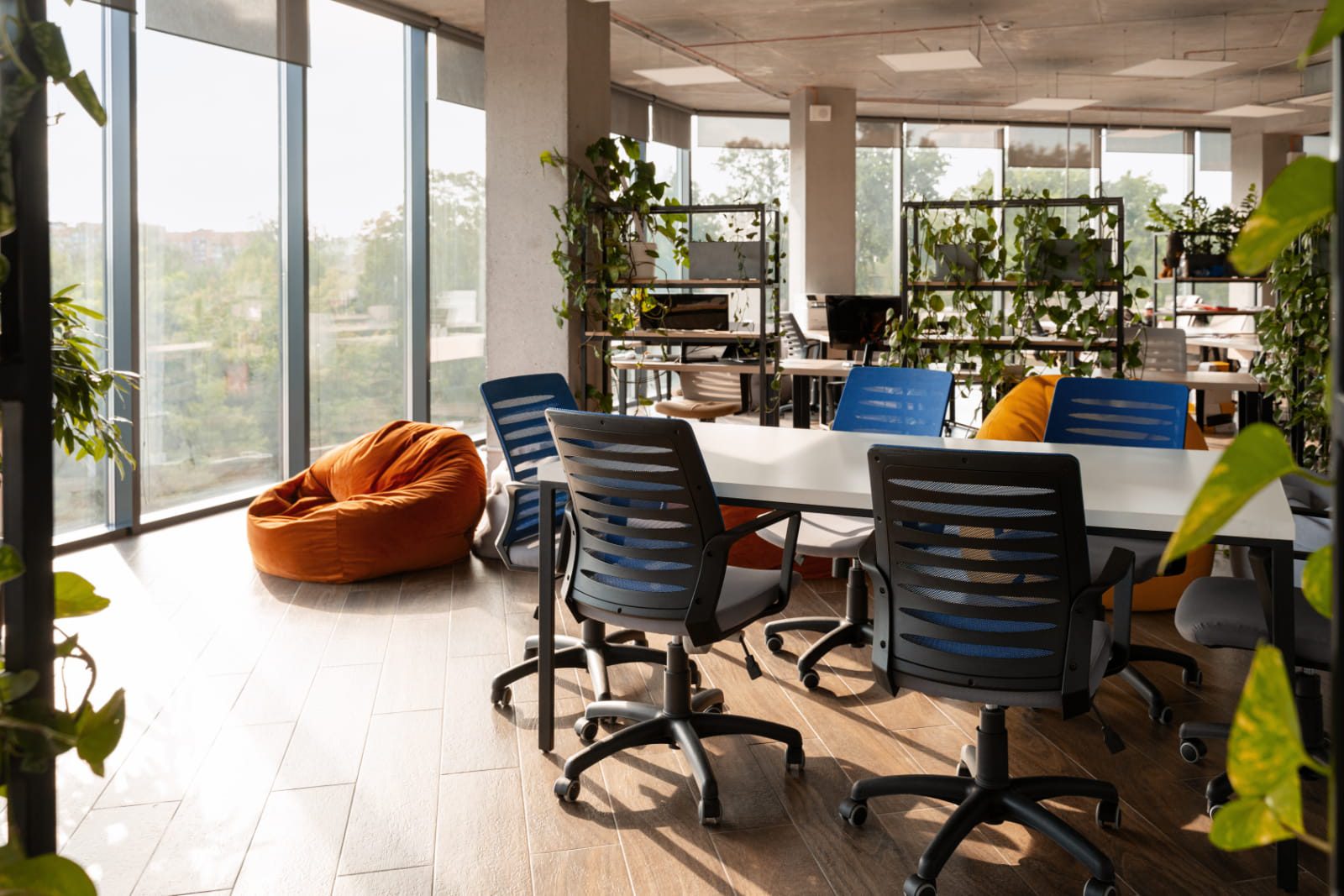
9 Smart, Eco-Friendly Office Design Strategies
Smart office design strategies that reduce costs and carbon footprint are becoming a core priority for interior companies and businesses looking to improve efficiency and remain competitive. Offices today are expected to do more than simply house employees. They must support well-being, reflect company values, and operate in a way that is both cost-effective and environmentally responsible.
By taking a more thoughtful approach to design, businesses can reduce operational expenses while creating healthier, more engaging workplaces. From energy efficiency to smarter layouts, these strategies help organisations achieve long-term value. Working with experienced interior companies ensures these improvements are practical, measurable, and aligned with broader business goals.
1. Prioritise Energy-Efficient Lighting and Systems
Reducing energy consumption is one of the quickest ways to lower costs and carbon emissions. Offices rely heavily on lighting, heating, and cooling, which means even small improvements can lead to significant savings over time. By focusing on efficient systems, businesses can create a more sustainable and comfortable environment. Energy-efficient solutions also support better workplace performance. Consistent lighting, stable temperatures, and improved air circulation all contribute to employee well-being and productivity, making this a practical and impactful starting point.
Key actions include:
- Install LED lighting instead of traditional bulbs
- Use motion sensors and occupancy-based controls
- Upgrade to energy-efficient HVAC systems
- Improve insulation and thermal performance
- Maximise natural ventilation where possible
Implementing these changes not only reduces energy bills but also extends the lifespan of systems and equipment. Over time, the cost savings can offset the initial investment, making it a financially sound decision. In addition, energy-efficient offices are better positioned to meet sustainability targets and regulatory requirements. This strengthens a company’s reputation while contributing to long-term environmental goals.
2. Use Sustainable Materials from Trusted Interior Companies
Material selection has a direct impact on both environmental performance and workplace quality. Choosing eco-friendly materials helps reduce carbon emissions while creating healthier indoor environments. Many interior companies now offer a wide range of sustainable options that combine durability with design appeal. Sustainable materials also support long-term cost savings. High-quality finishes last longer and require less maintenance, reducing the need for frequent replacements and minimising waste.
Key actions include:
- Use recycled or reclaimed materials where possible
- Choose responsibly sourced timber and natural finishes
- Select low-VOC paints, adhesives, and fabrics
- Prioritise durable and long-lasting materials
- Source materials locally to reduce transport impact
Working with experienced interior companies ensures that these materials are integrated effectively into the design. Their expertise helps balance sustainability with functionality and aesthetics. Over time, these choices contribute to a more resilient workspace. They reduce environmental impact while supporting employee wellbeing, creating a space that performs better on every level.
3. Design Flexible and Adaptable Workspaces
Flexibility is essential in modern office design. Businesses need spaces that can evolve as teams grow, shrink, or change how they work. Adaptable layouts reduce the need for costly renovations and help maximise the value of existing space. Flexible workspaces also support different work styles. Employees can move between areas designed for focus, collaboration, and relaxation, improving both productivity and satisfaction.
Key actions include:
- Use modular and reconfigurable furniture
- Create multipurpose rooms for different activities
- Incorporate movable partitions
- Design activity-based work zones
- Support hybrid working with adaptable layouts
This approach improves space efficiency and reduces unnecessary expenditure. Instead of redesigning entire offices, businesses can make small adjustments to meet changing needs. In the long term, flexibility supports sustainability by reducing material waste and extending the life of the office design. It ensures that the workspace remains relevant without constant investment.
4. Incorporate Biophilic Design for Wellbeing
Biophilic design focuses on connecting people with nature within the workplace. This approach improves well-being, reduces stress, and enhances productivity. It also contributes to a more sustainable environment by promoting natural elements and light. Even simple changes can have a noticeable impact. Bringing nature indoors creates a more inviting and energising atmosphere, helping employees feel more comfortable and engaged.
Key actions include:
- Add indoor plants and green walls
- Maximise natural light through layout design
- Use natural materials like wood and stone
- Incorporate earthy colours and textures
- Create access to outdoor or semi-outdoor spaces
These elements improve air quality and create a calmer, more balanced environment. Employees working in such spaces tend to feel more motivated and focused.
Biophilic design also aligns with sustainability goals. By relying more on natural light and materials, businesses can reduce energy use while enhancing the overall experience of the workspace.
5. Optimise Space Planning with Interior Companies
Effective space planning is essential for creating efficient and functional offices. A well-planned layout ensures that every area serves a purpose, reducing wasted space and improving workflow. Interior companies play a key role in designing layouts that meet both operational and employee needs. Strategic planning also supports collaboration and privacy. By balancing open areas with quiet zones, businesses can create environments that cater to a variety of tasks.
Key actions include:
- Define zones for focus, collaboration, and social interaction
- Improve traffic flow and accessibility
- Position workstations for efficiency and comfort
- Incorporate storage to reduce clutter
- Align layout with business processes
Working with interior companies ensures that these elements are carefully considered. Their expertise helps create layouts that are both practical and visually appealing.
Optimised space planning leads to better productivity and reduced costs. It ensures that resources are used effectively, preventing the need for unnecessary expansion or redesign.
6. Invest in Smart Technology and Automation
Smart technology is transforming how offices operate. Automated systems can monitor and adjust energy use, improving efficiency without requiring constant manual input. This helps reduce waste and lower operational costs. Technology also enhances the overall workplace experience. Employees benefit from more comfortable and responsive environments, while businesses gain valuable insights into how their spaces are used.
Key actions include:
- Install smart lighting and climate control systems
- Use occupancy sensors to optimise energy use
- Implement energy monitoring tools
- Enable automated adjustments based on usage patterns
- Integrate systems for seamless control
These solutions provide real-time data that can guide decision-making. Businesses can identify inefficiencies and make targeted improvements to reduce costs. Over time, smart systems create more adaptive and efficient workplaces. They support both sustainability goals and operational performance, making them a worthwhile investment.
7. Reduce Waste Through Circular Design Practices
Circular design focuses on minimising waste by reusing and repurposing materials. Instead of discarding old items, businesses can refurbish or adapt them for continued use. This approach reduces environmental impact and lowers costs. It also encourages more responsible consumption. By thinking about the full lifecycle of materials, businesses can make smarter design decisions from the start.
Key actions include:
- Reuse or refurbish existing furniture
- Choose products designed for recycling or reuse
- Avoid unnecessary replacements
- Partner with suppliers offering circular solutions
- Plan for future disassembly and reuse
Adopting these practices reduces the amount of waste sent to landfills. It also lowers the demand for new materials, which helps cut carbon emissions. Circular design supports long-term sustainability by creating a more efficient use of resources. It aligns environmental responsibility with practical business benefits.
8. Improve Indoor Environmental Quality
A healthy workplace is essential for employee well-being and productivity. Improving indoor environmental quality ensures that employees have access to clean air, natural light, and comfortable conditions. This approach goes beyond aesthetics. It directly impacts how people feel and perform in the workplace, making it a critical part of sustainable design.
Key actions include:
- Use low-VOC materials to reduce pollutants
- Improve ventilation and air circulation
- Maximise natural light exposure
- Incorporate plants for air quality
- Maintain comfortable temperature and humidity levels
These measures create a more pleasant and productive environment. Employees are less likely to experience fatigue or discomfort, leading to better performance. Improving environmental quality also supports long-term health outcomes. This reduces absenteeism and contributes to a more engaged workforce.
9. Integrate Renewable Energy Solutions
Renewable energy is a powerful way to reduce both costs and carbon footprint. By generating clean energy on-site, businesses can lower their reliance on traditional energy sources. Although the initial investment may be higher, the long-term benefits are significant. Renewable energy systems provide consistent savings and support sustainability goals.
Key actions include:
- Install solar panels where feasible
- Explore alternative renewable energy sources
- Partner with green energy providers
- Integrate energy storage solutions
- Monitor and optimise energy usage
These solutions help stabilise energy costs and reduce exposure to rising utility prices. They also demonstrate a strong commitment to environmental responsibility. Over time, renewable energy becomes a key part of a sustainable office strategy. It supports both financial performance and long-term resilience.
Who Offers Sustainable And Eco-Friendly Office Design Services?
At Turnkey Interiors, we believe that sustainable office design should be both practical and inspiring. We are not just a design and build company. We are a full-service partner that manages every stage of your project, from initial concept and space planning to procurement, implementation, and project management. Our goal is to create workspaces that align with your business objectives while enhancing employee well-being and productivity.
We take a strategic approach to every project, combining creativity with deep industry knowledge. Our team works closely with clients to understand their needs and deliver tailored solutions that support long-term performance. By integrating sustainable materials, efficient systems, and flexible layouts, we create environments that are future-ready and cost-effective.
We also prioritise transparency, quality, and efficiency throughout the process. Our hands-on approach ensures that every detail is managed with care, giving our clients confidence and clarity from start to finish. The result is a workspace that not only looks great but also performs at the highest level.
Better ROI, Greener Footprint
Smart office design strategies that reduce costs and carbon footprint provide a clear roadmap for creating efficient, sustainable workplaces. By focusing on energy efficiency, smart technology, flexible layouts, and responsible material choices, businesses can achieve meaningful improvements in both performance and environmental impact.
If you are ready to transform your workspace into a smarter, more sustainable environment, we are here to help. Get in touch with Turnkey Interiors and let us create a future-ready office that supports your people, your performance, and your long-term success.


Leave a Reply