

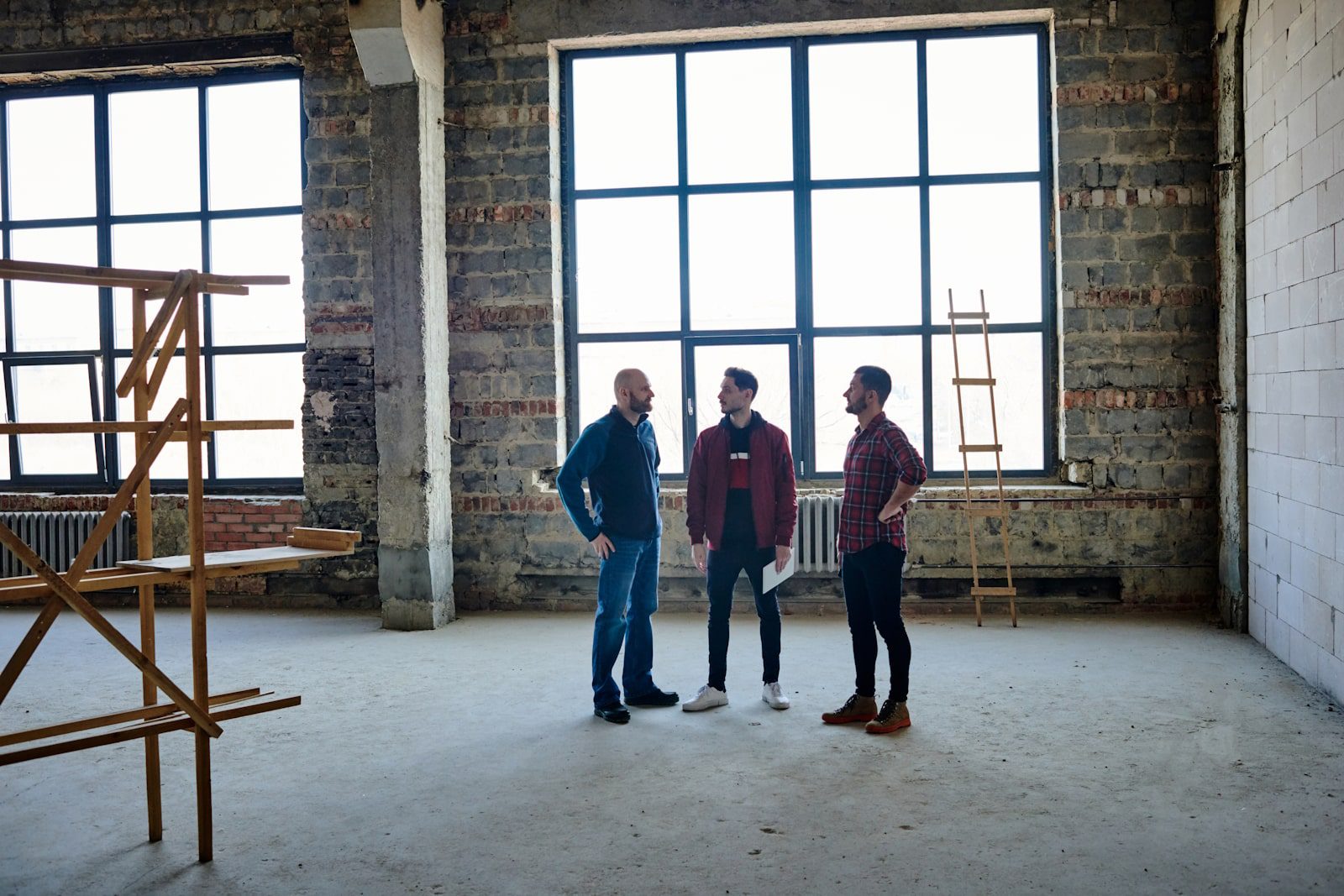
Interior Design and Adaptive Reuse of Commercial Buildings
Adaptive reuse of commercial buildings is becoming a central strategy for organisations seeking to balance sustainability, heritage, and economic viability. Adaptive reuse can transform underutilised commercial structures into thriving, efficient, and beautiful workplaces, and companies for interior design can play a pivotal role in turning those visions into reality. By focusing on sustainability, structural upgrade, architectural preservation, regulatory complexity, and more, this article aims to equip developers, designers, city planners, and investors with a rigorous, holistic guide.
Sustainability and Resource Efficiency
One of the strongest arguments for adaptive reuse lies in embodied carbon savings. When companies for interior design preserve existing structures instead of demolishing and rebuilding, they avoid the emissions tied to material production, transport, and demolition waste. According to a report by RMI, designers can reduce embodied carbon by 19% to 46% in typical new buildings using low-cost strategies. The greater the proportion of existing structure retained, the greater the savings.
Moreover, building reuse often captures 50% to 75% of the embodied carbon that would otherwise be expended for a new structure. By reusing the “sunk” carbon of the original building, adaptive reuse projects begin with a lower emissions baseline. Retrofitting also avoids construction and demolition waste, which globally contributes significantly to landfill and energy burden.
Beyond embodied carbon, operational energy efficiency upgrades are essential. Adding high-performance glazing, insulation, daylighting controls, heat recovery, smart HVAC systems, and electrification helps to reduce energy consumption over the building’s life. Some adaptive reuse projects have achieved energy savings in excess of 30% relative to the prior baseline. By combining the retention of structure with aggressive operational upgrades, the total carbon footprint is meaningfully lowered.
Preserving Architectural Heritage
Adaptive reuse offers companies for interior design a rare chance to maintain cultural memory and aesthetic legibility while bringing a structure into contemporary use. Many commercial or industrial buildings carry distinctive facades, masonry work, vaults, columns, or industrial character that communities value. By preserving these elements, a project strengthens local identity and continuity.
Yet there is tension between preservation and modern functionality. Heritage façades may not meet structural or thermal performance standards; original windows may leak energy; planning authorities may demand minimal alteration. The art is in selecting which features must be retained and which can be adapted. Often a layered design strategy is used: the “old” is exposed and celebrated, while the “new” is inserted transparently or in contrast.
Many projects lean on conservation standards (local heritage boards, ICOMOS principles) and early consultation with preservation authorities. Interventions are designed to be reversible or minimally invasive, and modern safety and accessibility upgrades are integrated discreetly. A best practice is sequencing: document every original element, propose minimal interventions, and negotiate with preservation authorities early in concept design.
Structural Assessment and Reinforcement
Before companies for interior design can start the process, a rigorous structural assessment is essential. Engineers inspect foundations, beams, columns, slabs, load paths, lateral bracing, and connection integrity. Non-destructive testing, core sampling, structural modelling, and existing drawings help determine which elements can be preserved and which require strengthening.
Once condition is established, retrofit strategies may include steel braces, carbon fibre wraps, plate bonding, jacketing, FRP (fibre reinforced polymer) reinforcement, or new shear walls or cores. Where a building’s lateral stability is inadequate, new structural systems may be added discreetly. Strengthening beam-column joints, improving diaphragm continuity, and redistributing loads are common tasks.
The design team needs to coordinate artistically and functionally so that reinforcements don’t visibly clash with original fabric. In best practice, reinforcement is concealed within new partitions, ceilings, or even exposed as an intentional design feature. The structural upgrades must also allow for future adaptability: raised floors, modular layouts, and non-destructive future alterations.
Design Integration and Space Planning
With the shell confirmed, companies for interior design and architects begin the choreography between old and new. In an adaptive reuse project, the original features, exposed brick walls, timber beams, steel columns, vaulted ceilings, become part of the spatial identity. The new interventions (glazing, partitions, lighting, floors) must respond sensitively.
Designers often demarcate character zones: portions of the plan that highlight original elements, while other zones absorb the new systems. The contrast approach is common, but blending textures and materials can also work. Circulation paths may need rethinking: the original stair cores, corridors, loading docks might not suit modern layouts, but they can be adapted or supplemented.
Flexibility is key. Co-working, open offices, mixed use and hybrid tenancy demand modular infrastructure: plug-and-play partitions, raised floors, flexible zones. Designers also plan for daylight: introducing atria, skylights, light wells, or internal glazing to bring daylight into deep zones. Spatial comfort, acoustics, and wayfinding must be balanced with respecting heritage geometry.
Building Systems Modernization
Updating mechanical, electrical, plumbing, and IT systems in older structures is a challenging but critical component. To companies for interior design The goal is to deliver modern performance without undermining heritage values.
For HVAC, options include VRF systems, heat pumps, displacement ventilation, or radiant systems. Demand-controlled ventilation, heat recovery, and zone control help optimise performance. Ducting is often tightly coordinated to avoid intrusion into heritage elements, concealed in floor, ceiling or vertical chases.
Electrical systems must be modernised: power distribution, lighting (LED + smart controls, daylight sensors, occupancy sensors), renewable integration (PV, solar shading). Building automation and energy management systems allow monitoring and adjustment of energy use. For insulation, new high-performance glazing or secondary glazing may be installed, and thermal upgrades to roofs and walls carefully integrated with historic materials (respecting moisture, breathability, and heritage constraints).
Plumbing upgrades include modern piping, leak detection, greywater or rainwater systems, but often require clever routing to avoid invasive cuts. IT and communications infrastructure (fiber, structured cabling, wireless access points, smart building sensors) are embedded discreetly, often with BIM coordination to avoid conflicts. The aim is seamless performance behind a heritage face.
Regulatory and Zoning Challenges
Adaptive reuse projects must navigate a thicket of regulations. First, there is land use and zoning: many commercial or industrial zones may not automatically allow alternative uses. Developers may need to apply for variances, change-of-use approvals, or zoning reinterpretation. Requirements on floor area ratio (FAR), parking, setbacks, and loading may differ under new use.
Building codes pose further hurdles. Fire safety standards have evolved, so designers often must install sprinklers, fire-rated separations, multiple egress routes, firestopping, and upgraded life-safety systems. Accessibility laws require ramps, lifts, accessible restrooms, and paths, sometimes demanding structural intervention in historic fabric.
Heritage or conservation overlays impose restrictions on façades, window patterns, materials, and massing. Approvals from heritage commissions, planning boards or cultural institutions are time consuming. On the upside, various jurisdictions provide incentives or relief for heritage or sustainable reuse projects (tax credits, grants, expedited permits). Navigating these requires early collaboration with planning authorities and heritage bodies.
Economic and ROI Considerations
Adaptive reuse often carries a higher upfront cost compared to a vanilla renovation, structural remediation, unexpected conditions, heritage constraints, regulatory compliance. But the cost must be weighed against avoided demolition, new material, shorter lead times, and value uplift. One report shows that reuse can drive robust returns while enriching urban districts.
Moreover, reuse projects can reduce both embodied and operational carbon, enhancing market value and tenant attraction. Some projects have reported embodied carbon reductions of up to 60% relative to new construction. The value uplift from a character-rich, sustainability-branded building can command premium rents, lower vacancy, and stronger tenant loyalty.
Incentives may further tilt the balance: tax credits for heritage rehabilitation, grants for green building, or low-interest green loans. Developers may partner with municipalities or heritage funds. A prudent financial model includes contingencies, phased implementation, and sensitivity analysis on energy costs and occupancy risk.
Urban Regeneration and Community Impact
Adaptive reuse projects often act as catalysts for broader urban renewal. By converting a dormant commercial building into active offices, cultural space or mixed use, a building can inject foot traffic, services, and new jobs into neglected districts. The local economy benefits from construction activity, permanent tenancy, ancillary services, and increased property tax base.
Beyond economics, adaptive reuse has measurable social and cultural impacts. A social life cycle assessment (S-LCA) study of a reuse project in Sweden found significant positive community effects in local identity, social inclusion, and heritage preservation. Community engagement, public shared spaces, and reuse of local materials help embed a project meaningfully in its context.
Adaptive reuse helps cities densify without sprawl, reduce waste, and incorporate local memory. In many cases the reuse of a single prominent building encourages adjacent investment and revitalisation of streetscapes, infrastructure, and public realm.
Sustainability Certifications and Benchmarking
Adaptive reuse projects commonly pursue certifications such as LEED, BREEAM, or WELL to validate their performance. The U.S. Green Building Council acknowledges that adaptive reuse can be “even more sustainable” by granting credits for reuse and material conservation.
To succeed, companies for interior design must embed performance metrics early. Life cycle assessment (LCA) tools are used to benchmark embodied carbon against a new‐build baseline. Some regions or challenges require submission of whole building LCA.
Emerging tools also streamline certification workflows. For example, a new platform integrates computer vision and AI to automate LEED credit compliance and documentation, achieving over 80% automation and cutting documentation time by up to 70%.
Post-occupancy evaluation and performance monitoring are crucial. Digital twin or sensor networks measure energy use, indoor air quality, and occupancy patterns to ensure that design intent is realised in operation.
Workplace Experience and Brand Storytelling
One powerful advantage of adaptive reuse is narrative. The history, patina, and character of a building become part of the occupant experience and brand identity. A creative agency in a converted factory, for instance, can use the building’s story as a metaphor for innovation, disruption, or legacy. Clients and employees appreciate the authenticity and depth that new glass boxes may lack.
From a spatial perspective, high ceilings, exposed structure, daylight, tactile materials, and unique geometry enhance occupant engagement, wellbeing, and delight. Many tenants perceive such spaces as more inspiring, healthier, and more memorable. That in turn supports tenant attraction, retention, and lease premiums.
In marketing materials, companies for interior design can highlight how the interior narrative respects the past while enabling future performance. The building itself becomes part of a brand story, reinforcing values around sustainability, authenticity, and innovation.
Material Reuse and Salvage Strategies
A core sustainability move is to salvage materials from the existing building. Ideally, the first strategy is retention in situ; next is on-site reuse; then off-site reuse or refurbishment. Elements such as timber beams, brick walls, structural steel, metal railings, doors, masonry, glass, and millwork are prime candidates.
In practice, salvage must be strategic. Materials must be assessed for structural integrity, compatibility, safety compliance, and cost of reconditioning. Sourced items are catalogued, cleaned, refurbished, and reinserted into the new design. Reclaimed materials often serve as accent zones or secondary finishes, helping bridge old and new visually and materially.
Best practice education is to include salvage strategies in the earliest design phase, not as an afterthought. A collection of embodied carbon case studies demonstrates that reuse of materials can significantly enhance total carbon savings.
Technological Integration: BIM, 3D Scanning, and Digital Tools
Adaptive reuse benefits greatly from digital tools. Reality capture techniques such as laser scanning (LiDAR) and photogrammetry produce accurate point clouds of existing structure, which are converted into as-built BIM for coordination. That makes clash detection, interference modelling, and design overlay much safer.
With BIM, architects and engineers can integrate structural, MEP, architectural, and heritage layers in one environment. Parametric modelling helps reconcile geometry constraints with new insertions, and embedded material data enables carbon accounting.
Beyond design, digital twins and sensor networks allow real-time performance monitoring (temperature, humidity, energy, occupancy). For example, a case study of a historic castle in Sweden used a parametric digital twin and sensor network to manage humidity, temperature and energy strategies.
Simulation tools also support construction sequencing, clash detection, lighting & airflow modelling, and structural stress analysis. All of these help the team intervene precisely and minimise harm to heritage elements.
Your Partner In Sustainable Interior Design
Adaptive reuse of commercial buildings offers a path for organisations to reduce carbon footprint, preserve heritage, strengthen community ties, and deliver financial returns. By retaining the embodied value of existing structures and combining rigorous modern upgrades, adaptive reuse is uniquely aligned with net-zero ambitions while celebrating cultural legacy. In this framework, companies for interior design deliver the narrative, function, and experience that make the project resonate with tenants, users, and communities.
If you are planning an adaptive reuse or retrofit project, our team is ready to help translate your vision into buildable, beautiful reality. At Turnkey Interiors, we specialise in collaborating with architects, engineers, and stakeholders to craft interiors that honour history, deliver high performance, and tell your brand’s story. Contact us today and let us transform possibilities into places.


Leave a Reply